Film Birmingham workshop trains newcomers for Alabama film sets
Film Birmingham’s PA Technical Skills Workshop gives newcomers the hands-on basics that matter on day one, from C-stands to call sheets, inside Birmingham’s crew pipeline.
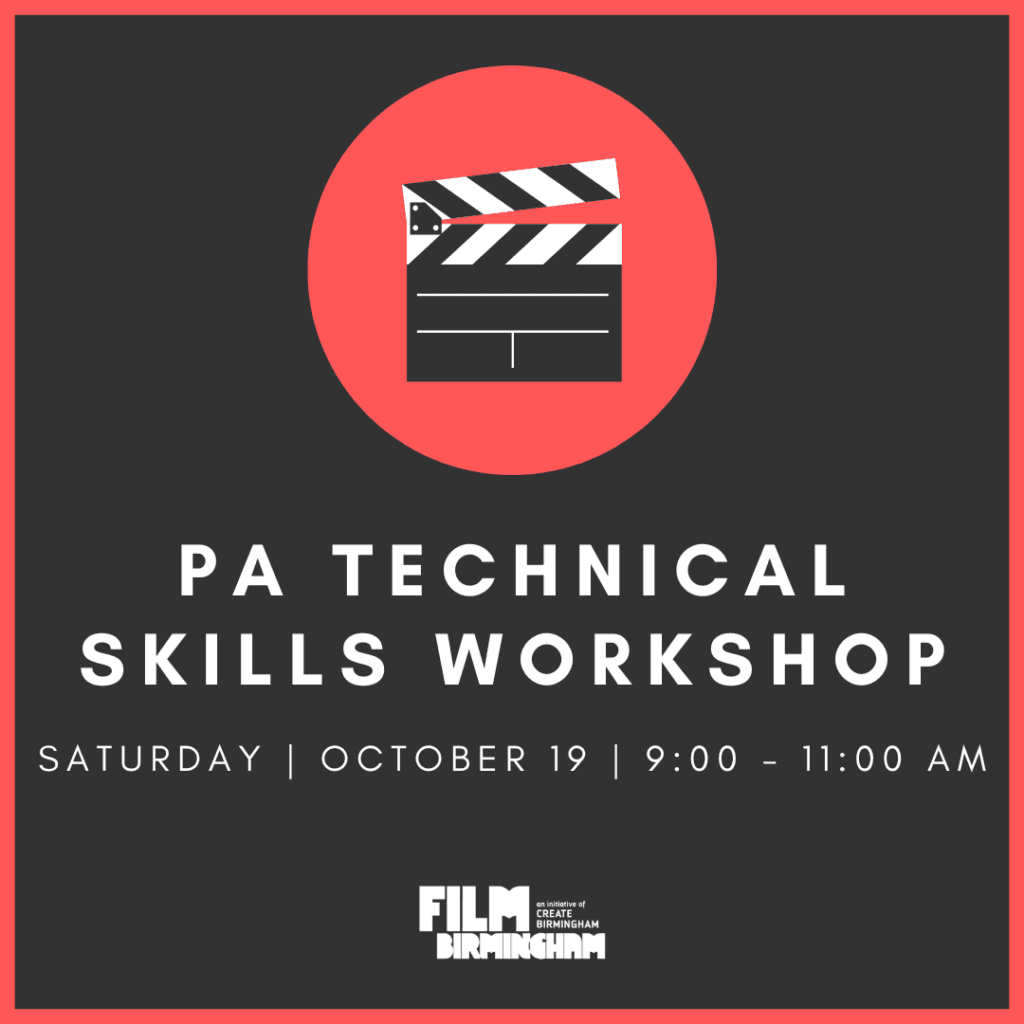
A C-stand, a sandbag, a call sheet, and a walkie-talkie are all part of Film Birmingham’s PA Technical Skills Workshop. The session is built for people who want to understand how a production actually runs, not just for those who already know they want to become a production assistant. It moves participants from department to department, with Birmingham crew members and industry experts demonstrating the work, answering questions, and translating set language into something a newcomer can use right away.
What the workshop teaches before you ever step on set
The curriculum is practical in the most useful way. Participants get hands-on instruction in how to set a C-stand, where sandbags go, how to set up a craft services table, how to read a call sheet, what walkie-talkie codes mean, and how set protocol works. Those are not abstract film-school concepts. They are the small, repeatable tasks that keep a day moving when the clock is running and a crew is counting on someone to know the basics without hesitation.
A production assistant is often the first person a crew tests for reliability. If you can identify gear, understand where things belong, and follow set protocol without creating extra work for the department head above you, you become useful fast. Film Birmingham’s workshop is designed to shorten that learning curve by putting the mechanics of the job in front of you before a call time ever appears on your phone.
How those basics translate to day-one usefulness
A newcomer can walk into a local production with technical vocabulary and still be stranded if the physical work is unfamiliar. Setting a C-stand correctly, placing sandbags where they actually stabilize a rig, and reading a call sheet without slowing down the schedule are the sorts of skills that let a PA keep pace with a real crew. Walkie-talkie codes and set protocol are equally important because they keep communication clean when the set is moving quickly.
These are core lessons, not side lessons. By framing the class around department-by-department exposure, the workshop gives aspiring crew members a sense of how one task connects to the next. On smaller Alabama productions, people often have to jump across responsibilities and learn quickly.
Why Workplay and local crew involvement matter
The workshop is hosted at Workplay, which gives it a concrete Birmingham anchor instead of a generic classroom feel. The setting signals that local infrastructure is part of the lesson. You are not just hearing about film work in theory, you are seeing it in a place tied to the city’s production ecosystem.
Local Birmingham-based crew members are part of that lesson too. They answer questions and demonstrate what a production assistant actually does, which gives the workshop a practical edge that a slide deck never could.
Film Birmingham’s role is bigger than a single class
Film Birmingham is the film commission for the Greater Birmingham region and an initiative of Create Birmingham. Its mission is to create job opportunities, generate revenues, elevate regional visibility, and advocate economic development across Greater Birmingham. It also serves as the primary liaison between film production and city agencies, helping productions with permitting, crew connections, and communication with municipalities and the community.
Film Birmingham also maintains a crew-and-resource database and a locations guide.
Why the workshop fits Alabama’s production incentives
Alabama’s film and TV incentives apply to projects spending $500,000 to $20 million in the state. The Alabama Entertainment Office offers a 25% rebate on certain production expenditures and a 35% rebate on payroll paid to Alabama residents. Alabama awards the incentive on the first $20 million of qualifying production expenditures.
There are also clear timing rules that shape how productions come in. Film and TV projects must apply at least 30 days before starting activities in Alabama, commit to a minimum of $500,000 in qualified in-state expenditures, and begin principal photography within 90 days of application approval.
The local job market this workshop is trying to serve
Motion picture and video production and motion picture theater account for just over 400 jobs locally, according to Film Birmingham. A large portion of Birmingham film production serves commercial or public-sector markets. The city’s production scene is not only about feature films; it also runs through ads, agency work, and other non-theatrical jobs that still need dependable crew.
For a newcomer, that mix creates more than one doorway into the business. A PA who learns the fundamentals at the workshop can be useful on a commercial shoot, a public-sector project, or a larger narrative production. The same basics still apply: handle gear properly, understand the call sheet, listen on the walkie, and respect set protocol.
How to turn the workshop into real set work
After the class, the next step is staying visible in Film Birmingham’s crew database and paying attention to local job-fair programming.
Maggie Ballard’s PA workshop is one of several entry-level programs Film Birmingham has promoted. Film Birmingham has also promoted job fairs for recent graduates and emerging professionals alongside other in-person workshops with local industry experts.
This article was produced by Prism’s automated news system from verified source data, official records, and press releases, then run through automated quality and moderation checks before publishing. The system is built and supervised by the people who set the standards it runs under. Read our full AI policy.
Did this article answer your question?