The Phenix City Story turned an Alabama scandal into national cinema
The film showed Alabama filmmakers how a local scandal, real testimony, and on-location shooting could travel far beyond one county.
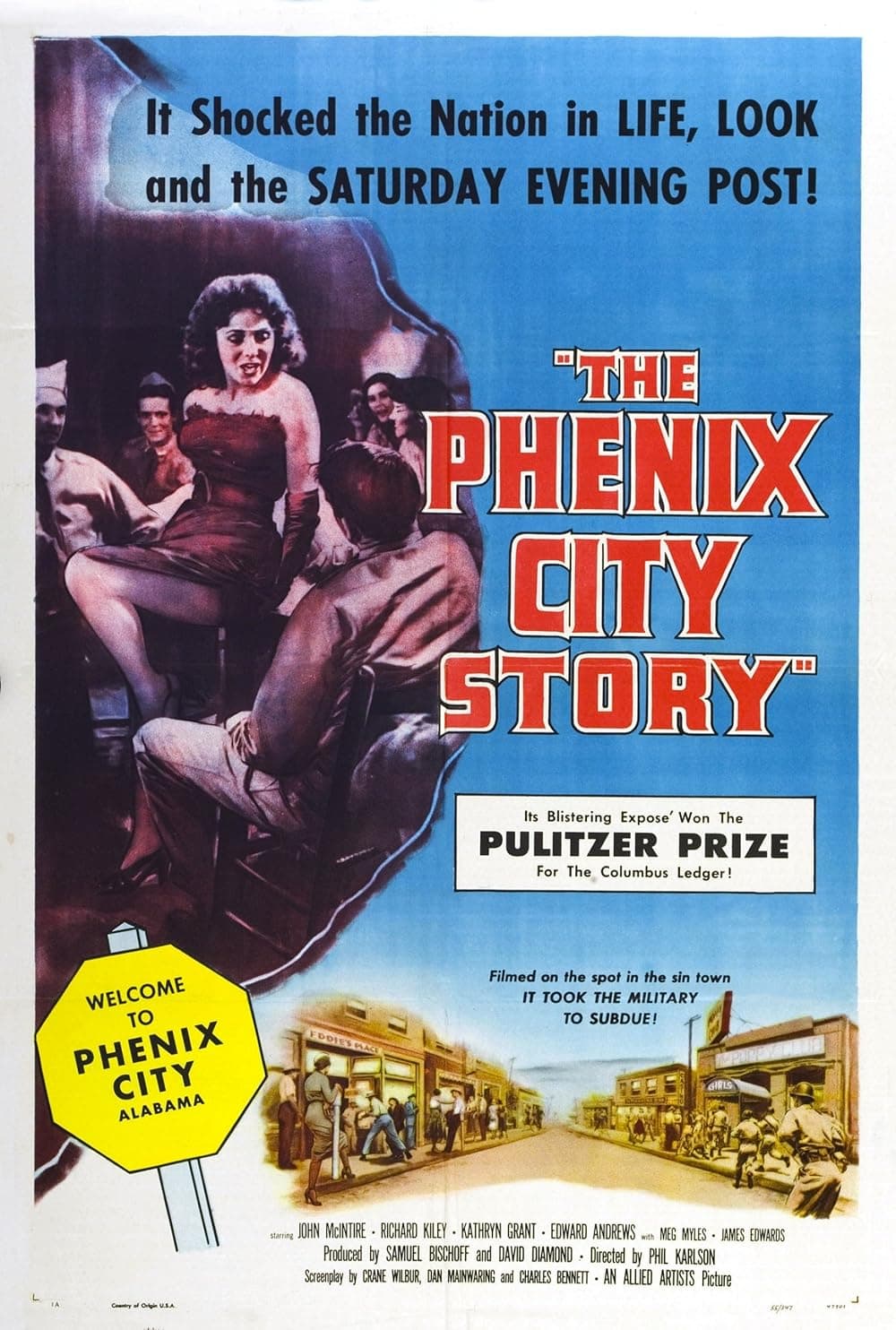
The Phenix City Story still matters because it proves an Alabama film does not need to widen its gaze to feel national. It can start with one murder, one corrupt city, and one hard piece of local history, then build enough force to play in Phenix City, Columbus, and Chicago at once. For Alabama filmmakers looking for a durable model, that is the lesson: the more specific the place and stakes, the stronger the cinema.
Phenix City gave the movie its engine
Long before the cameras rolled, Phenix City already carried a reputation that made the story travel. Turner Classic Movies describes the town as a vice center during World War II, when it had the highest venereal disease rate in the nation and a gambling syndicate had taken over major civil and social institutions. That network preyed on soldiers coming through from nearby Fort Benning, so the city’s corruption was never just local color; it was tied to wartime traffic, border geography, and a steady stream of outsiders moving through the area.
That backdrop is what gave Albert L. Patterson’s murder such force. Patterson, an attorney and political reformer, was killed on June 18, 1954 after campaigning to clean up the city. His death turned a municipal corruption fight into a public crisis, and it is the kind of civic rupture filmmakers still look for when they want a story that feels rooted and consequential. The film’s power comes from that exactness: this was not an invented noir town, but a real Alabama place where crime, reform, and public fear were already colliding.
The film made the case with form, not just facts
The Phenix City Story does not begin like a conventional crime drama. The AFI Catalog says the credits are preceded by a 13-minute documentary sequence, with reporter Clete Roberts interviewing people tied directly to the events, including local anti-corruption figures and Patterson’s widow. That opening gives the film an unusual double life: part testimony, part dramatized thriller, and that hybrid structure is one of the clearest craft lessons the movie leaves behind for independent filmmakers in Alabama.
For a low-budget production, the documentary prologue does a lot of heavy lifting. It gives the audience faces, voices, and firsthand memory before the narrative machinery starts turning, which means the later dramatic scenes land on a foundation of lived reality. It also shows how local history can be made legible without sanding it down into generic dialogue or broad exposition. If the subject is strong enough, eyewitness testimony and archival texture can do more for a film than elaborate set pieces ever will.
What modern Alabama indies can borrow from the production
The shoot itself reinforces the same point. Filming in Phenix City began in March 1955, and the entire movie was shot on location there, a rarity for the time. That choice gave the production the geography it needed: recognizable streets, border-town atmosphere, and the physical reality of the place that had produced the scandal in the first place. For current Alabama filmmakers, that is still a practical blueprint. If a story is inseparable from its setting, the location becomes part of the storytelling language, not just a backdrop.

The production also faced pressure that feels familiar to anyone trying to make difficult regional work. The AFI Catalog notes that filmmakers were harassed and threatened by criminals still operating in Phenix City, and by citizens who opposed the exposé, while the Russell County Betterment Association supported and protected them. That detail matters because it shows the film was not made in a vacuum. It was part of an active civic struggle, with allies and antagonists on the ground, and that kind of real-world tension can be the difference between a movie that feels safe and one that feels urgent.
Hollywood censorship shaped the film too. The Encyclopedia of Alabama notes that censors pushed the writers away from explicit references to prostitution and venereal disease and toward gambling, intimidation, and mob power. That constraint did not weaken the movie; it sharpened its focus. For indie writers working in Alabama now, the lesson is clear: when a subject cannot be shown directly, specificity in character, atmosphere, and local power structures can still make the story bite.
A few practical takeaways stand out from that model:
- Start with a real Alabama conflict that already has civic stakes, not just atmosphere.
- Use the city itself as part of the drama, especially when the geography is recognizable.
- Build from witness, testimony, and local memory when the history is too big for straight fiction alone.
- Treat limitations, whether budget or content restrictions, as a reason to sharpen the writing rather than dilute it.
Why the story moved beyond the state
The release strategy shows how far a local Alabama story could reach when it was built right. The Encyclopedia of Alabama notes that The Phenix City Story opened on July 19, 1955 with simultaneous premieres in Phenix City, Columbus, Georgia, and Chicago, Illinois. That kind of rollout underscores the scale of the story’s appeal. It was tied to one city, but it was also legible as a national corruption drama, the kind of movie that could travel because its local details were specific enough to feel true.
The aftermath of Patterson’s murder gives the film even more weight. Governor Gordon Persons declared limited martial law in Russell County on July 22, 1954, and under that order the Alabama National Guard took over the duties of the sheriff’s office and the Phenix City Police Department. Columbus State University archives note that Albert Frederick Fuller, former chief deputy sheriff of Russell County, was convicted of Patterson’s murder and sentenced to life in prison. Those facts make the film feel less like a sensational crime picture and more like a cinematic record of a state already forced into intervention.
That is why The Phenix City Story remains such a useful precedent for Alabama independent film. It did not dilute the scandal, flatten the geography, or pretend the stakes were abstract. It took a specific Alabama wound, shot it where it happened, opened with people who were there, and sent it out into the world as national cinema.
This article was produced by Prism’s automated news system from verified source data, official records, and press releases, then run through automated quality and moderation checks before publishing. The system is built and supervised by the people who set the standards it runs under. Read our full AI policy.
Did this article answer your question?


