Whistleblowers Behind Oscar-Nominated Alabama Prison Doc Face Ongoing Retaliation
Three men who filmed Alabama prison abuse with contraband phones were moved to solitary confinement days before "The Alabama Solution" received an Oscar nomination.

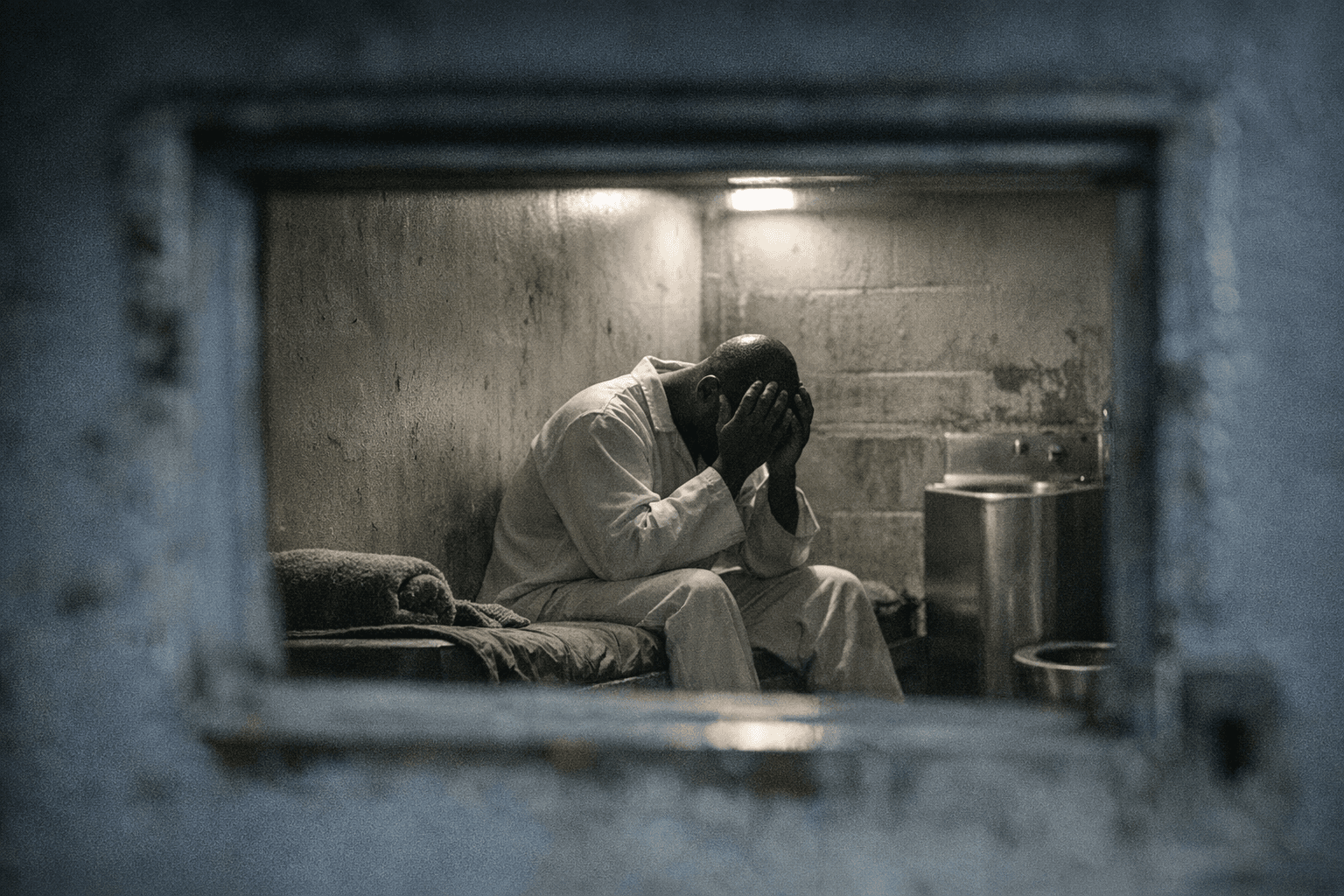
The three incarcerated whistleblowers whose contraband cellphone footage anchors the Oscar-nominated documentary "The Alabama Solution" were transferred to solitary confinement days before the film received its Academy Award nomination, with a lawyer in contact with the men saying the timing points to retaliation by the Alabama Department of Corrections.
Prison Journalism Project published the companion investigation on March 12, 2026, written by Richard "Corey" Fox, a writer detained at William E. Donaldson Correctional Facility. The report, which Truthout first broke, identified the three men as Robert Earl Council, known as "Kinetik Justice"; Melvin Ray, founder of the Free Alabama Movement; and Raoul Poole. All three had filmed prison brutality with contraband phones and gave on-camera interviews to the documentary's directors, Andrew Jarecki and Charlotte Kaufman.
"The Alabama Solution," released in October 2025 and now available on HBO Max, was six years in the making and draws heavily on footage incarcerated men secretly recorded inside Alabama's 13 state prisons for men. The film focuses on two central stories: the October 2019 death of Steven Davis, who was beaten by corrections officers inside Donaldson, and the statewide prisoners' work strike of October 2022, organized in part by Council and Ray. Davis's mother, Sandy Ray, appears throughout the film carrying a photo of her son's beaten face. The state's official explanation was that Davis had threatened officers with a knife, but multiple incarcerated witnesses disputed that account.
The October 2022 strike, which the Free Alabama Movement helped organize, drew thousands of incarcerated people across all 13 state prisons, according to the Prison Journalism Project. The Guardian reported that the Alabama Department of Corrections broke the strike by starving prisoners en masse, choking out Council, deploying soldiers to intimidate and beat others, and cutting off contact from strike leaders. Those two accounts differ on duration: PJP described a 23-day action, while The Guardian reported ADOC effectively broke it in 11 days.
Co-producer Beth Shelburne, who has reported on Alabama's prison system since 2012, participated in a screening and discussion at Yale Law School on February 9, organized by the Arthur Liman Center for Public Interest Law and the Investigative Reporting Lab at Yale. Sarah Stillman, director of the Investigative Reporting Lab, moderated. "I started listening to people on the inside because what they were telling me was turning out to be true," Shelburne said at the event.
Director Charlotte Kaufman, reflecting on the risks the whistleblowers took, relayed a remark Ray made privately during production. "As Melvin said to us, not in the film, but at one point, 'I'm more afraid of what happens when they turn the cameras off,'" Kaufman said.
The film's findings align with federal conclusions. The U.S. Department of Justice issued finding letters in 2020 concluding there was reasonable cause that conditions inside Alabama's prisons, including use of force, violated prisoners' Eighth and 14th Amendment rights and amounted to cruel and unusual punishment. Those findings also overlapped with the 2014 class action Braggs v. Dunn, now Braggs v. Hamm, in which a federal court found systemic constitutional violations in the state's prison mental health care system and ordered ongoing reforms the state has appealed.
Fox, writing from Donaldson after exchanging handwritten questions with Ray following Ray's arrival at the facility, framed the stakes plainly in the PJP piece: "It is one thing to celebrate an Academy Award nomination as a personal achievement, but it is an entirely different thing to utilize a platform like this to further a mission."
ADOC has not provided a public explanation for the transfers to solitary. The name of the lawyer whose team characterized the moves as retaliatory was not included in the Prison Journalism Project's reporting.
This article was produced by Prism’s automated news system from verified source data, official records, and press releases, then run through automated quality and moderation checks before publishing. The system is built and supervised by the people who set the standards it runs under. Read our full AI policy.
Did this article answer your question?


