Why Alabama filmmakers turn to documentary work first
Alabama’s easiest first film is often a documentary, because the grants, archives, and audience infrastructure are already in place.
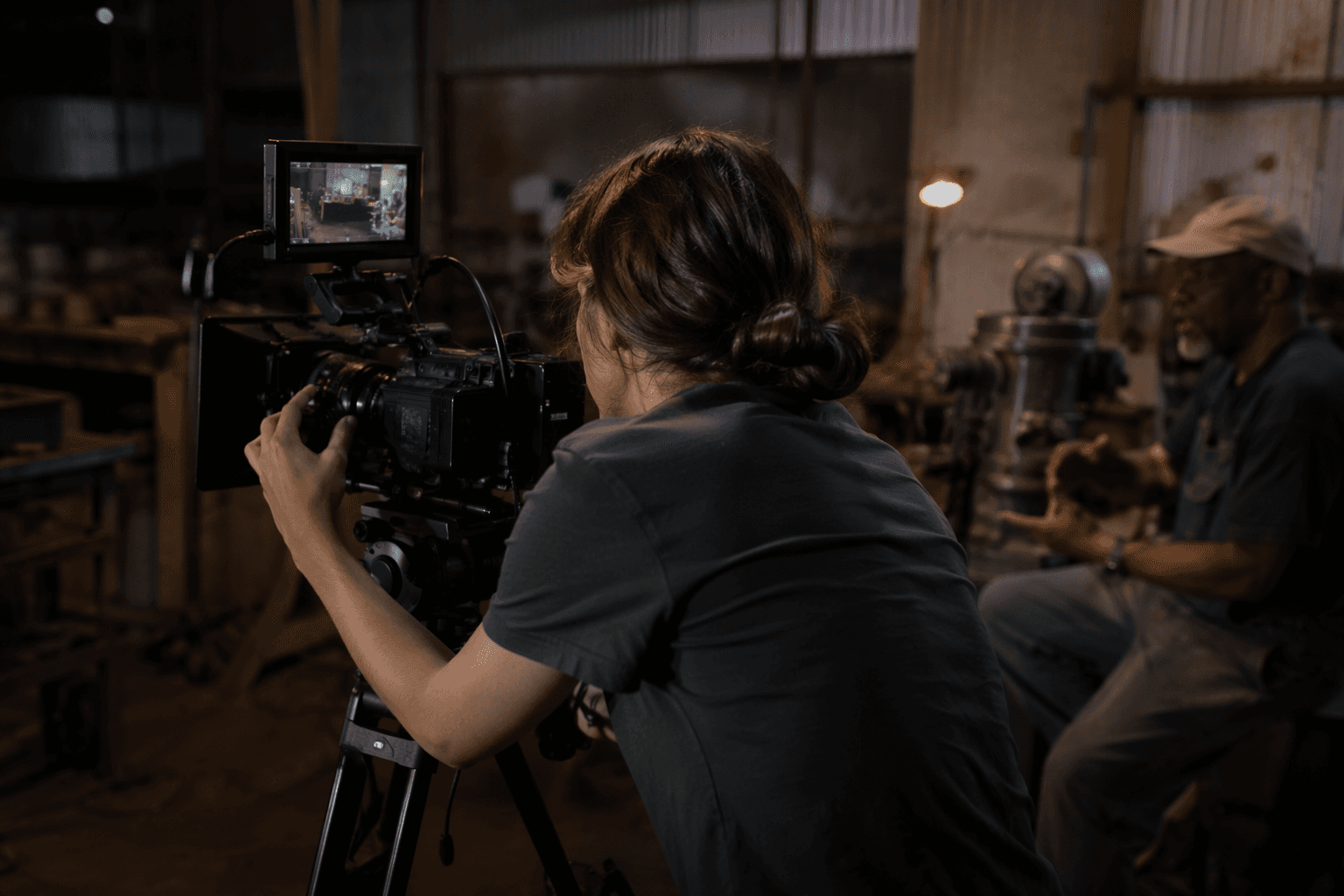
Discovering Alabama has been on Alabama Public Television since 1985, and Alabama filmmakers looking for the smartest first project do not have to start by chasing a truckload of gear or a script that needs a full crew. Documentary work fits the state’s actual ecosystem: small-scale public humanities money, deep archival holdings, and a long-running local broadcast home for story-driven nonfiction. If you want a first lane into Alabama indie film, this is the one that lets you begin with a subject the state already knows how to support.
Why documentary is the cleanest first entry
The Alabama Humanities Alliance gives the clearest signal. Founded in 1974 and serving as the state affiliate of the National Endowment for the Humanities, the Alabama Humanities Alliance can support oral histories, temporary exhibitions, documentary films or series, podcasts, and other digital media through its public humanities grants. Its current grants page limits grantmaking right now to Mini Grants of up to $2,500, while Major Grants and Media Grants are paused after abrupt federal cuts.
AHA’s historical Media Grants supported documentary films, television and radio programs, and digital or web-based projects, and the guidelines required a 2:1 cost-share match with cash and in-kind contributions. They also came with a 90-day start window, a useful clue for how tightly these projects need to be scoped.
Start where Alabama already keeps its stories
The Alabama Department of Archives and History gives you the second half of the equation: primary material. Its audiovisual collection preserves sound and motion picture recordings, and it can be browsed by subject, including Civil Rights, the Great Depression, transportation, and politics. The collection was first published in August 2012 and continues to grow.
Instead of inventing a topic from scratch, you can build a film around records that already exist, then use the department’s broader digital collections and research pages to search catalogs and databases, browse selected digital records online, and request a research consultation. That workflow lets you verify names, dates, places, and visual material before you ever schedule an interview.
Why the audience for this work already exists
Alabama did not have to wait for the current interest in local-history storytelling to understand documentary as a public form. Discovering Alabama calls itself the longest-running locally produced show on Alabama Public Television. It also identifies itself as an Emmy-winning documentary series about Alabama’s natural history and heritage, produced by the Alabama Museum of Natural History and The University of Alabama in cooperation with Alabama Public Television.
A 2019 National Academy of Television Arts and Sciences Emmy for *Discovering Alabama: State Archives* shows that this style of work still has recognition, while the series’ educational resources point to a built-in classroom use case. For an Alabama filmmaker, that means a documentary can be designed not only for a festival screen or a streaming link, but also for teachers, libraries, and public television audiences.
The most useful Alabama documentary subjects tend to be close to the ground
The strongest first projects usually begin with a place, a family, a work site, or an archive box that already has witnesses attached to it. In Alabama, that often means local-history subjects, oral histories, and community memory, because those are the same forms the humanities system knows how to support. A project does not need to start grandly to feel meaningful; it needs a subject with enough documentary evidence to carry the film and enough living connection to keep the interviews sharp.
Build around living witnesses or descendants. Pair the story with a humanities scholar, archivist, or local institution that can strengthen the proposal. Then aim the finished piece toward public-facing outcomes like screenings, discussion, and classroom materials.

A recent example shows the model in motion
The Alabama Humanities Alliance’s *Healing History* initiative makes that route even clearer. The program is meant to help Alabamians explore shared history and consider how conversation can help heal divides created in the past. One recent film, *Echoes of the Forks of Cypress*, was funded through that initiative and premiered in Alabama on August 12, 2025, at the Florence-Lauderdale Public Library.
The premiere drew around 125 people, more than the library’s viewing area could comfortably hold. The project used a film to bring descendants of enslaved people and plantation owners into the same conversation about a shared past.
How to begin, step by step
A first Alabama documentary is strongest when it moves in a simple sequence:
1. Choose a local subject with a clear historical spine, ideally one tied to a place, family, institution, or public event.
2. Search the Alabama Department of Archives and History audiovisual collection for recordings, subjects, and supporting records.
3. Shape the interview list around people who can speak from lived memory or inheritance: witnesses, descendants, former workers, community members, and local experts.
4. Bring in a humanities partner, archivist, or scholar who can help sharpen the historical frame and strengthen a grant proposal.
5. Design the public outcome early, whether that is a screening, classroom guide, library event, or discussion series.
6. If funding is needed, map the project to AHA’s grant structure and keep the budget realistic enough for a small public humanities frame.
This article was produced by Prism’s automated news system from verified source data, official records, and press releases, then run through automated quality and moderation checks before publishing. The system is built and supervised by the people who set the standards it runs under. Read our full AI policy.
Did this article answer your question?