YellowHammer Film Festival opens Alabama film pipeline for student creators
YellowHammer gives Alabama students a free first foothold in film, then points them toward statewide screenings, memberships, and incentive-backed work.
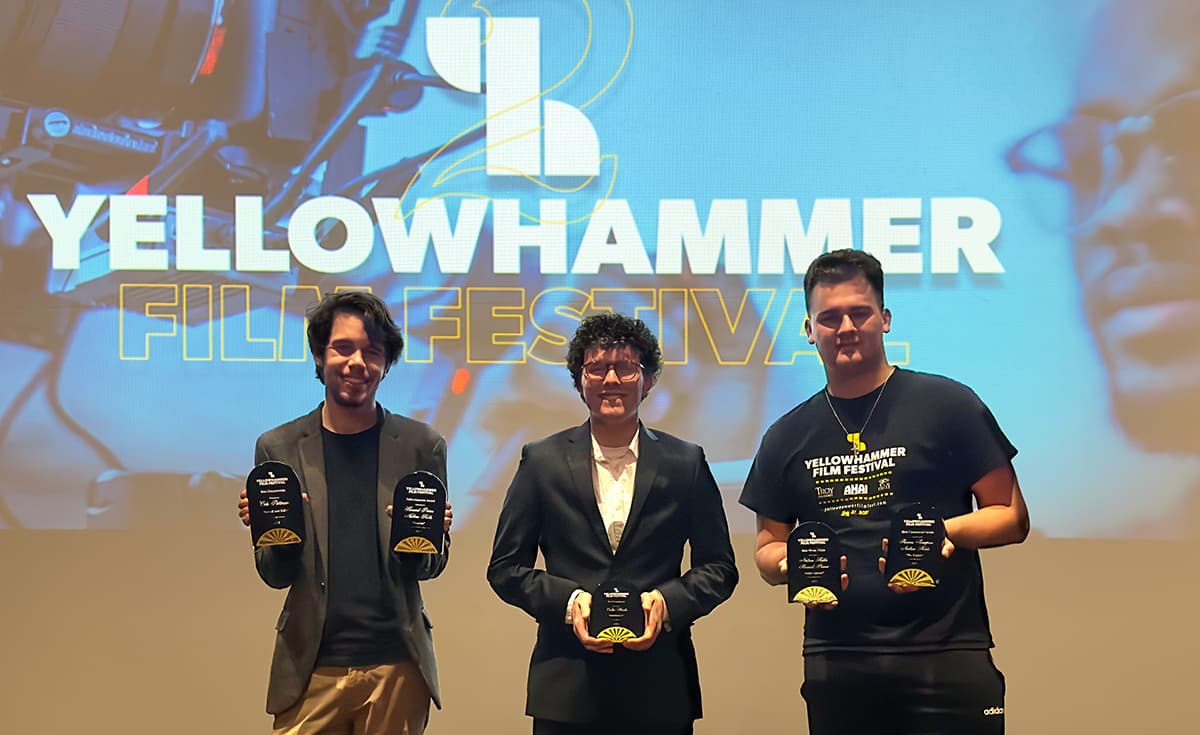
YellowHammer Film Festival has become one of the clearest on-ramps into Alabama independent film because it starts where many newcomers already are: in school. Created in 2021 by Troy University Associate Professor of Design Chris Stagl, the festival was built to bring creative filmmakers and animators together during the pandemic, and it has grown into a platform that still prioritizes Alabama creators while welcoming student work from far beyond the state.
YellowHammer is built to let beginners in
The first thing that separates YellowHammer from a lot of film-world gatekeeping is its access model. Troy University says the festival is free and open to high school and college filmmakers, and its lineup goes well beyond a single screening block. The program includes workshops, a keynote speaker, a student film exhibition, a photo exhibition, and an awards ceremony, which means a student can come in as a learner, a maker, or both.
That openness has not kept the festival small. By 2024, Troy said YellowHammer had already awarded more than 100 prizes to films from more than 40 states, with judging handled by industry professionals. The festival also keeps one award tied specifically to Alabama: the YellowHammer Award, given to an Alabama high school or college student for outstanding contributions. For a newcomer, that matters because the path into the room is not limited to people with professional credits, but the recognition still carries real industry weight.
The scale of the 2024 festival shows how active that pipeline has become. Troy reported 548 entries from more than 150 high schools and colleges across the country, with presentations from professional and student filmmakers and animators. Nine TROY students went home with multiple awards, which is the kind of outcome that turns a campus festival into a working proof point for the rest of the state.
Start with the format you can actually finish
If you are trying to make your first Alabama film credit, YellowHammer is designed to let you start small. Troy’s festival categories include short films under 10 minutes, plus posters, commercials, social media videos, animation, motion graphics, music videos, news packages, photos, and experimental films. That range is the real lesson for beginners: you do not need to arrive with a feature film or a perfect calling card, only with work that fits one of the lanes the festival already accepts.
That is also why Troy’s YellowHammer 48-Hour Film Race matters. Launched in 2024 as a spring counterpart to the fall festival, the race was created to encourage students and educators to make a four-minute film in less than two days. The inaugural race named 10 winners, and it gives students an unusually fast way to move from idea to finished piece without needing a large crew or months of production time.
For a beginner in Alabama, the most practical move this month is to pick one YellowHammer category and finish one piece that fits it. A short under 10 minutes, a poster, a social video, or a four-minute race entry all give you the same essential thing: a screenable credit that can travel into the next room, whether that is a workshop, a university festival, or a local networking event.
Use the state network once the first credit exists
YellowHammer is only the first step if you want it to be. The Alabama Film Guild exists to help keep that momentum going, and it describes itself as a nonprofit working to build a sustainable, inclusive film and television industry. Its membership page makes the access point plain: student memberships are free, general memberships are $10 a year, and lifetime founding supporter memberships are $2,000.

That fee structure tells you exactly how the guild sees its role in the ecosystem. It is not just a social club for established filmmakers. It is a place where students, working filmmakers, and anyone invested in Southern storytelling can connect to training, events, and opportunities across the state. When a student festival like YellowHammer hands you a first credit, the guild is one of the cleanest next places to turn that credit into contacts.
The value of that bridge is practical. A student who has submitted to YellowHammer, attended the festival’s workshops, and then joined the guild can move from campus to community without waiting for some outside industry to discover them. Alabama’s indie scene works better when those steps stack together: make work, show work, then meet the people who are still making work.
Give yourself a real target in Florence
The George Lindsey UNA Film Festival gives Alabama creators another concrete destination. Hosted by the University of North Alabama and running since 1998, the festival welcomes local, national, and international entries, while still setting aside space for work made in Alabama. UNA says it is one of the few film festivals hosted by a university, and it identifies the event as Alabama’s longest-running film festival.
The most useful part for a newcomer is the festival’s Alabama-specific recognition. UNA awards $2,000 to the best film made in Alabama in memory of George Lindsey’s childhood friend Clyde “Sappo” Black. That prize gives emerging filmmakers a clear local benchmark: if YellowHammer is the entry point, UNA is one of the next serious targets for a finished Alabama film.
This matters in the Shoals because it keeps the pipeline visible outside a campus bubble. Florence is not just where a film screens, it is where student work can start to feel like state-level work. When a filmmaker moves from a YellowHammer submission to a UNA entry, they are no longer just testing their craft in class. They are stepping into a statewide conversation about what Alabama-made film looks like when it is ready for an audience.
Alabama is building for both small starts and bigger sets
The state’s film rebate program shows why that pipeline matters. Alabama currently offers a 25% rebate on qualified non-payroll expenses and a 35% rebate on payroll paid to Alabama residents, and productions generally have to spend at least $500,000 in Alabama to qualify. That is the larger industrial frame around all the student-level activity: the state wants bigger productions, but it also needs a local workforce that knows how to make the smaller projects happen first.
That is where YellowHammer, the Alabama Film Guild, and the George Lindsey UNA Film Festival connect. One gives students a first stage, one helps them stay connected, and one gives them a statewide target to aim for next. If you are starting in Alabama film right now, the first move is simple: make something small enough to finish, put it in front of YellowHammer, and use that first screening credit to keep moving through the rooms already built for you.
This article was produced by Prism’s automated news system from verified source data, official records, and press releases, then run through automated quality and moderation checks before publishing. The system is built and supervised by the people who set the standards it runs under. Read our full AI policy.
Did this article answer your question?