Amateur Pickleball Guide: Courts, Equipment Rules, and Youth Clinics Explained
Pickleball's fastest-growing pressure points sit at the intersection of court access, equipment compliance, and youth development - here's what every amateur player needs to navigate all three.
Finding Your Court: Municipal Construction and Hospitality Venues
Two distinct models are reshaping where amateur pickleball gets played. The first is municipally driven: parks and recreation departments across the country have been converting underused tennis courts, repurposing parking lots, and breaking ground on dedicated pickleball facilities in response to surging demand. These public courts are typically free or low-cost, operate on a first-come, first-served or reservation basis, and represent the most accessible entry point for new players.
The second model is hospitality-driven, with hotels, resorts, and private social clubs building dedicated pickleball courts as amenities. These venues often offer professional instruction, equipment rentals, open play sessions, and league formats under one roof. The trade-off is cost: drop-in fees and memberships at hospitality venues run significantly higher than municipal options, but the infrastructure quality, programming, and social atmosphere tend to reflect that investment.
For amateur players trying to maximize court time, the practical move is to register with your municipal parks department early in the season, when reservation windows open and leagues form. Simultaneously, keep an eye on hospitality venues for open-play events, which are often offered at reduced rates to build community and fill off-peak hours.
Equipment Rules: What Every Amateur Player Must Know
Equipment compliance is one of the most overlooked areas for amateur players, and it becomes consequential the moment you enter any sanctioned tournament or organized league. Pickleball's governing bodies periodically update approved paddle lists, ball specifications, and noise ordinance standards as the sport evolves and manufacturers introduce new materials and designs.
The core areas to understand are:
- Paddle approval: Not every paddle on store shelves meets current tournament specifications. Before purchasing or competing with a new paddle, verify it appears on the current approved paddle list maintained by USA Pickleball. Paddle surface texture, core material, and deflection standards are all regulated.
- Ball standards: Outdoor and indoor balls differ in hole count, hardness, and bounce characteristics. Sanctioned play specifies which ball type is in use, and some tournaments supply balls rather than allowing player choice.
- Noise considerations: Several municipalities have introduced noise ordinances specifically targeting pickleball due to the distinctive pop of paddle-on-ball contact. Hospitality venues and municipal facilities in residential-adjacent areas increasingly require low-noise paddles and balls, a category that has its own approved list.
The most common compliance mistake among amateur players is using a paddle purchased before a rule update cycle. USA Pickleball reviews and updates its approved equipment lists regularly, so checking the current list before a tournament, rather than assuming last year's paddle still qualifies, is non-negotiable preparation.
Youth Clinics: How Pro Clubs Are Building the Next Generation
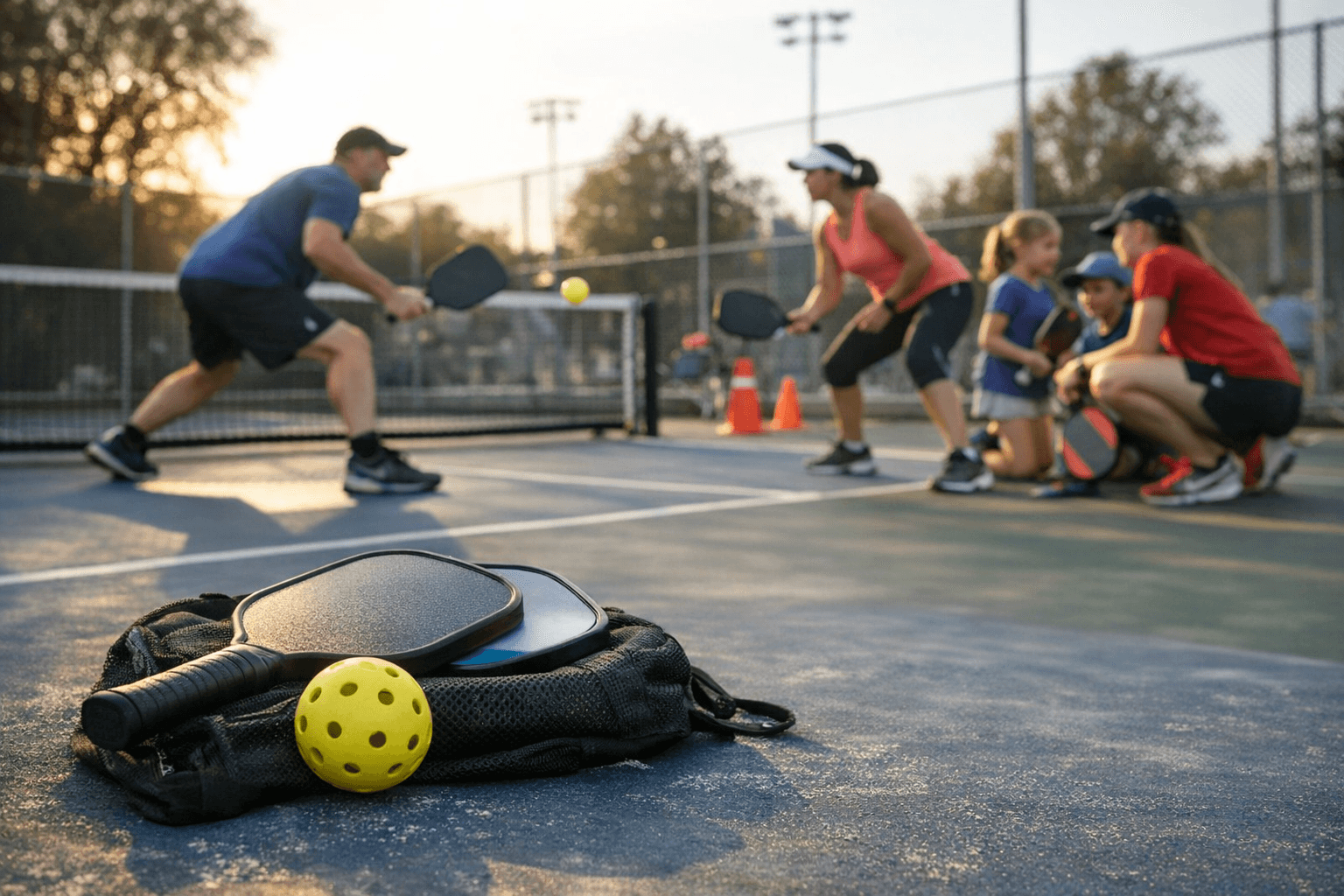
One of the most significant structural shifts in amateur pickleball is the entry of professional clubs and teams into youth development programming. Pro organizations have recognized that building grassroots pipelines serves both community goodwill and long-term sport growth, and youth clinics have become a primary vehicle for that investment.
These clinics typically run in concentrated formats: weekend sessions, after-school programs, or week-long summer intensives. Instruction focuses on foundational mechanics (grip, dinking, third-shot drops) rather than advanced strategy, making them appropriate for complete beginners aged roughly eight and up. Many programs also train clinic instructors simultaneously, addressing the coach supply gap that has become a real bottleneck as participation grows faster than qualified instruction.
For parents and young players looking to find legitimate programs, the clearest signal of quality is affiliation: clinics run or certified by USA Pickleball, Major League Pickleball franchises, or established regional associations carry curriculum standards and coach vetting that unaffiliated pop-up clinics may not. Ask specifically whether instructors hold USA Pickleball or International Pickleball Teaching Professional Association (IPTPA) certification before enrolling.
Youth players who progress through structured clinic pathways also gain access to junior tournament circuits, which have expanded considerably. Competing in age-grouped divisions provides a structured development track that casual open play simply cannot replicate.
Practical Checklist for Amateur Players and Organizers
Whether you are stepping onto a court for the first time or coordinating a community league, a few baseline actions cover most of the ground:
- Confirm your paddle appears on the current USA Pickleball approved equipment list before any organized play
- Register with your municipal parks and recreation department for court reservations and league sign-ups at the start of each season
- Check local noise ordinances if you are organizing play near residential areas and select equipment accordingly
- For youth participants, verify instructor certification (USA Pickleball or IPTPA) before committing to a clinic program
- If pursuing hospitality venues, ask about open-play pricing specifically, which is often significantly lower than membership rates
The sport's infrastructure is being built in real time across all three of these fronts simultaneously. Municipal courts are coming online, equipment standards are tightening, and professional organizations are formalizing youth pathways that did not exist five years ago. Staying current on all three is what separates players who are perpetually scrambling from those who are simply playing.
Know something we missed? Have a correction or additional information?
Submit a Tip