Baltimore's Expanding Pickleball Courts Reshape Neighborhood Social Life as New Community Hubs
Baltimore's pickleball courts are becoming the city's newest third spaces, reshaping how neighbors meet, connect, and build community beyond home and work.
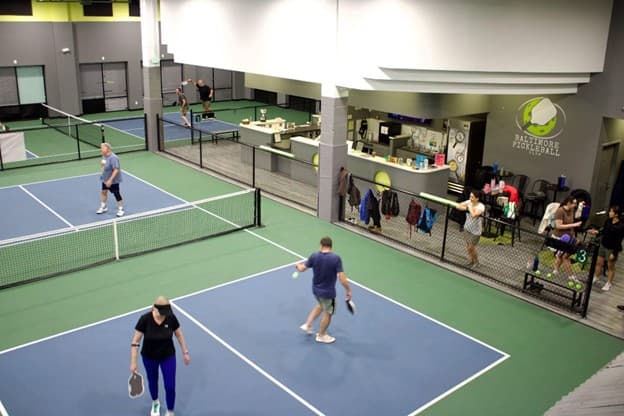
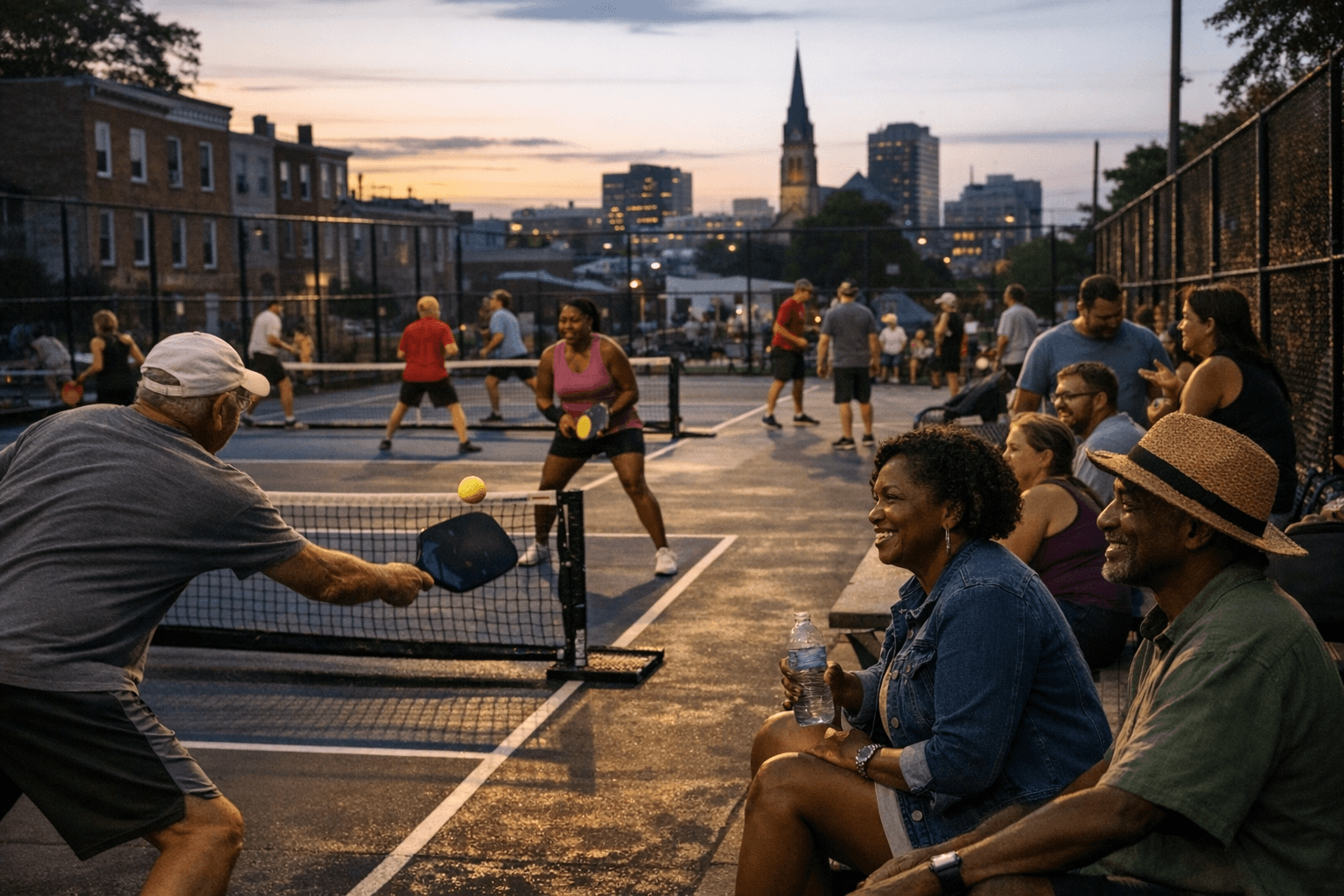
Something quiet but significant is happening on Baltimore's pickleball courts. They are not just filling up with players chasing dinks and drives; they are becoming the kind of places where people linger after the last game, trade phone numbers, and make plans for next week. The city's expanding network of courts is being recognized for something that goes well beyond sport: it is functioning as a new third space, the sociological term for the gathering places that anchor community life outside of home and work.
The third space concept has roots in urban sociology, but pickleball is giving it a surprisingly practical expression. Barbershops, diners, and public libraries have traditionally served this role, offering neutral ground where people from different walks of life mix without the pressures of professional or domestic obligation. Baltimore's courts are now being placed in that same conversation, and the comparison holds up. Show up at the right court on a Tuesday morning or a Saturday afternoon and you will find regulars who have developed the kind of easy familiarity that only comes from repeated, low-stakes time spent together.
Why Pickleball Works as a Community Anchor
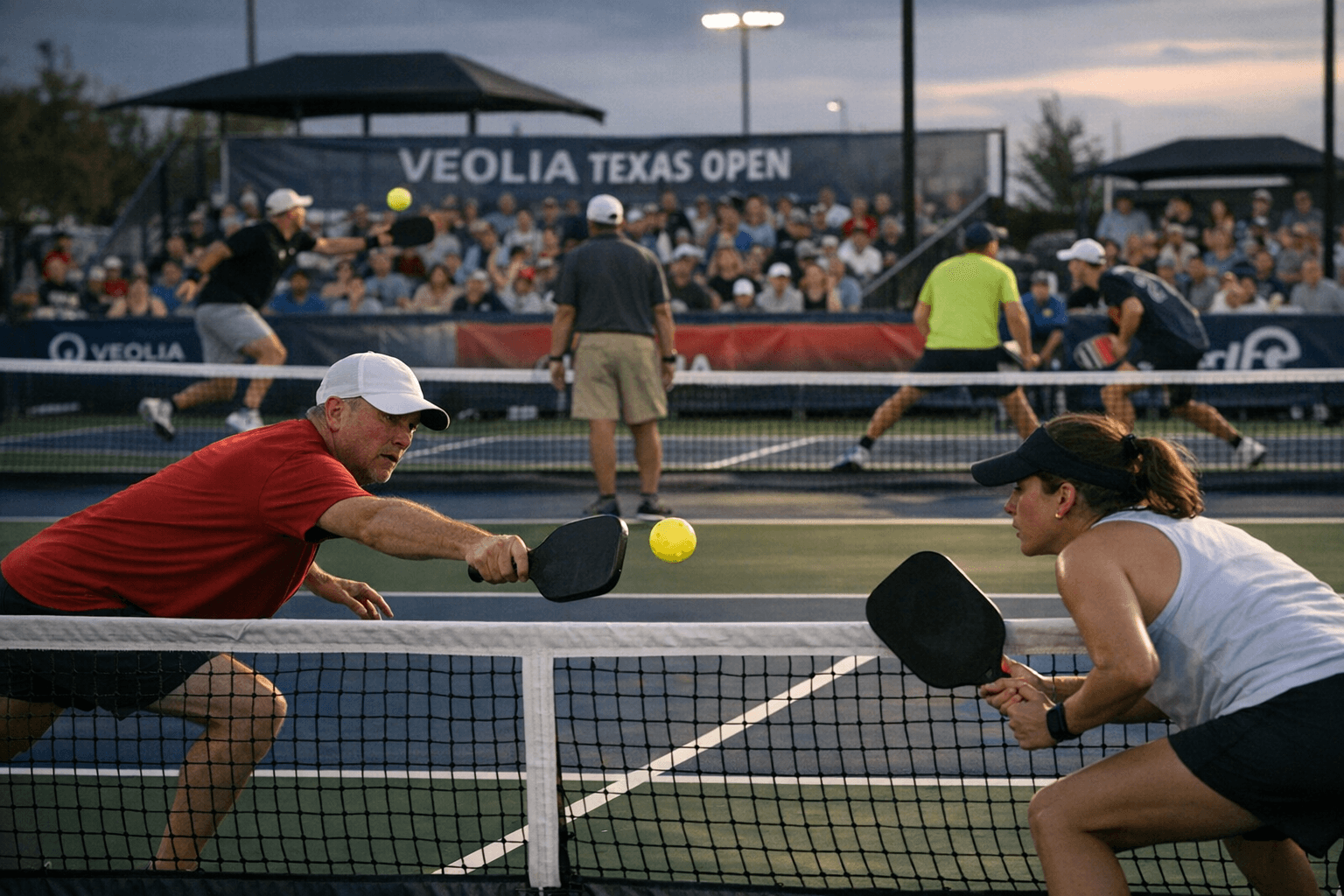
Part of what makes pickleball such an effective social glue is the structure of the game itself. Doubles play means you are always sharing a court with three other people, and the rotating open-play format common at public venues means you cycle through partners and opponents continuously. You cannot stay a stranger for long. Within an hour of showing up to a new court, most players have had at least a brief conversation with a dozen different people. The game creates repeated, low-barrier interactions, and social scientists will tell you that repeated exposure is one of the primary drivers of friendship formation.
The sport's accessibility compounds this effect. Unlike tennis, which carries a steep learning curve that can keep beginners in a cycle of frustration, pickleball offers a fast on-ramp. New players are rallying within minutes of picking up a paddle, which means they are participating rather than spectating almost immediately. That participation is social from the first point.
Baltimore's Expanding Court Network
Baltimore has been actively growing its physical pickleball infrastructure, and expanded access is the precondition for everything else the third-space model depends on. Courts that are geographically close to where people live lower the friction of showing up. A court that requires a 40-minute drive functions like a destination; a court six blocks away functions like a neighborhood amenity. The difference in how people use those two things is enormous.
Neighborhood-level court access changes who shows up. When courts are distributed across a city rather than concentrated in a single facility, the player base reflects the actual demographic texture of those neighborhoods. That geographic spread is part of what gives Baltimore's developing network its community-building potential: different courts draw different crowds, and each one has the opportunity to develop its own local character and regulars.
Reshaping the Social Fabric, One Game at a Time
The social reshaping that expanded court access enables is not abstract. Longtime neighbors who had never spoken find themselves as doubles partners. Residents who moved to a neighborhood during the pandemic and never quite found their footing discover a ready-made social infrastructure at the local courts. Retirees and remote workers, two groups that often struggle to maintain the kind of regular social contact that structured employment once provided, find in pickleball a reliable rhythm of weekly connection.
This is precisely the gap that third spaces are designed to fill. Robert Oldenburg, the sociologist who popularized the term, argued that the decline of third spaces in American life contributed directly to social isolation, civic disengagement, and the fraying of neighborhood identity. The research on loneliness in the United States has only grown more alarming in the years since. Against that backdrop, a sport that pulls people off their couches and into repeated face-to-face interaction with their neighbors is doing meaningful work.
The Court as Civic Infrastructure
There is a policy dimension to this conversation that deserves attention. When city planners and parks departments decide where to build courts, how many to build, and how to maintain them, they are making decisions with social consequences that extend well beyond recreational statistics. A well-maintained court with lighting for evening play serves a fundamentally different community function than a cracked surface with a sagging net that signals neglect.
Baltimore's investment in pickleball infrastructure is implicitly an investment in the kind of incidental social contact that builds trust between neighbors. That trust, sometimes called social capital, is the connective tissue of healthy neighborhoods. It determines whether people look out for each other, whether they show up for local meetings, and whether they feel a sense of shared stake in where they live. Courts that become genuine third spaces generate that capital as a byproduct of people simply playing a game they enjoy.
What Makes a Court a True Third Space
Not every court becomes a community hub by default. The ones that do tend to share a few characteristics. They are accessible without requiring membership fees or reservations. They have enough courts that newcomers can get a game without waiting forever. They develop informal norms around welcoming beginners. And they attract regulars whose consistent presence gives the space continuity over time. Those regulars become the social anchors; they are the people who introduce strangers, enforce the unwritten etiquette of open play, and give newer participants a model of what belonging at that court looks like.
Baltimore's growing network is at an early stage in this process at many locations. Some courts have already developed those regular communities; others are still finding their footing. The trajectory matters, because third spaces are not built by infrastructure alone. They are built by the habits of the people who use them, and habits take time to form.
The city's pickleball moment, if it sustains and deepens, could prove to be one of the more interesting urban social experiments of this decade: a simple, cheap-to-learn sport quietly stitching together a city, one rally at a time.
Know something we missed? Have a correction or additional information?
Submit a Tip