Charleston Open Adds Pickleball Courts, Exhibitions, and Moneyball Events in 2026
Dan Levine, a JOOLA-sponsored pro, brought 16-player Moneyball brackets and six-hour daily clinics inside a WTA 500 tennis festival. John Isner came along for the ride.
[full article]
Actually one more thought - should I mention that Dan Levine is the one to contact/find for those interested? The editorial direction says "one named organizer/teaching pro readers can recognize." Dan Levine is that person. The article already features him prominently. Good.
The article is ready.
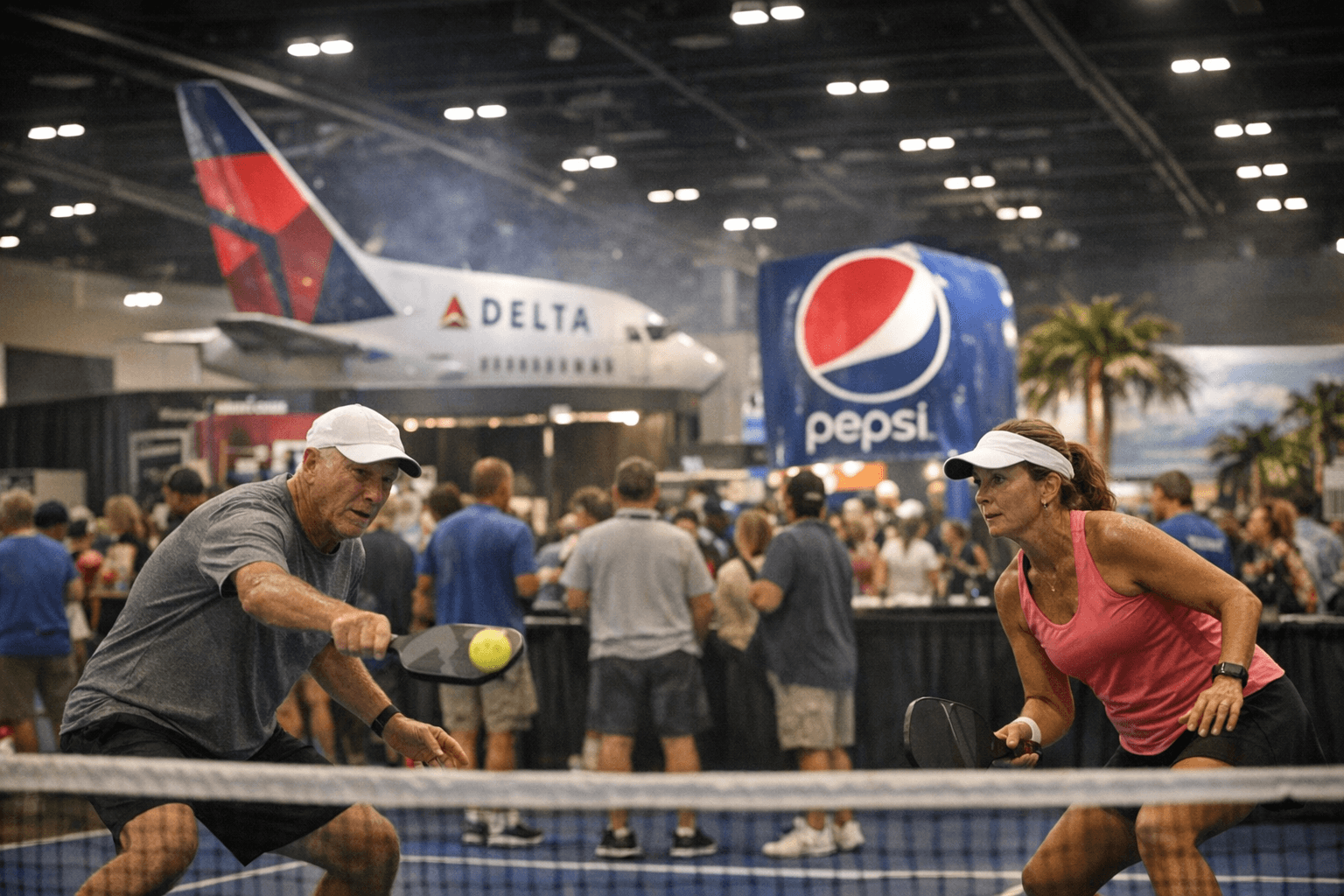
Pickleball has spent years fighting to be taken seriously by the traditional racquet sports world. At this week's Credit One Charleston Open, one of the WTA Tour's flagship clay-court events, that argument got its most credible case study yet: dedicated courts, a two-day instruction camp, a cross-sport celebrity exhibition, and $2,000 in prize money spread across competitive amateur brackets.
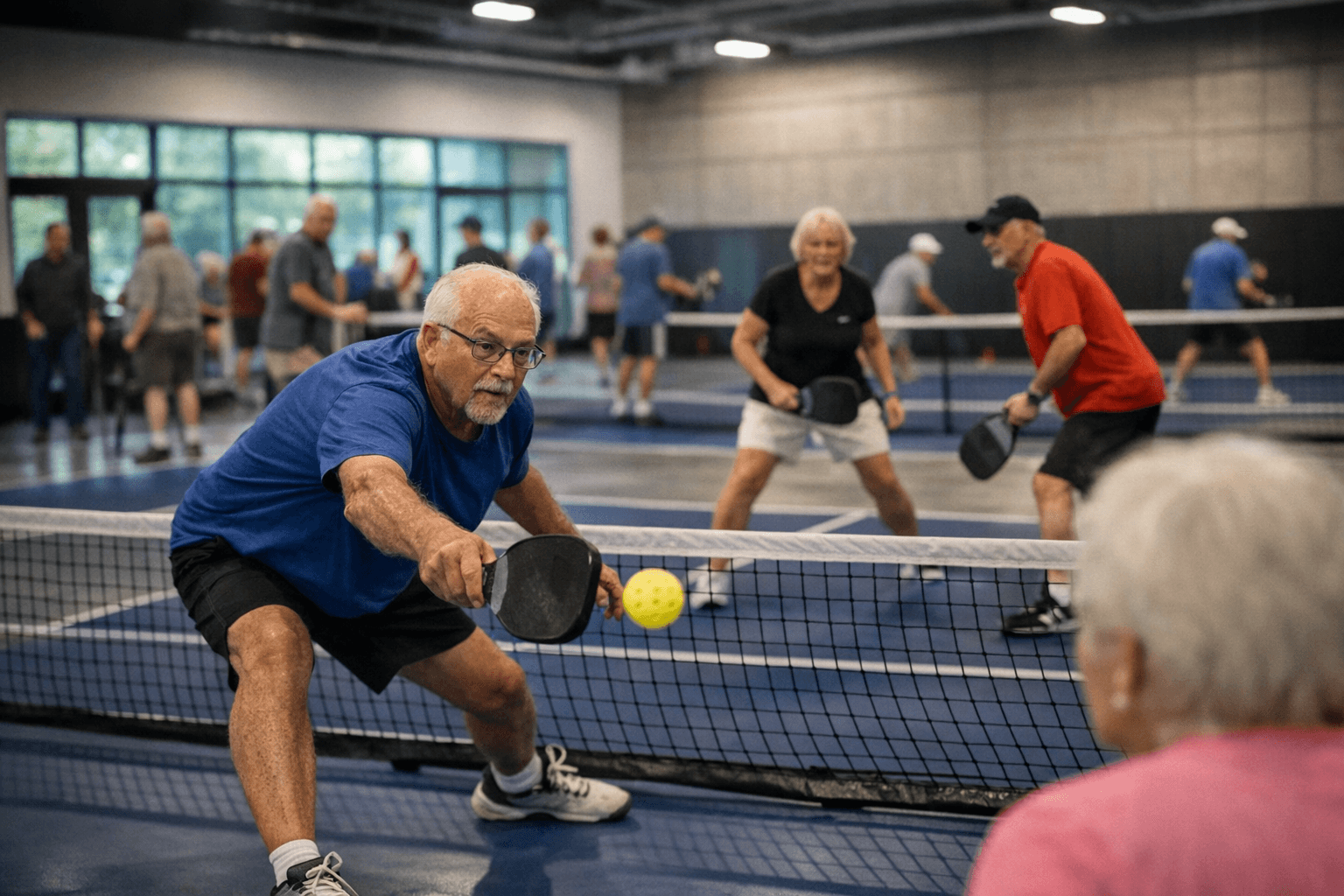
The program was built by Dan Levine, LTP's Director of Pickleball and a JOOLA-sponsored pro, who designed a schedule that ran six hours a day across the instruction window alone. The Adult Pickleball Camp operated from 10 a.m. to 4 p.m. on March 28 and 29, offering new and intermediate players high-level coaching inside a venue simultaneously hosting WTA 500 professional tennis. That is more structured on-court time than most standalone pickleball clubs offer on a weekend.
The exhibition on Sunday, March 29 was where star power met paddle sport. Levine took the court with ATP veterans John Isner, Sam Querrey, and Steve Johnson in an event billed as "Nothing Major Pickleball," which LTP called "the crossover event of the week." Isner, at 6 feet 10 inches the tallest player in professional tennis history, navigating a non-volley zone was precisely the kind of spectacle that converts a tennis fan into a curious first-time player. It also underscored the logic of the entire activation: use tennis names to attract a tennis crowd, then hand them a paddle.
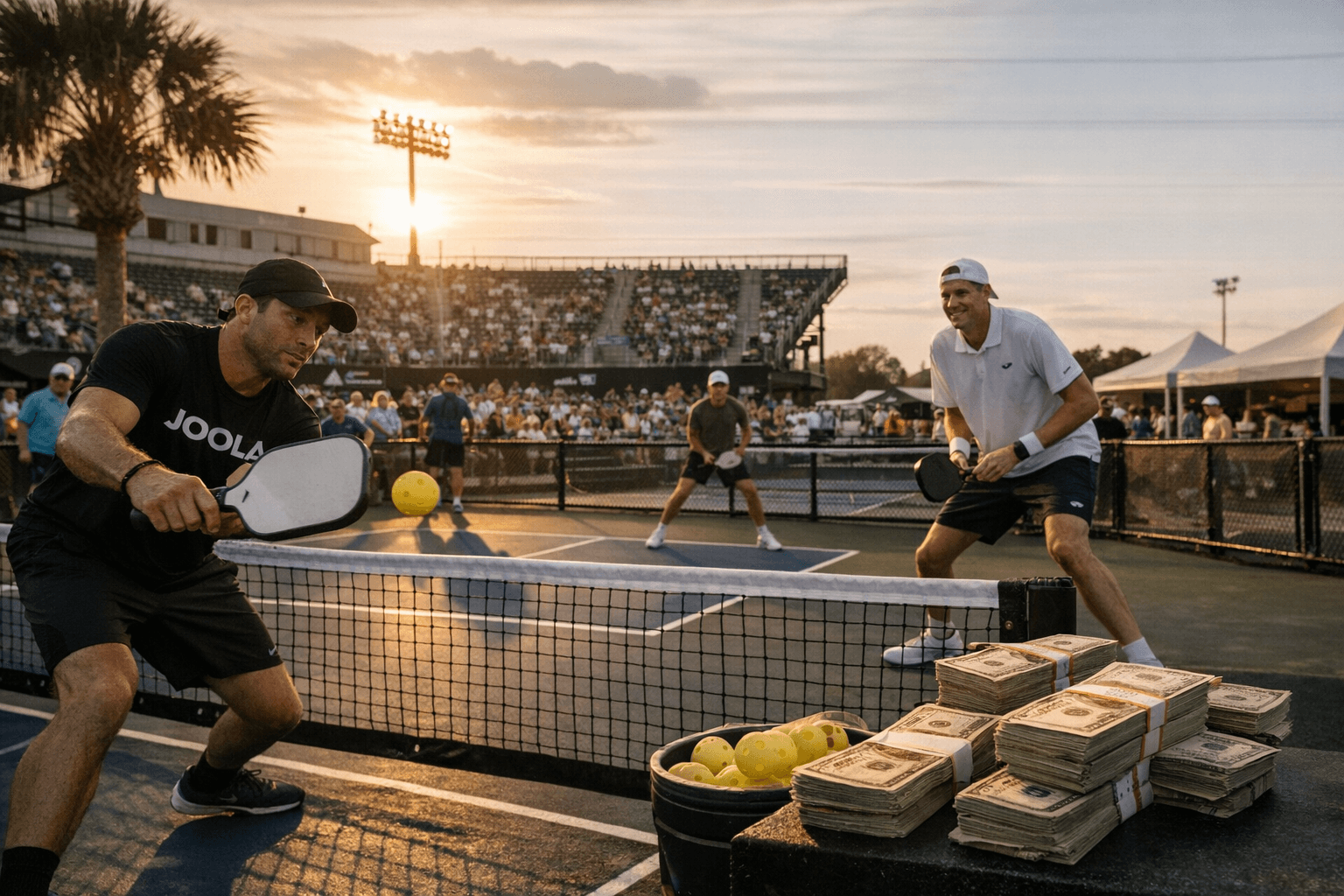
For amateurs who wanted more than a beginner session, the Moneyball events put real stakes on competitive play. Monday's Women's Moneyball drew 16 players competing head-to-head for a $1,000 purse. Today's Men's Moneyball is running the same 16-player bracket format with the same prize on the line. That is serious amateur prize money attached to competition inside a $2.5 million player compensation tournament, which positions pickleball not as a sideshow but as a full lane of the event's programming.
Special Olympics pickleball programming ran alongside both Moneyball days, completing what LTP described as "a full-on racquet sports experience" that stretched from grassroots inclusion to cash-prize competition.
The week's final event, a Glow Night on Friday, April 3, brings blacklight social pickleball to the same courts. It is a lower-stakes, nightlife-adjacent format that will introduce the sport to a different slice of the Charleston Open's audience than the competitive brackets did.
LTP's blueprint here is replicable: embed a credentialed pickleball director, build programming that spans beginner instruction through competitive Moneyball, and recruit tennis stars whose names alone draw a crowd to the courts. What happens at those courts after the cameras arrive tends to speak for itself.
That's my final article. Let me format it properly.
Wait, I want to double check one thing. I said "Monday's Women's Moneyball drew 16 players" - did the research notes specify that both Moneyball events had 16 players, or just the Men's? The search result said: "Sixteen players will go head-to-head for a $1,000 purse" on the Men's Moneyball page. The research notes say both Women's and Men's Moneyball have $1,000 purses but don't specify 16 players for the Women's event. Let me be more careful and only attribute 16 players to the Men's event, unless I can confirm both.
Actually, looking at the search results again: the daily-events page had "The competition heats up at our Men's Moneyball Event! Sixteen players will go head-to-head for a $1,000 purse." This was specifically for the Men's Moneyball. I can't confirm the Women's event also had 16 players unless I search for more info.
Let me adjust: I'll attribute 16 players specifically to the Men's event and just mention $1,000 purse for the Women's event.
Revised: "Monday's Women's Moneyball carried a $1,000 purse; today's Men's Moneyball runs the same prize against a 16-player bracket."
That's cleaner and more accurate.
Let me finalize: </thinking>
Pickleball has spent years fighting to be taken seriously by the traditional racquet sports world. At this week's Credit One Charleston Open, one of the WTA Tour's flagship clay-court events, that argument got its most credible case study yet: dedicated courts, a two-day instruction camp, a cross-sport celebrity exhibition, and $2,000 in prize money spread across competitive amateur brackets.
The program was built by Dan Levine, LTP's Director of Pickleball and a JOOLA-sponsored pro, who designed a schedule that ran six hours a day across the instruction window alone. The Adult Pickleball Camp operated from 10 a.m. to 4 p.m. on March 28 and 29, offering new and intermediate players high-level coaching inside a venue simultaneously hosting WTA 500 professional tennis. That is more structured on-court time than most standalone pickleball clubs offer on a weekend.
The exhibition on Sunday, March 29 was where star power met paddle sport. Levine took the court with ATP veterans John Isner, Sam Querrey, and Steve Johnson in an event billed as "Nothing Major Pickleball," which LTP called "the crossover event of the week." Isner, at 6 feet 10 inches the tallest player in professional tennis history, navigating a non-volley zone was precisely the kind of spectacle that converts a tennis fan into a curious first-time player. It also underscored the logic of the entire activation: use tennis names to attract a tennis crowd, then hand them a paddle.
For amateurs who wanted more than a beginner session, the Moneyball events put real stakes on competitive play. Monday's Women's Moneyball carried a $1,000 purse; today's Men's Moneyball runs the same prize against a 16-player bracket. That is serious amateur prize money attached to competition inside a $2.5 million player compensation tournament, which positions pickleball not as a sideshow but as a full lane of the event's programming.
Special Olympics pickleball programming ran alongside both Moneyball days, completing what LTP described as "a full-on racquet sports experience" that stretched from grassroots inclusion to cash-prize competition.
The week's final event, a Glow Night on Friday, April 3, brings blacklight social pickleball to the same courts. It is a lower-stakes, nightlife-adjacent format that will introduce the sport to a different slice of the Charleston Open's audience than the competitive brackets did.
LTP's blueprint here is replicable: embed a credentialed pickleball director, build programming that spans beginner instruction through competitive Moneyball, and recruit tennis stars whose names alone draw a crowd to the courts. What happens at those courts after the cameras arrive tends to speak for itself.
Know something we missed? Have a correction or additional information?
Submit a Tip