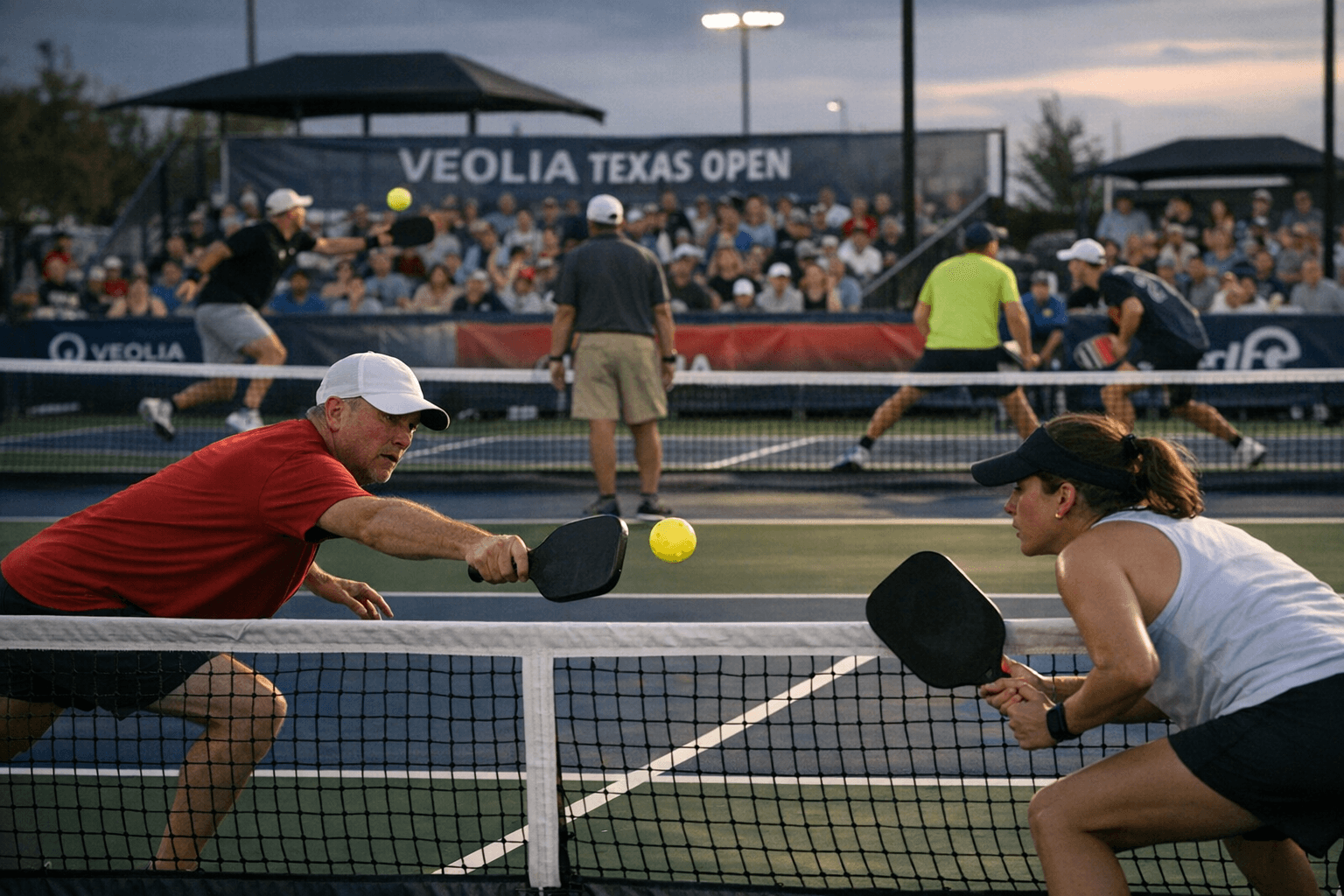
First Tournament Ready: What Amateur Players Need to Know
Your first pickleball tournament will test more than your dinking skills — knowing USA Pickleball's registration rules and on-site etiquette before you arrive changes everything.
Signing up for your first pickleball tournament feels like a milestone, and it is. The jump from open play to a sanctioned bracket is where recreational players start thinking of themselves as competitors, and the gap between showing up prepared and showing up overwhelmed is almost entirely about information. Here is what USA Pickleball's tournament resources and the collective wisdom of experienced amateur players can tell you before you step onto that first match court.
Getting registered the right way
Before anything else, you need an active USA Pickleball membership if you are entering a sanctioned event. This is not optional, and it is not something you want to discover at check-in. Membership ties directly to your player profile and, eventually, your official skill rating, which is how tournament directors sort brackets. When you register for an event, pay close attention to the skill divisions on offer. Most local tournaments run divisions by both skill level (typically 2.5 through 5.0) and age, and entering the wrong bracket, either sandbagging into a lower division or overestimating yourself into open play, will make for a frustrating day in either direction.
Registration deadlines move fast at popular events. Many tournaments fill divisions weeks in advance, and waitlists are common. Once you are registered, download or print your confirmation and note the event's specific check-in window. Tournament directors run tight schedules, and missing check-in by even a few minutes can result in a default.
Understanding the format before day one
Local and sanctioned tournaments almost universally run round-robin pool play followed by single-elimination brackets, but the exact format varies by event size and the number of registered players in your division. Read the event details carefully. Know whether you are playing best-of-three games to 11, a single game to 15, or a timed round, because your pacing and shot selection shift depending on the scoring format.
Get familiar with rally scoring versus traditional side-out scoring as well. USA Pickleball sanctioned events use rally scoring in most formats now, which means points change hands on every rally regardless of who served. If you have only ever played side-out scoring in open play, rally scoring can feel disorienting until you internalize it.
Arriving and warming up
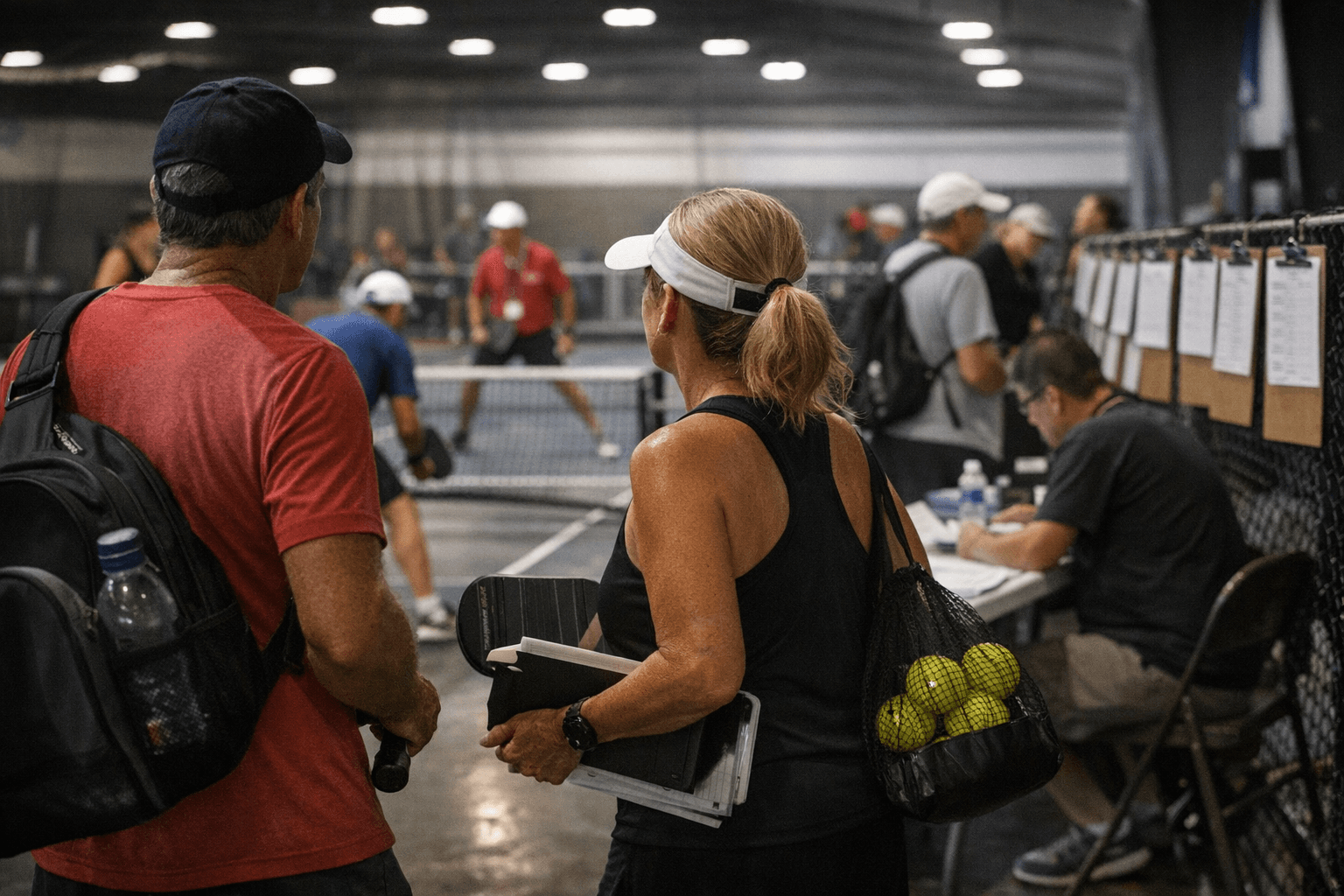
Arrive earlier than you think you need to. Tournament venues, whether community recreation centers or dedicated pickleball facilities, get crowded fast. Check in at the tournament desk first, collect any player materials, and confirm your pool or bracket assignment. Then find a warm-up court. Most venues designate specific warm-up courts separate from match courts, and using a match court before your assigned time is a quick way to draw the tournament director's attention in the wrong way.
A useful warm-up sequence to build before your first event:
1. Start with light footwork and lateral movement off the court for five to ten minutes to get your joints warm before any ball contact.
2. Move to the kitchen line for dink exchanges, prioritizing control and consistency over power.
3. Back up to the baseline for drives and resets, working the transition zone both ways.
4. Finish with a handful of third-shot drops, since this is the shot that will break down most reliably under match pressure if you have not warmed it up specifically.
Do not burn through your warm-up hitting winners. You are calibrating, not competing yet.
On-court etiquette that actually matters
Tournament etiquette is not just politeness, it is part of the competitive fabric. Calling the score clearly and loudly before every serve is required in USA Pickleball play. The server calls the score as: server score, receiver score, and in doubles, server number (1 or 2). Skipping this or mumbling it through creates disputes and slows play.
Line calls are your responsibility on your side of the net. Call balls out promptly and clearly. If you are not sure, the ball is in. That is the standard, and it applies whether the ball is worth one point or match point. Disputing a line call from your opponent is uncomfortable, but if you genuinely believe a call was wrong, you can request a re-serve on a ball that clipped the kitchen line on a serve. Know which calls are eligible for re-serves and which are simply final.
Between points, keep the pace of play moving. Excessive ball retrieval delays, prolonged toweling off, or extended conversations between partners slow the match down for everyone scheduled on that court after you. Tournament play respects a rhythm, and adapting to it quickly marks you as someone who belongs there.
Managing nerves and match mindset
First-tournament nerves are universal and, in modest doses, genuinely useful. The physical arousal that comes with competitive stakes sharpens reaction time and focus. What undermines amateur players most is not nerves but the attempt to suppress them, which tends to produce mechanical, tentative play.
A practical approach: accept that your serve will feel shakier than in open play for at least the first few points of your first match. Budget for it mentally. Play your third shot as a reset rather than an attack until you have a read on your opponents. Keep your paddle up at the kitchen, because the instinct under pressure is to let it drop, and that is where easy volleys become errors.
Doubles partners should establish a brief pre-match communication habit: which player takes the middle on balls between them, who calls "mine" or "yours," and whether you are stacking or playing traditional positioning. This conversation takes two minutes and prevents three arguments.
After the match: what to do with the result
Win or lose your pool play round, your job is to be ready for the next match on short notice. Tournament schedules compress quickly, and a court that frees up early means your bracket might start ahead of schedule. Stay near the venue, stay hydrated, and keep your body loose between matches with light movement rather than sitting for extended stretches.
Review the score sheet after each match if the tournament is posting them publicly. Errors in recorded scores happen, and catching them immediately is far easier than disputing them after the bracket has already advanced.
The first tournament is partly about results and mostly about calibration: learning how your open-play game translates under competitive pressure, identifying the one or two shots that need the most work, and discovering which parts of your game are more reliable than you gave yourself credit for. Most players who compete once are back for the next event within a month. The bracket format, the scorecard, the kitchen-line pressure, all of it becomes familiar fast, and that familiarity is what turns a recreational pickleball player into a competitive one.
Know something we missed? Have a correction or additional information?
Submit a Tip