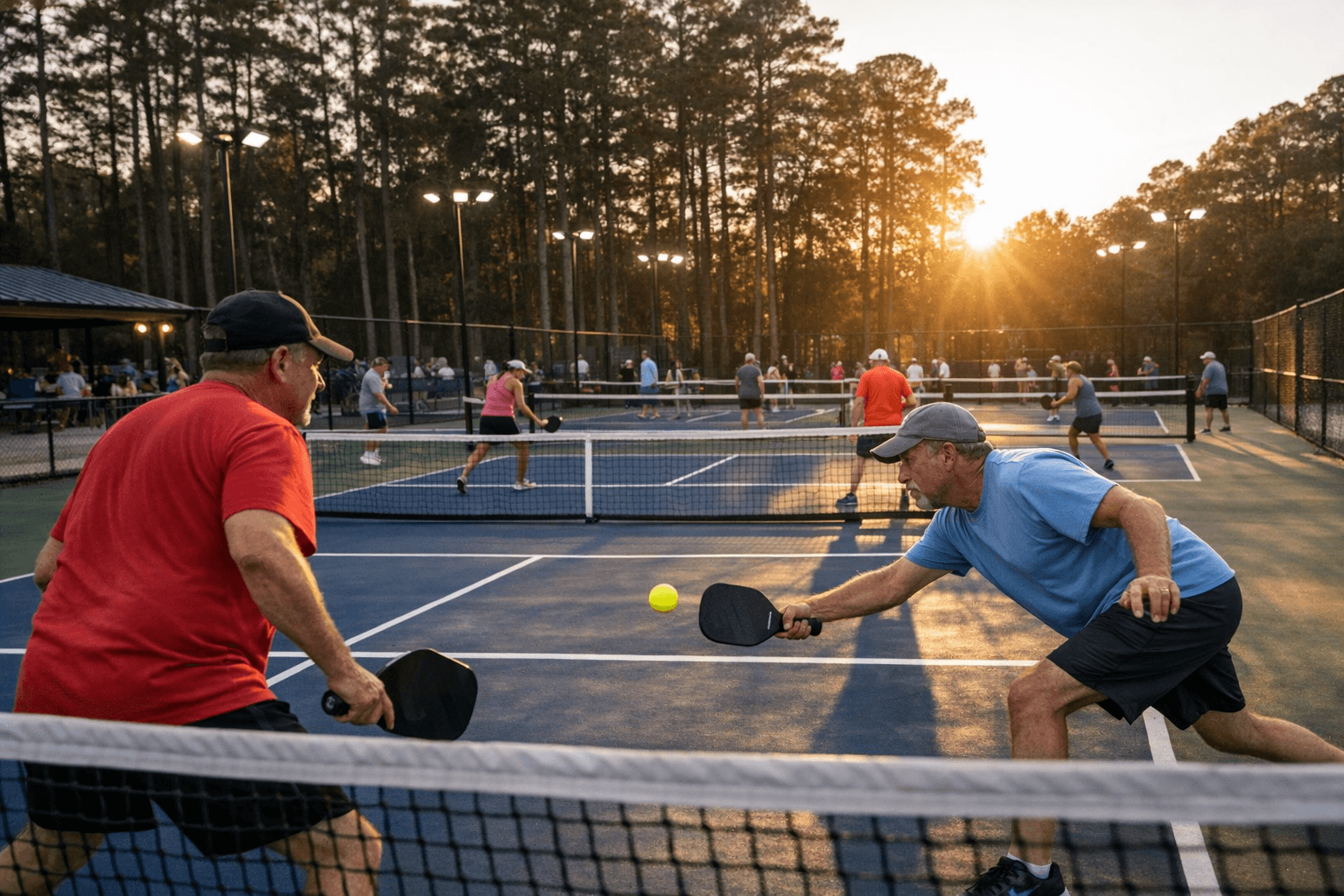
Rally Pickleball Blends Courts, Food and Bar Service to Build Community
Rally Pickleball is rewriting what a court facility can be, pairing high-end food, bar service and coffee-shop atmosphere with play to turn venues into true community hubs.
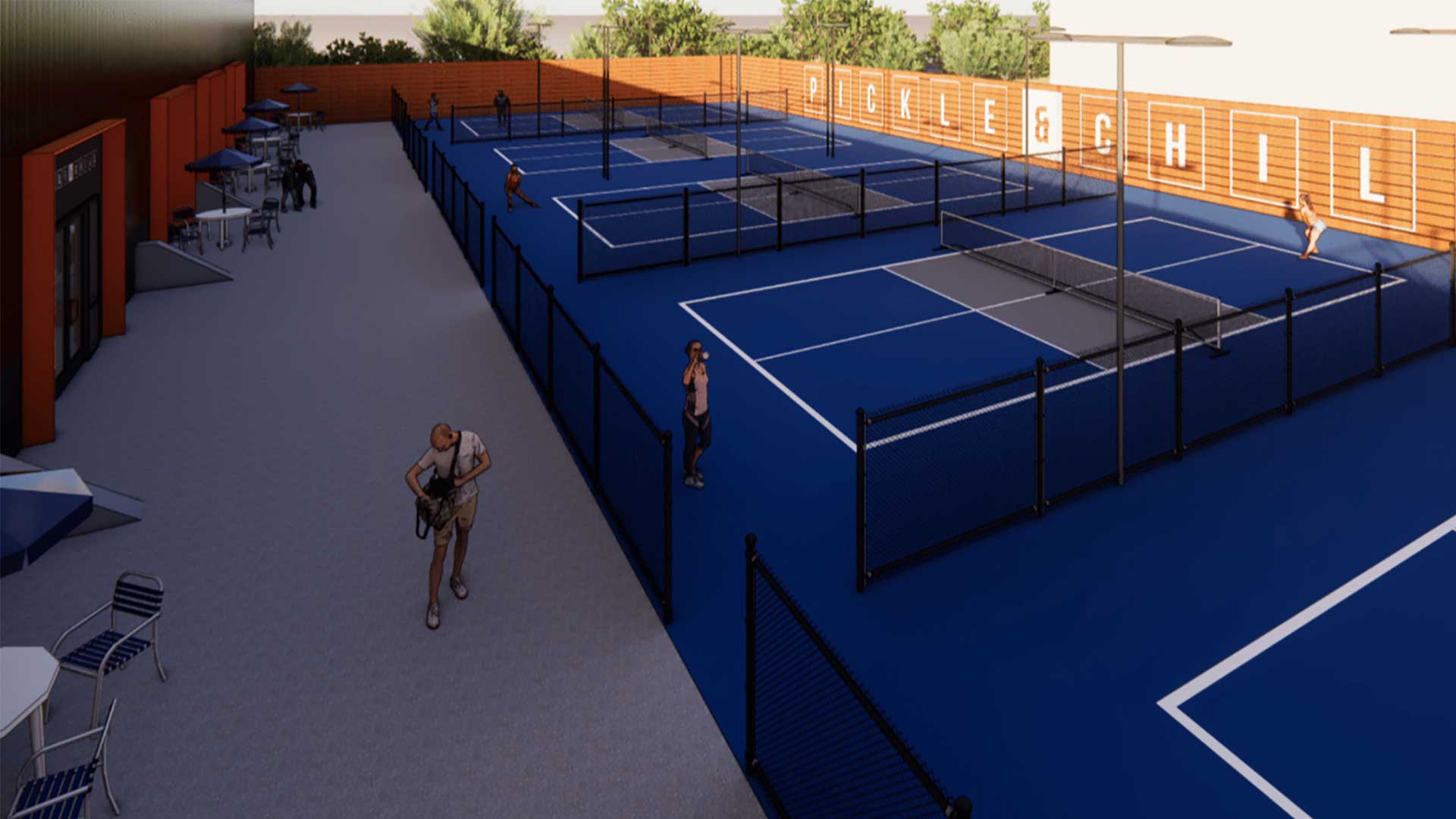
Coffee shop in the morning, bar at night, pickleball all day. That is the vision Rally Pickleball is building toward, and it represents one of the more compelling shifts happening in the amateur game right now. Rather than offering bare courts and a vending machine, Rally pairs its playing surfaces with coffee-shop vibes, high-end food and bar service, and dedicated event space, framing the whole operation around a single idea: a pickleball facility should feel like a community gathering place, not just somewhere you show up, play, and leave.
That framing matters more than it might first appear. Pickleball has spent years growing on the strength of its accessibility and social culture, but the venues hosting the game have often lagged behind those values. Rally is betting that closing that gap, by investing as seriously in the hospitality side as the court side, is what turns occasional players into regulars and regulars into a genuine community.
Why Hospitality-First Changes the Game
The logic behind Rally's model has real-world validation on the other side of the planet. PicklePlay, widely recognized as one of Australia's largest indoor pickleball brands, built its scale on essentially the same foundation. According to Pickleball Innovators, "PicklePlay's growth into one of Australia's largest indoor pickleball brands highlights how a hospitality-first operating model can drive scale without sacrificing experience."
The key insight in PicklePlay's approach was treating the court as one part of the product rather than the whole thing. As Pickleball Innovators describes it, "rather than treating courts as the sole product, the brand focused on creating environments that prioritize comfort, service, and community alongside high-quality play." The result of that focus was something courts-only operators struggle to manufacture: genuine repeat visitation. The PicklePlay model, the Pickleball Innovators profile notes, helped "position PicklePlay not just as a place to compete, but as a destination people want to return to."
That distinction, between a place you visit and a destination you return to, is exactly what Rally is chasing with its combination of food, drink and social infrastructure.
The Broader Trend Pickleball Is Joining
Rally's model does not emerge in a vacuum. It is part of a much larger global movement in how people want to spend leisure time, and pickleball is now firmly inside that wave.
Pickleball Innovators frames the arc of this shift clearly: "What started globally with golf simulators and social darts has become large-format, experience-led venues that integrate play, food, drink and social connection, now being tailored to Australian markets." The same pattern is showing up in traditional hospitality venues too. "Pubs and clubs are quietly transforming, adding social sport, arcades, VR, karaoke and flexible event spaces to diversify beyond traditional bar and gaming revenue and attract younger, experience-driven audiences and corporate groups."
Melbourne's new Kingpin venue is cited as a concrete marker of where this trajectory is heading in Australia, with Pickleball Innovators noting that "Australia's social gaming boom isn't coming, it's already here, and Melbourne's new Kingpin is a strong indicator of where venue strategy is heading." The implication for pickleball operators everywhere is direct: venues that combine activity with food, drink and social programming are not a niche experiment; they are becoming the standard that players will increasingly expect.
What Rally Actually Offers
The specific hospitality elements Rally brings to its courts are worth spelling out because they go beyond the typical "we have a snack bar" upgrade. The concept explicitly incorporates coffee-shop vibes as part of the atmosphere, meaning the space is designed to be inviting and relaxed before and after play, not just a waiting area between games. High-end food and bar service elevate the post-match or between-session experience into something worth lingering over. And the inclusion of dedicated event space signals that Rally is thinking about programming, not just drop-in play.
That event space component is particularly significant for the amateur community. Leagues, clinics, round robins, beginner nights, corporate team events, and birthday tournaments all need a venue that can flex between court time and social gathering. A facility with proper event infrastructure can host those experiences in a way a bare-bones court setup simply cannot.
The Drivers Behind Successful Projects
Pickleball Innovators identifies what it describes as four consistent drivers in successful projects of this type, though the full list has not been publicly detailed in available materials. Two are explicit: activity-first customer journeys and strong food and beverage as a core revenue stream. Both of these are directly visible in Rally's model.
Activity-first customer journeys means the design and programming of the space puts the game at the center of the experience rather than treating it as an afterthought. Players come to play, and every other element, the coffee, the food, the bar, the event space, is organized to support and extend that experience rather than distract from it. Strong food and beverage as a core revenue stream means the hospitality side is not a loss-leader amenity bolted onto a court rental business; it is a genuine pillar of how the operation sustains itself financially. That revenue mix matters for venue longevity, which in turn matters for the communities that form around these spaces.
What This Means for Players
For anyone who has played at a facility where the best post-match option was a vending machine or a drive to a restaurant down the road, the Rally model is a direct answer to a gap that has frustrated players for years. The social dimension of pickleball, the kitchen banter, the post-game debrief, the impromptu rematch conversation, is best served when the venue itself supports it rather than ending the moment the last point is played.
PicklePlay's experience in Australia offers a preview of what that looks like at scale. By "pairing thoughtfully designed indoor facilities with social and lifestyle elements, PicklePlay has expanded the appeal of pickleball to a broader audience within the country," per Pickleball Innovators. That broader audience is the point: hospitality-first venues lower the barrier for people who might love the game but find a pure court facility intimidating or unappealing. When the venue feels welcoming to non-players and social visitors as well as competitive regulars, the entire player pool around it grows.
Rally Pickleball is positioning itself at the front of that movement in its market. Whether the model scales the way PicklePlay has in Australia will depend on execution, programming, and community investment over time. But the blueprint is clear, and the direction it points is one the amateur pickleball world has been ready for.
Know something we missed? Have a correction or additional information?
Submit a Tip