Buying Baseball Gear in the Netherlands: A Complete Equipment Guide
Getting started in Dutch baseball doesn't have to break the bank; clubs, classifieds, and smart sizing tips make building your kit straightforward.
Getting kitted out for baseball in the Netherlands is more accessible than most new families expect. Between club loaner programs, a thriving second-hand market, and specialist retailers shipping across the country, there are multiple routes to a complete setup at almost any budget. Knowing what you actually need, how to size it, and where to find it makes all the difference.
What you actually need: the essential kit
The non-negotiables for any new player come down to a handful of items, and understanding the sizing logic behind each one saves both money and frustration.
Glove
A glove is the most personal piece of equipment on the field, and getting the fit right matters from day one. First, confirm which hand the player throws with, since a right-handed thrower wears the glove on the left hand and vice versa. For younger players, glove sizes typically run from 9 to 11 inches; older youth players generally move into the 11 to 12-inch range. If at all possible, try before you buy: the player should be able to close the glove comfortably without straining. A glove that gaps or feels stiff is often simply the wrong size, not a break-in problem.
Bat
Youth bats are measured by both length and weight, and the right combination depends on the child's height and strength. Aluminum and composite youth bats are the standard choice for beginners. One important caveat for competitive play: the KNBSB enforces permitted bat lists at higher competition levels, meaning certain models are restricted depending on the league. Before buying anything beyond a starter bat, check with the club or consult KNBSB regulations, and lean on coaches to match bat length to the player's build.
Helmet
A helmet is non-negotiable and must meet recognized safety standards. It needs to fit snugly, not wobble, and should never be worn with padding removed to compensate for sizing. Modern youth helmets come with ear protection on both sides or just the front-facing ear; which style is appropriate often comes down to club policy, so it's worth asking your club before purchasing. Verify the certification marking on any helmet you buy, particularly second-hand, and avoid bargain-bin options with no visible safety standard.
Cleats and footwear
For most amateur club-level baseball in the Netherlands, turf shoes are the practical, versatile choice. Metal spikes are generally unnecessary at the recreational and youth levels that most Dutch clubs operate at, so there's no need to budget for them unless a coach specifically advises otherwise.
Catcher's gear
If the player will be catching, a properly fitted chest protector, shin guards, and mask are all required. The good news: many Dutch clubs keep catcher's gear available to loan for players trying the position out. Before spending on a full set, ask the club what they have available.
The extras
A complete kit also includes batting gloves, a bat bag to protect equipment in transit, a reliable water bottle, and sun protection for summer training sessions. For older players, a protective cup is standard and worth including from the outset.
Where to buy in the Netherlands
New retail
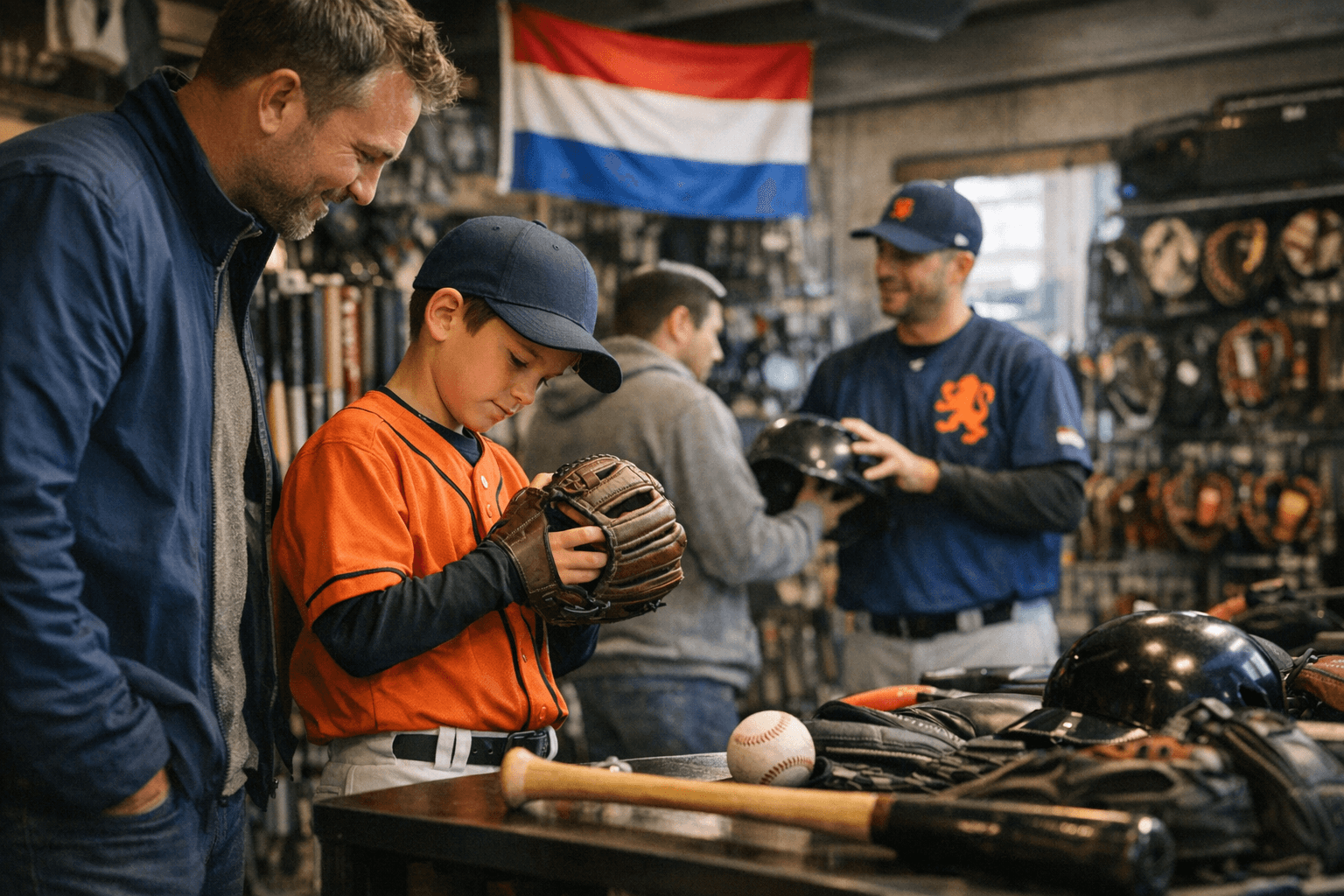
Specialist sporting goods stores in larger Dutch cities carry baseball equipment, and several online hockey and baseball retailers based in the Netherlands stock a solid range of bats, gloves, and helmets. International brands ship to the Netherlands without issue, which broadens your options considerably when local stock is limited on specific sizes or models.
Second-hand: the smart starting point
The Netherlands has a genuinely active second-hand market for baseball equipment. Marktplaats, the country's main classifieds platform, regularly lists used gloves, bats, and helmets at meaningful discounts compared to new retail. The Dutch search terms to use are "honkbal knuppel" for bats and "honkbal handschoen" for gloves; both terms turn up fresh listings on a weekly basis. Club swap sales and baseball-focused social media groups are equally worth monitoring.
When inspecting second-hand gear, be thorough:
- Check bats for shaft cracks, dents, or any bend that could compromise safety or performance
- Inspect glove leather for deep cracking, broken lacing, or web integrity issues
- Verify that helmets carry visible safety certification and show no sign of impact damage
A glove in good leather condition is almost always worth buying used. A bat with any structural concern is not.
Club loaners
Before spending a single euro on helmets or gloves, ask the club directly what they have available. Most Dutch clubs keep a loan set of helmets and basic gloves for first-time participants and trialists. Using the club's gear for the first few sessions confirms fit preferences and gives the player time to decide what they actually want before committing to a purchase.
Budgeting for a first season
A starter setup for a youth player can be genuinely modest: a used glove in good condition, a certified helmet, and basic cleats or turf shoes cover the core requirements. Many families deliberately spread purchases across the first season rather than buying everything upfront, which makes sense given that a child's interest and positional role both take time to settle. Upgrading to better equipment as the player progresses is a natural, cost-effective approach rather than front-loading a large investment.
Putting it all together
The most cost-effective and safe approach to equipping a Dutch baseball player combines two distinct resources: federation guidance for the rules side (KNBSB regulations on permitted bats, safety standards, and competition requirements) and local club advice for the practical side (brand fit, sizing, and what the club already has in stock). Neither works as well without the other. Clubs and classifieds platforms both play a central role in keeping youth baseball accessible across the country, and leaning on both from the start puts new players on the field faster and for less than going it alone through retail.
Know something we missed? Have a correction or additional information?
Submit a Tip