Emmen’s Bedrocks celebrates 45 years, bets on Baseball5 growth
Bedrocks is using a 45th-anniversary spotlight to connect BeeBall, Baseball5, and first-team ambition. The Emmen club’s growth plan is as much about access as results.
A club anniversary with a growth plan attached
Bedrocks is not treating its 45th anniversary as a nostalgia exercise. In Emmen, the club is using a public Sportcafé moment to show how tradition, youth access, and Baseball5 can sit in the same development plan, and that matters well beyond Drenthe. For smaller Dutch clubs, the real question is whether they can build a pathway that starts early, stays affordable, and still feeds senior teams. Bedrocks is making the case that the answer may lie in combining a classic baseball identity with newer entry formats that fit modern schedules and spaces.
The central figure in that message is Erik Eilering, a long-time club name in Dutch baseball and now team manager of the Team Kingdom of the Netherlands Baseball5 side. He connects eras in a very practical way. He has spent years around the game, still carries a clear love for the American ballpark atmosphere, and has built his own fandom around the Minnesota Twins and trips to stadiums in the United States. Yet the focus of this moment is not overseas baseball romance. It is Bedrocks in Emmen, and how one club can turn its own history into a reason to widen participation.
Why Baseball5 is the sharpest tool in the club’s kit
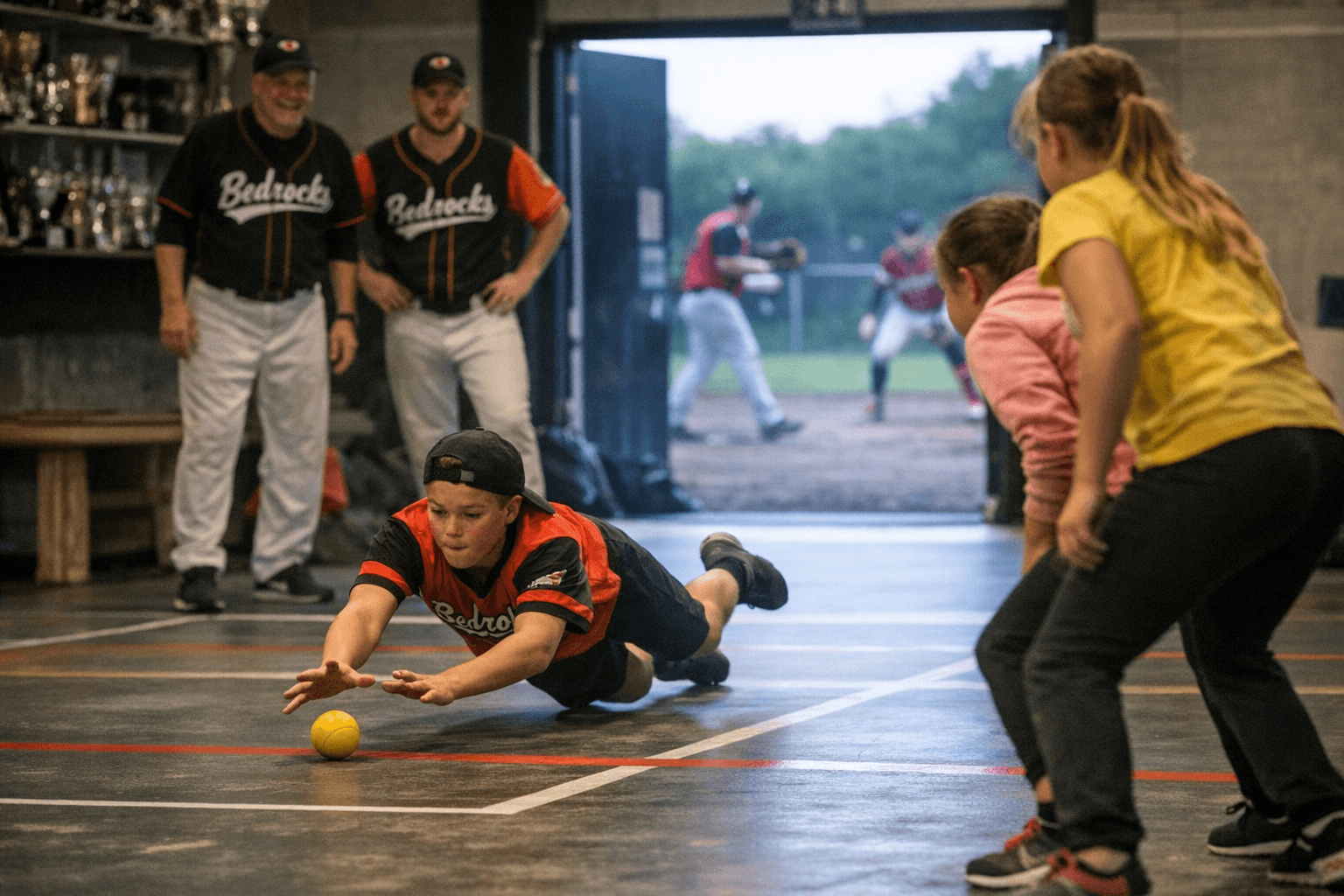
Baseball5 is built for access, and that is exactly why Bedrocks is leaning on it. The World Baseball Softball Confederation describes it as a five-on-five, five-inning street version of baseball and softball that can be played anywhere, on any surface, with just a rubber ball. Its official rules were unveiled in March 2018 after an initial trial period, which means the format is still relatively new but already standardized enough to be used as a serious development tool.
KNBSB frames Baseball5 in similar terms, calling it the urban variant of honkbal en softbal. It is designed without bats or gloves, and the federation highlights how well it fits school gyms and schoolyards. That practical fit is the point. A club that wants to grow cannot rely only on full baseball diamonds, full kit, and a long wait before a child gets a meaningful touch on the ball. Baseball5 shortens the distance between interest and participation, which is why it is becoming such a useful club-building format.
Eilering’s own résumé gives that argument real weight. He won the Dutch title in 2019 with a mixed team, won a tournament in Barcelona, and now manages the Dutch national Baseball5 side. That is a rare combination of local credibility and international legitimacy, and it lets Bedrocks present Baseball5 as more than a side activity. At the club level, the game is one of the clearest ways to pull new players into the sport without asking them to master a full baseball setup on day one.
The youth ladder starts very early in Emmen
The other half of Bedrocks’ strategy is youth development, and that begins before most clubs would even think about a formal baseball pathway. Bedrocks’ BeeBall program is aimed at very young children, with club pages describing it as for ages 5 to 7 on one page and ages 5 to 10 on another. Training is listed on Tuesdays in Emmen, at Sportpark De Meerdijk, which gives the club a repeated weekly touchpoint with families rather than a one-off introduction.
That matters because the club is not just looking for occasional participation. It is building a ladder. Eilering is also teaching at the Angelslo Academy for primary and secondary school pupils, which adds another access point beyond the club gate. KNBSB describes BeeBall as a playful form of baseball for young children, and Bedrocks is clearly using that logic: start with a format that feels accessible, keep the sessions regular, and give children a route into a larger club culture before the sport feels distant or technical.
For a club trying to grow in the north, that early pathway is not a nice extra. It is the infrastructure. A child who starts with BeeBall, sees Baseball5 as a nearby next step, and then enters full baseball later has far more chances to stay in the sport than one who only shows up when the barriers are already high.
Promotion helps, but the club still needs depth
Bedrocks’ first team recently earned promotion, and competition has resumed, but the club is not presenting that as proof that the job is done. Instead, the promotion is part of the same wider identity story: success on the field only holds if the club keeps enough people coming through the system to support it. That is why the youth work and Baseball5 push sit so close to the first-team message.
The club’s Baseball5 page underlines that point by describing the side as ambitious, with multiple titles to its name, and as one of the largest and most active Baseball5 teams in the Netherlands. That is not just branding. It signals that Bedrocks has already found a version of the game that can produce results while also lowering the threshold for entry. For clubs watching from elsewhere in the country, that combination is the key takeaway: growth is easier to sustain when the introductory format is visible, successful, and connected to the main club identity.
A regional network, not a solo effort
Bedrocks also knows that it cannot build everything alone. The club is cooperating with Groningen and Assen to support women’s softball in the north, which shows a willingness to share the load across the region rather than keeping development inside one fence line. That matters in a part of the country where travel, staffing, and day-to-day club management can put real strain on volunteers.
Volunteers remain central to making all of this work. Long away trips and the ordinary business of running training, fixtures, and events still depend on people giving their time. That is why Bedrocks’ approach feels so practical: the club is trying to grow by using formats that fit the lives of families, schools, and volunteers, not by pretending every player can plug into a full traditional pathway from the start.
The club’s public activity in spring 2026, including youth tournaments and other events, suggests it is keeping that pathway visible rather than hidden. With its base at Sportpark De Meerdijk, its early-years BeeBall work, its school connections, and its growing Baseball5 identity, Bedrocks is offering a blueprint that other clubs in the Netherlands will recognize immediately. The message is simple: tradition still matters, but in today’s Dutch baseball landscape, clubs that want to grow need an easier on-ramp, a wider base, and a reason for young players to stay. Bedrocks is betting that Baseball5 can be that bridge.
Know something we missed? Have a correction or additional information?
Submit a Tip