G-honkbal vergroot toegankelijkheid van baseball in Nederland
G-honkbal gives Dutch baseball a practical route into participation for players who need a different setup. Seven clubs were already fielding teams in 2020, with more room for growth.
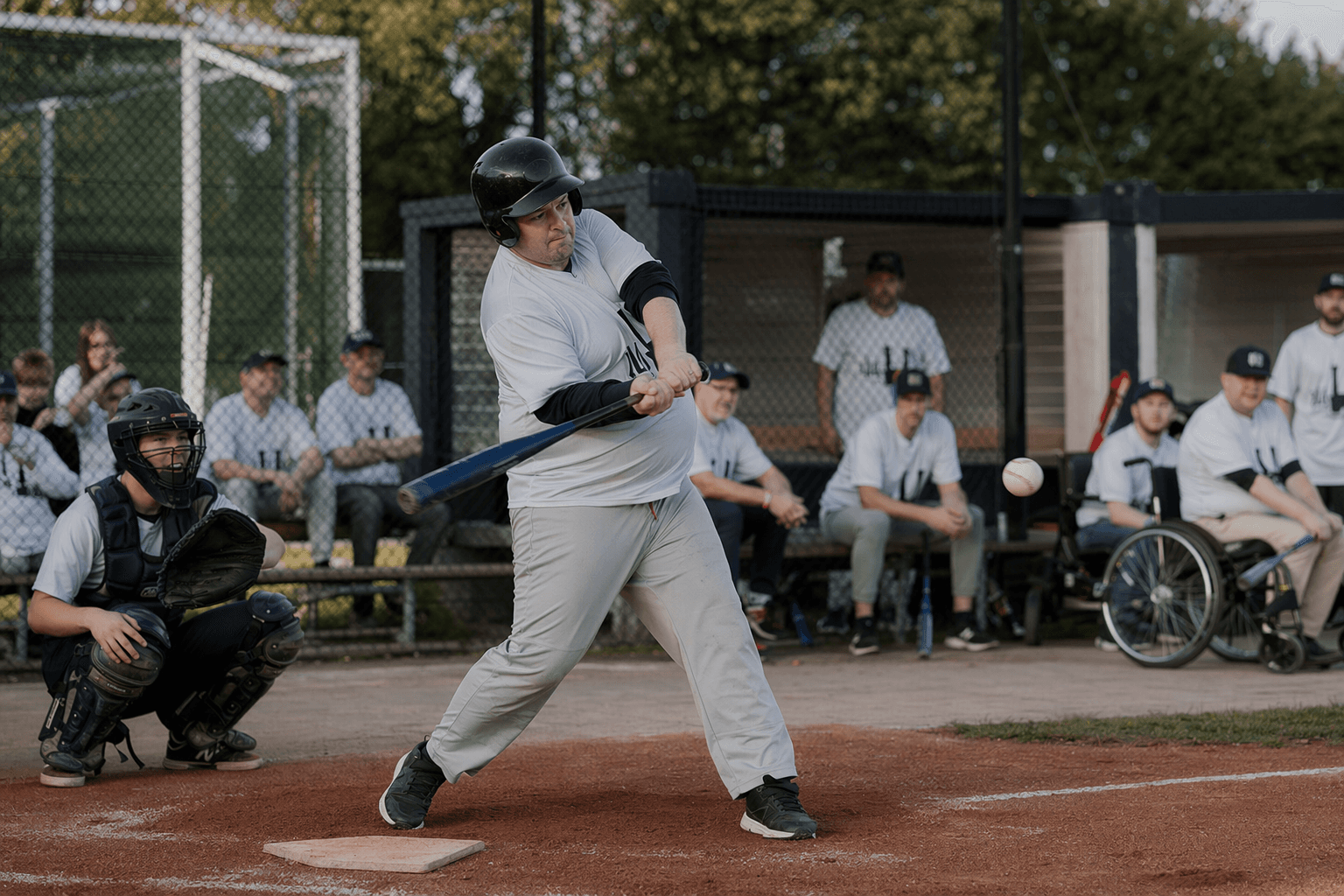
G-honkbal is one of the clearest signs that baseball in the Netherlands is about more than the standard competition ladder. It gives players with a physical and/or intellectual disability a way into the sport through adapted rules, flexible guidance, and a format built around ability rather than exclusion.
A wider entry point into Dutch baseball
The Dutch baseball and softball world already recognises that the sport must be open to more than one type of player. KNBSB describes honkbal and softbal as sports for everyone, including people with a physical and/or intellectual disability, and says it wants to expand sporting opportunities for that group both recreationally and at performance level. Within that para-sport framework, KNBSB names three forms: Baseball for the Blind, G-Honkbal and Wheelchair Softball.
That matters because g-honkbal is not presented as a side project or a charity add-on. It is part of the sport’s infrastructure in the Netherlands, and it gives clubs, coaches and families a concrete way to think about participation. For clubs that want to widen their reach, g-honkbal opens a path to members who may not fit the rhythm, pace or pressure of a regular team structure.
How g-honkbal works in practice
Gehandicaptensport Nederland describes g-honkbal as an adapted form of baseball and softball that is especially suitable for people with an intellectual disability. The key idea is simple: the sport is shaped around the individual, not the other way around. That means the player’s possibilities, skills and wishes are taken into account before the game starts.
In practical terms, that difference is huge. ASC Hilversum Hurricanes describes g-honkbal as an individual sport within a team sport, which captures the balance at the heart of the format. The club also says there are no fixed rules, because the guidance team makes game agreements for each match. That flexibility is what allows the sport to stay safe, understandable and enjoyable for very different players, while still keeping the recognisable feel of baseball.
This is also why g-honkbal can work well for players who might otherwise stay outside the sport altogether. It does not try to copy regular competition baseball one-to-one. Instead, it focuses on pleasure, achievability and customisation, which makes the game accessible without stripping away its identity.
Where the teams are already playing
G-honkbal is not an abstract concept in the Netherlands. Uniek Sporten reported in 2020 that there were seven associations with a G-honkbal team, with examples in Rotterdam, Amsterdam, Den Haag, Leusden and Soest. That is still a small number compared with the wider baseball structure, but it is enough to show that the format is being picked up in several parts of the country.
Local club development is where the story becomes most practical. Uniek Sporten also described how g-honkbal in Amsterdam grew from a simple observation in day care: football was not suitable for everyone. That led Peeters to start the Amsterdam North Stars. It is a useful reminder that inclusion in sport often begins with a very local problem and a very direct solution.
ASC Hilversum Hurricanes shows what that solution can look like inside a broader club. The club says it has about 200 members and 14 teams, which underlines an important point for other associations: inclusive sport does not have to sit outside the normal club model. It can live inside a larger baseball community and strengthen it from within.
Why this matters for clubs and families
For clubs, g-honkbal offers more than a new team. It can become a gateway to new partnerships with local sport and care organisations, especially where players need a gentler introduction to organised sport. It also gives coaches and volunteers a way to build a more flexible culture, one that is based on adaptation instead of selection.
For families and begeleiders, the value is just as clear. The format explains what g-honkbal is, why it works, and how the sport can be organised safely and in a way that fits the player. That makes it easier to imagine a first step into baseball for someone who has never felt the sport was meant for them.
There is also a wider social benefit. Honkbal in the Netherlands is often discussed through youth pathways, recreational teams and the top competition, but g-honkbal shows the sport’s social role much more clearly. It creates a place where participation itself is the outcome.
A place on the national stage
G-honkbal also connects to the biggest multi-sport moment for athletes with a disability in the Netherlands: the Special Olympics National Games. Special Olympics Nederland describes the event as the country’s largest multi-sport event for people with an intellectual disability. The 2024 edition in Breda and Tilburg drew more than 2,100 athletes, and the 2026 Games are scheduled for 12, 13 and 14 June in the region of Haarlem, Haarlemmermeer and Zandvoort.
That 2026 setting is especially meaningful for baseball followers. Haarlem points to honkbal and softbal as typical Haarlem sports that can be part of the Games, which gives the event a strong local baseball identity as well as a national inclusive-sport profile. With more than 3,000 athletes expected in more than 20 sports, the Games will again show how broad the Dutch sporting landscape really is.
Built on a long baseball tradition
The rise of g-honkbal also fits into a much longer Dutch baseball story. KNBSB traces the history of honkbal in the Netherlands back to the beginning of the 20th century, when gymnastics teacher J.C.G. Grasé proposed the sport in 1903 to the Amsterdamschen Bond voor Lichamelijke Opvoeding. That origin matters because it reminds us that Dutch baseball has always evolved by expanding who gets to play.
G-honkbal is the modern expression of that same impulse. It turns accessibility into structure, and structure into participation. For a sport that wants to stay relevant in the Netherlands, that may be one of its most important developments.
Know something we missed? Have a correction or additional information?
Submit a Tip