HCAW publiceert Slagwijdte 2026, met blik op eerste landskampioenschap
With the season already underway, Slagwijdte 2-2026 reads like HCAW’s 2026 roadmap, blending history, youth, and practical advice in one club-minded issue.

A clubblad that sets the tone after opening day
HCAW’s second Slagwijdte of 2026 lands with the season already in motion, and that timing matters. The club is not treating the magazine as a simple recap. Instead, it works as a practical anchor for everyone around the club, from players and volunteers to parents and long-time members who want to understand what kind of year HCAW is trying to build.
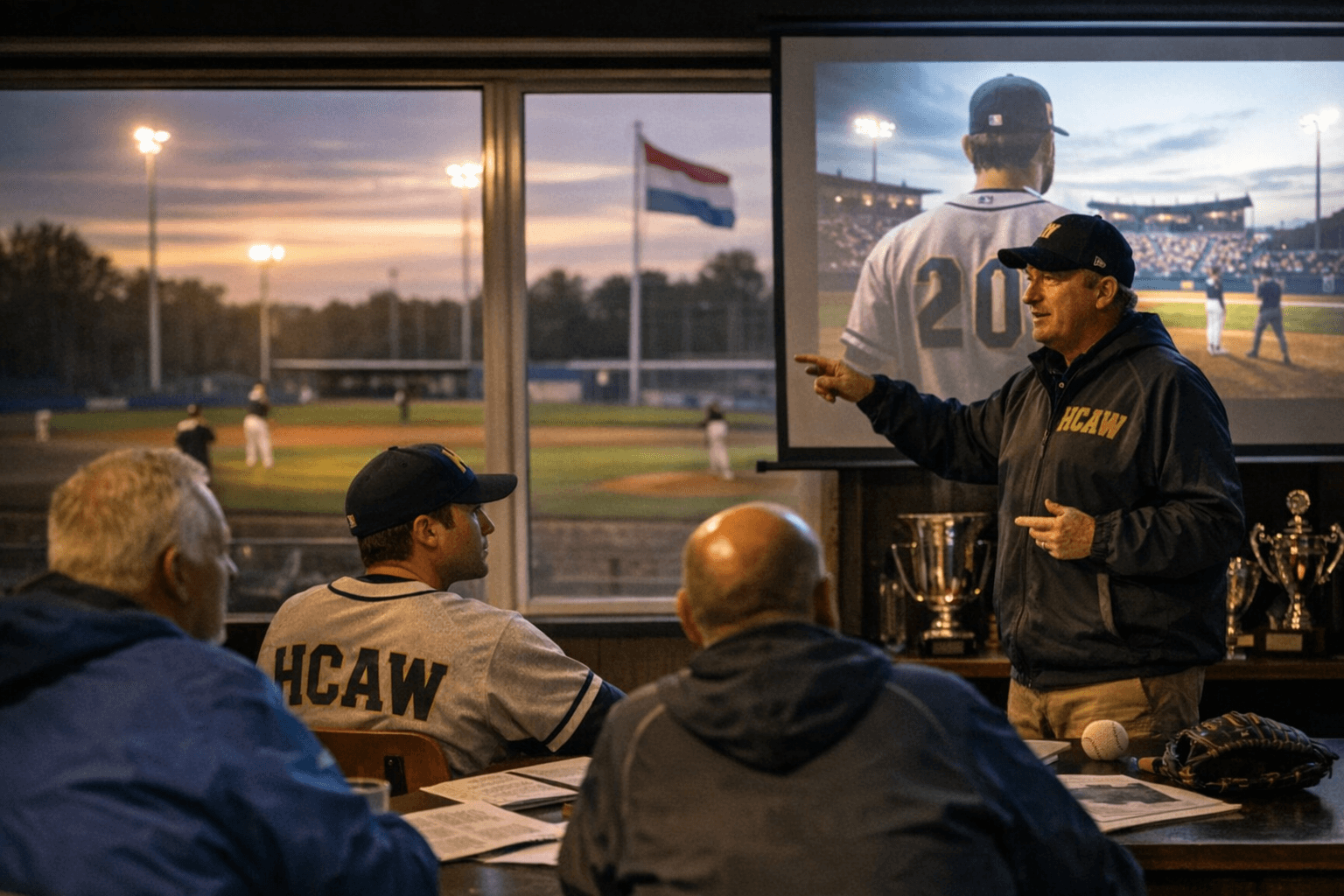
That is the strongest signal in the edition: HCAW wants its communication to feel active, not archival. The club already keeps a Slagwijdte archive on its website, and earlier in the year it made clear that it wants a proper online home for club news and information. The point is bigger than convenience. HCAW says even older generations still want to follow the day-to-day life of the vereniging, and this issue shows a club trying to speak to that full range of people at once.
History is not background here, it is the club’s operating system
The most striking narrative piece in Slagwijdte 2-2026 is the new contribution from Rinus Lobbezoo, who looks back on HCAW’s very first national championship. That is not just nostalgia. It ties the opening weeks of the season to the club’s deepest sporting memory, and it reminds readers that HCAW’s present-day ambitions sit on top of a long, carefully guarded identity.
That identity is rooted in a history the club tells with real pride. HCAW was first founded in 1938 as HC’38, later spent a period as part of Allen Weerbaar, and became independent again in 1957. The club’s own history pages present that lineage as a defining thread, and the Lobbezoo piece fits neatly into that tradition. In a season roadmap, that matters: it tells members that 2026 is not just about the next series or the next result, but about carrying a lineage forward.
For a club like HCAW, that historical framing has practical value too. It gives parents, new players, and younger members a sense that the badge on the chest is tied to something real and durable, not just a current roster or a single campaign. The first landskampioenschap becomes a reference point for what the club believes it can still be.
Youth development sits at the center of the club’s present tense
If the history piece gives the magazine its memory, the youth coverage gives it direction. The youth team of the month in this issue is U21-1, which is a clear sign that HCAW wants the path from junior baseball to senior baseball to remain visible. This is not window dressing. The club’s own structure shows youth baseball running through U12, U15, and U21, with the age category determined by the player’s age on 1 January of the current year.
That structure tells you a lot about how HCAW thinks about development. The pathway is formal, tiered, and easy to read, which is exactly what a club needs if it wants families to understand where a player fits and what comes next. By spotlighting U21-1, HCAW is effectively saying that the bridge between school-age baseball and adult baseball is worth celebrating, not just the first team.
The issue also keeps the younger end of the pipeline in view. HCAW includes a report on U12-1’s trip to a tournament in Brasschaat, which gives the edition a broader youth-development feel. Brasschaat is across the border in Belgium, so the piece also suggests a youth program that is not sealed off from competition outside the Netherlands. Even without turning the report into a blow-by-blow game story, the choice to include it says the club values travel, exposure, and experience as part of development.
That is reinforced by the fact that HCAW still notes room for new players in the U12 age group on its team pages. Taken together, the team-of-the-month feature, the Brasschaat report, and the U12-U21 structure show a club trying to build a clear ladder. The message to parents is simple: there is a place to start, a place to grow, and a place to aim for.
The material side of baseball gets the same treatment as the results
Slagwijdte 2-2026 does not only focus on identity and youth. It also includes a shop contribution with tips on choosing a glove, and that may be the most quietly useful part of the entire issue. It turns the clubblad into something more than reading material. It becomes a hands-on guide for players who need to make a decision about equipment, especially at ages where a glove can shape comfort, confidence, and performance.
That practical tone helps explain why the issue feels so current. A club magazine can easily become a place where memories and announcements sit side by side without much urgency. Here, the glove advice makes the publication feel lived-in. It acknowledges that the season is not only won in the standings, but also in the small daily choices players make about their gear.
The new puzzle page pushes that same idea in a lighter direction. It is a simple addition, but it signals that HCAW wants the clubblad to be a place people open, not just file away. For members, that means a mix of information and play. For families, it means the magazine has a social function as well as an informational one.
A volunteer-made club communication model, not a corporate one
The behind-the-scenes picture matters just as much as the content. HCAW says the website is made and maintained by volunteers, and Slagwijdte 2-2026 is likewise built from the work of several writers. The previous issue’s colofon named Huub Baaij, Kirsten de Gijsel, Rinus Lobbezoo, Hans van Sloten, and Arno Timmermans among the contributors, which gives a sense of how many hands keep the communication moving.
That volunteer structure is not a footnote. It explains the tone of the whole project. The club is not presenting polished, outsourced media. It is presenting a living club voice, shaped by people who know the teams, the history, and the routines of Bussum baseball from the inside. In a community like HCAW, that matters because trust is built by familiarity as much as by polish.
The club’s physical and symbolic home reinforces that continuity. HCAW plays at the Rob Hoffmann Vallei, a name the club has used since 2016, and it also stages the annual Charles Urbanus sr.-toernooi in Bussum. Those names are part of the same larger message: HCAW sees its infrastructure, its events, and its communication as pieces of one long story.
What Slagwijdte 2-2026 says about HCAW’s 2026
If you strip the issue down to its clearest takeaways, three things stand out. First, HCAW wants its identity to be unmistakably historical, with the first national title and the club’s 1938 roots still shaping how it talks about itself. Second, it wants youth development to be legible, from U12 to U21, with clear pathways and visible attention at every stage. Third, it wants the everyday tools of baseball, from a glove to a puzzle page, to feel like part of the same club experience.
That is why this edition works as more than a clubblad. It is a season roadmap, a statement of intent, and a reminder that HCAW’s 2026 is being shaped now, in public, by people who care enough to keep the club’s past, present, and future in the same conversation.
Know something we missed? Have a correction or additional information?
Submit a Tip