Bath Bomb Sellers Get MoCRA Compliance Guide on Labels, Listings, Reporting
A new MoCRA library gives bath-bomb sellers fast answers on labels, listings, and reporting right when federal enforcement is no longer theoretical.
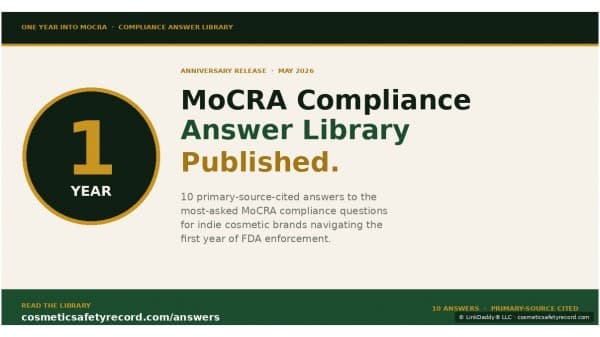
A year into active MoCRA enforcement, bath-bomb sellers are getting a shortcut built for the exact questions that slow down labels, product pages, and retailer outreach. CosmeticSafetyRecord.com has packaged 10 quick-answer compliance topics into a primary-source library aimed at cosmetic brand owners who need clear explanations without digging through dense legal memos.
The shortcut indie bath-bomb brands have been missing
The point of the new library is practical, not academic. It is built around the operational issues small makers keep running into: facility registration, product listing, the 15-day adverse-event rule, Section 606 label requirements, the Responsible Person framework, and the small-business exemption. That mix matters because many indie bath-bomb brands are trying to do the same federal work as larger cosmetics companies, but without in-house legal staff or a regulatory team to translate the rules into packaging files and sales-ready listings.
For bath bomb sellers, that is not a theoretical problem. If a product is marketed for bathing, skin softening, fragrance, or beautifying, it can land in the cosmetics lane, which means label content, product listing, and complaint reporting are compliance issues, not optional polish. The library is meant to help with the two or three questions that most often stall a launch or force a relabel, especially when a maker is trying to move from small-batch crafting into real commercial distribution.
The questions that matter most right now
The fastest way to use this kind of resource is to focus on the decisions that change what goes on the box, what appears on the listing, and who has to answer if a consumer report comes in. For bath-bomb brands, the most important questions are usually these:
- Is this being treated as a cosmetic, a drug, or something else based on intended use?
- What has to appear on the label, including domestic contact information for adverse-event reports?
- Do facility registration, product listing, and adverse-event reporting already apply to this product and business structure?
That is where the new library is strongest. It gives sellers a place to verify the answer before they print a run of labels or send a retailer a product sheet that leaves out a required contact point. It also helps clarify the Responsible Person concept, which matters because MoCRA shifted more accountability onto the company tied to the product rather than treating compliance as an abstract government issue somewhere upstream.
Why bath bombs are squarely in the cosmetics conversation
FDA defines a cosmetic by intended use: a product rubbed, poured, sprinkled, or otherwise applied to the human body for cleansing, beautifying, promoting attractiveness, or altering appearance. That definition is broad enough to pull in a lot of bath-and-body items once they are sold with skin or sensory claims, and bath bombs are a common example. If the product is presented as something that softens skin, adds fragrance, or enhances the bath experience, buyers and regulators can analyze it as a cosmetic rather than a simple craft item.
That distinction matters because cosmetics and drugs are regulated differently, and the label and registration rules follow the intended use. FDA’s own guidance makes clear that a product can sit in one category or even overlap with another depending on the claims being made. The Consumer Product Safety Commission has also warned that many products marketed as soaps are actually cleansers or other items regulated by FDA as cosmetics or drugs, which is a useful reminder for bath-and-body sellers who assume a handmade product automatically stays outside federal cosmetics rules.
What changed in the enforcement timeline
The compliance clock has been moving for a while, and the deadlines are no longer fuzzy. FDA began enforcing facility registration and product listing on July 1, 2024, and the agency’s labeling deadline landed on December 29, 2024. FDA also updated its final guidance on registration and listing on December 11, 2024, which signaled that the agency expected sellers to use the system, not wait for a more convenient moment.
The administrative side got another update on February 11, 2026, when FDA added registration-status and renewal-date fields to Cosmetics Direct to support biennial facility-registration renewals under MoCRA. That update is important for sellers who need to keep records clean and current, because the process is no longer a one-and-done filing. It is becoming a maintenance task, which is exactly why a short-answer library is useful for small brands trying to stay ahead of relabeling costs, listing errors, and avoidable delays.
What the small-business exemption does, and does not, solve
FDA does have a small-business and homemade-cosmetics fact sheet, and the agency has long recognized the needs of small and home-based makers. But MoCRA did not create blanket immunity for anyone selling from a kitchen table or a tiny studio. Qualification depends on statutory criteria, and core obligations can still apply depending on the product and the company.
That is the key nuance many bath-bomb sellers miss. A business may qualify for some exemptions, but that does not mean adverse-event handling disappears, or that label language can be handled casually, or that product listing can be skipped because sales are still small. The new library’s value is that it separates those questions instead of lumping everything into one vague warning, which is exactly the kind of clarity a maker needs before printing inventory or pitching a retailer.
How the 10-answer library works as a seller’s tool
CosmeticSafetyRecord.com says the library is meant to give cosmetic brand owners quick, sourced explanations instead of dense legal memos, and that approach fits the way indie bath-bomb businesses actually work. A seller often needs one answer before finalizing a batch label, another before updating an ecommerce product page, and a third before responding to a retailer asking for compliance documentation. A resource built around those pressure points can save real time and reduce the odds of a last-minute packaging reprint.
The emphasis on primary-source citations also signals something important for this market: people do not just need advice, they need a fast way to verify it. For bath-bomb brands, that can mean checking whether a skin-softening claim pulls the product deeper into cosmetic territory, whether the domestic contact information is present where it should be, or whether the business has the right process in place for serious adverse-event reports within 15 business days. In a category where packaging and product pages often get written fast, that kind of check is the difference between a clean launch and a costly do-over.
The bottom line for bath-bomb sellers
MoCRA is no longer a distant federal acronym. It is a working checklist that reaches into the label on the jar, the text on the product page, the paperwork behind the listing, and the inbox that handles consumer complaints. For indie bath-bomb brands, the new 10-answer library is valuable because it turns the hardest compliance questions into something you can act on before you print, post, or pitch.
This article was produced by Prism’s automated news system from verified source data, official records, and press releases, then run through automated quality and moderation checks before publishing. The system is built and supervised by the people who set the standards it runs under. Read our full AI policy.
Did this article answer your question?