Bonsai and viewing stones shine at Gaozhou's Phoenix Garden exhibition
Gaozhou turned a bonsai show into a lesson in place, pairing 260-plus trees and 80-plus stones with Lady Xian’s heritage and Phoenix Garden’s sprawling Lingnan setting.
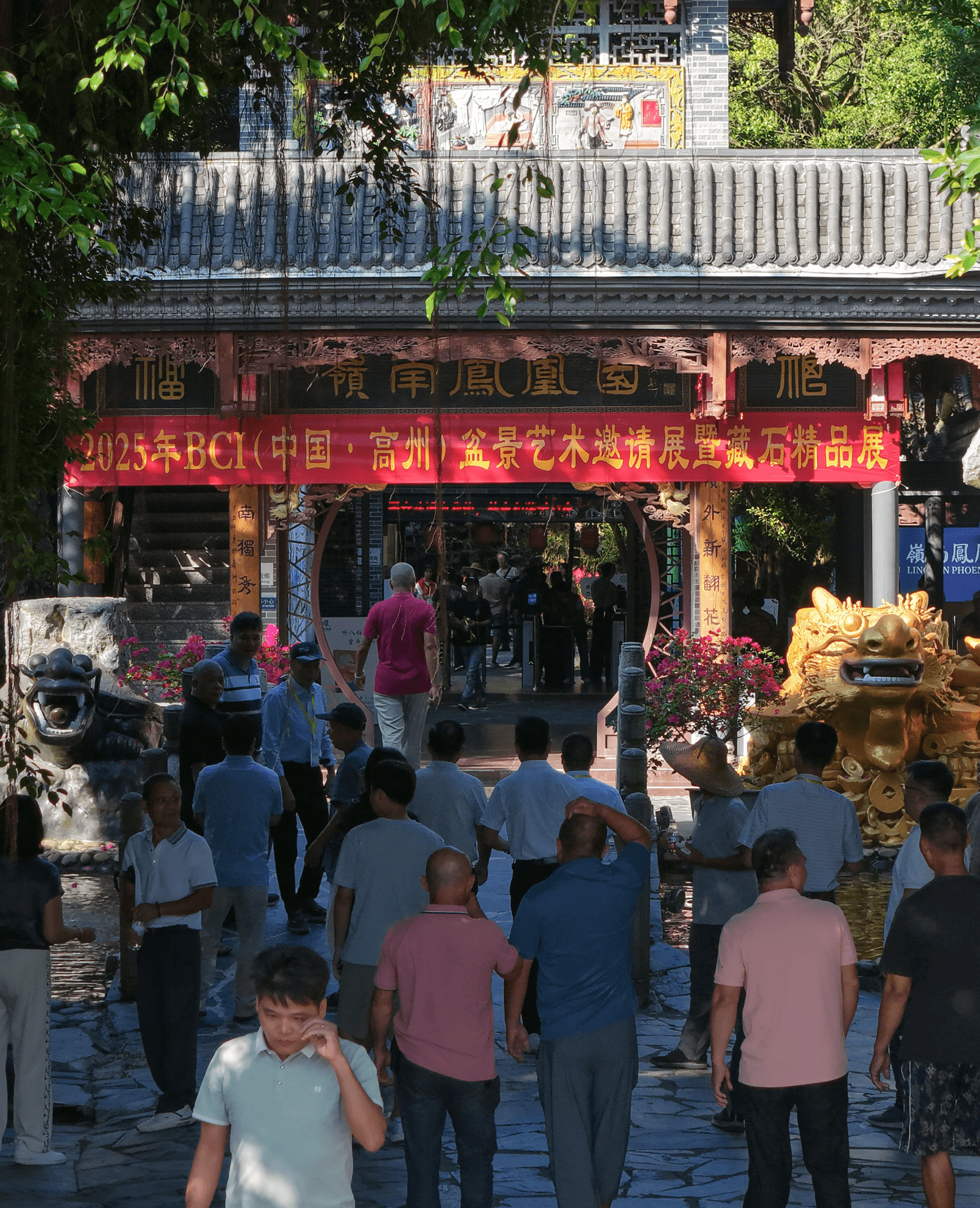
Bonsai in Gaozhou did not feel isolated on plinths or stranded in a hall. At Lingnan Phoenix Garden, trees and viewing stones were presented as part of a larger regional landscape, with the city’s Lady Xian heritage and the garden’s own scale giving the exhibition its frame. The result was a rare chance to read Lingnan style not just as technique, but as a way of placing art inside memory, hospitality, and local identity.
A city where the route matters
The approach to Gaozhou set the tone before the first tree came into view. The trip from Guangzhou by high-speed rail took about two hours, and the stop at the Gaozhou Madam Xian Temple made the city’s historical spine impossible to miss. Local reporting says the temple was built in 1535 to commemorate Lady Xian, and she is widely identified as Xian Ying, a 6th-century Baiyue leader, politician, and military strategist.
That backdrop matters because Gaozhou is not presenting bonsai in a vacuum. The city’s cultural memory, anchored by Lady Xian, sits alongside horticulture and stone culture in a way that makes the exhibition feel rooted rather than imported. For bonsai readers, that context explains why the venue and the city itself were treated as part of the display.
Lingnan Phoenix Garden as a living setting
Lingnan Phoenix Garden is not a neutral convention site. Published descriptions place it at more than 300 acres, or 300 mu, and identify it as a National 3A-level tourist attraction and a modern private garden opened in 2022 by entrepreneur Yang Xingzhu. It was shaped in a Jiangnan style but grounded in Lingnan tradition, a combination that gives the garden both elegance and regional character.
The scenery is part of the lesson. Mountains, water, rockeries, grottoes, ponds, and Taihu stones create an environment where bonsai and viewing stones do not sit apart from the landscape but are absorbed into it. That approach changes how you read a display: the tree is no longer just an object, it becomes one voice in a wider composition.
For anyone studying Lingnan presentation at home, that is the first design principle to borrow. The display does not rely only on individual quality, but on relationship, between plant material, stone, space, and setting. Even on a bench or in a small courtyard, the goal is the same: let every element help build one scene rather than compete for attention.
The scale of the exhibition
Bonsai Clubs International listed the 2025 Gaozhou convention as running from October 18 to 22, with over 260 premium bonsai works from across China and more than 80 fine stone collections from Lingnan Phoenix Garden’s archive. The event also included international master workshops and cultural demonstrations, which helped broaden it beyond a simple show-and-tell of elite material.
That scale mattered because it allowed the exhibition to function as a full cultural gathering. The opening ceremony included speeches and performances, and the organization extended to transport, lodging, and sightseeing for international guests. Those practical details made the visit feel coordinated and generous, but they also reinforced the point that a major bonsai event can operate as hospitality in motion, not just as a competition of trees.
The stone collection deserves particular attention because it sat in equal conversation with the bonsai. Viewing stones are often treated as supporting material at exhibitions; here, they were displayed as a parallel art form with its own archive and its own authority. That pairing made the event especially useful for readers who want to understand how Chinese display traditions link tree and stone as related disciplines.
How Lingnan style reads on the bench
BCI background material traces Lingnan bonsai and penjing back at least to the 15th century and notes that the style developed through the Ming and Qing dynasties. That long history shows in the way Lingnan work is often described: abundant, vital, and visually forceful rather than spare for its own sake. The style does not apologize for fullness. It uses energy, movement, and a strong sense of scene to hold the eye.
For non-Chinese bonsai readers, the easiest way to translate that into practice is to study composition before refinement. A Lingnan-inspired display asks you to think about how a tree relates to water, stone, structure, and surrounding space, not only how the branches ramify. When the exhibition placed trees alongside stones in a landscape garden, it showed that the design logic is relational, with each object gaining meaning from the others around it.
- pair a tree with a viewing stone only when the two share a clear visual conversation
- give the composition enough room to breathe, but do not strip away all density or energy
- think about the scene as a whole, including stand, accent, and backdrop
- use strong movement and layered mass when the material calls for it, rather than forcing minimalism onto every tree
At home, that means a few practical adjustments:
Those choices reflect the larger Lingnan habit of letting art sit inside place. The 2025 Gaozhou exhibition made that philosophy visible by surrounding the works with a garden designed for immersion, by linking the show to Lady Xian’s legacy, and by presenting bonsai and stones as parts of one living cultural register.
In Gaozhou, the trees were beautiful, but the real lesson was how they belonged there. That is the power of Lingnan style at its best: it turns a convention into a landscape, and a landscape into a cultural argument that still feels alive when you step back onto the train to Guangzhou.
This article was produced by Prism’s automated news system from verified source data, official records, and press releases, then run through automated quality and moderation checks before publishing. The system is built and supervised by the people who set the standards it runs under. Read our full AI policy.
Did this article answer your question?