Bonsai Empire explains how to keep juniper bonsai healthy outdoors
Junipers fail fastest indoors, and the fix is simple: keep them outside, flood them with sun, and let winter do its part.
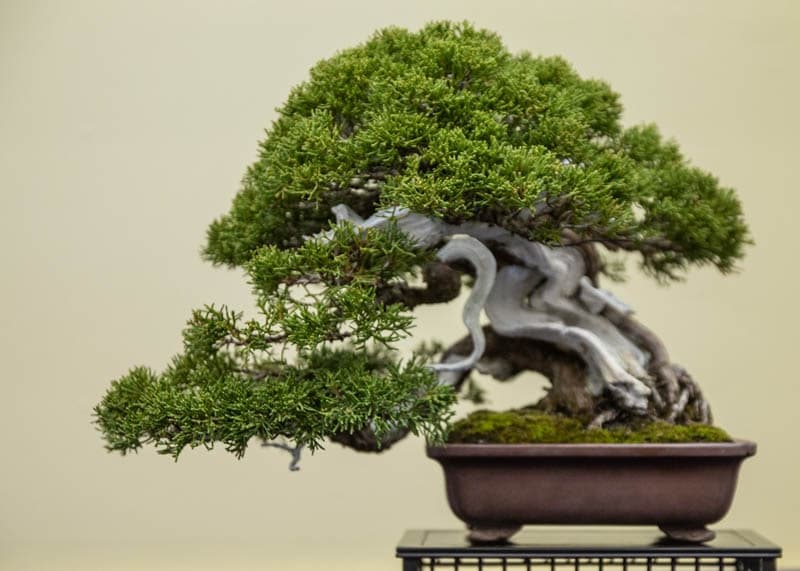
The easiest way to lose a juniper bonsai is also the most common beginner habit: bringing it inside and treating it like a houseplant. Bonsai Empire’s guidance is blunt on that point, and it is exactly why junipers keep showing up as the tree people buy first and misplace fastest. If you want one to stay healthy, the routine starts outdoors, in bright sun, with the seasons doing the work the tree expects.
Why junipers trip up beginners
Junipers are not a tiny indoor shrub waiting for a decorative shelf. Bonsai Empire says juniper bonsai should be kept outside year-round in a bright spot with lots of sunlight, and that they cannot live indoors long-term. Most outdoor bonsai trees need sunlight for at least a few hours a day, so the placement question is not a side note, it is the whole game.
That matters because junipers are one of the most common starter bonsai, which makes them one of the most commonly misunderstood. The tree looks rugged, compact, and manageable, but its needs are tied to outdoor conditions, not indoor comfort. Once you stop forcing it into a living room schedule, the rest of the care starts to make sense.
What kind of tree are you actually working with?
Juniperus is a broad genus, not a single look. Depending on the treatment, the genus is counted at roughly 50 to 70 species, and Conifers.org describes Juniperus as the largest genus in the Cupressaceae, with 73 species in one treatment. That range helps explain why juniper bonsai can look so different from one another even before styling enters the picture.

The foliage alone shows that range. Bonsai Empire notes that junipers are evergreen conifers or shrubs with two main foliage types, needle-like and scale-like. For you, that means two things at once: the species is adaptable enough to support many forms, but not so uniform that one care habit fits every tree.
Sunlight and outdoor placement are not optional
A juniper that lives outside gets the light, airflow, and seasonal rhythm it was built for. Bonsai Empire’s advice is straightforward: keep it outdoors all year, in a bright location with lots of sun. If the tree is not getting that kind of exposure, you are already working against its biology.
This is where beginner mistakes get expensive. People often assume “bonsai” means “small indoor tree,” when in practice the pot is just part of the discipline. The Royal Horticultural Society describes bonsai as tray cultivation and emphasizes careful training, pruning, container restriction, and attention all year round. That is a seasonal craft, not an occasional watering task.
Winter is part of the care plan
Temperate-climate bonsai need winter dormancy, and junipers are no exception. Bonsai Empire says outdoor bonsai from temperate climates need that dormancy period, along with protection from frost and strong winds. The practical threshold it gives is clear: protect junipers once temperatures drop below 15°F, or -10°C, for example by placing them in a cold frame.
That is not a sign the tree is failing. Some junipers can turn purplish brown during frosty periods as part of an internal frost-protection mechanism, then green up again in spring. If you have only seen summer foliage, that color shift can look alarming, but in this species it is often a seasonal response, not a death sentence.
How styling works when the tree is young
Junipers are famous for the dramatic, twisted forms people love in exhibitions and club benches, and that look is no accident. Bonsai Empire says junipers produced for bonsai are often heavily wired when they are very young, and they can be bent aggressively if the branches are protected with raffia or tape. That is why so many shohin and larger junipers carry those dramatic lines and movement.
The key is to respect the material while you shape it. Protective wrapping is not decorative, it is part of making the bend possible without tearing the branch. The tree can take bold styling, but the work has to be deliberate, not rushed, because the same flexibility that makes a stunning silhouette also makes careless bending unforgiving.
Prune with the branch alive in mind
This is the rule that separates a careful juniper keeper from someone who just cut away a future branch. Bonsai Empire warns that junipers cannot bud again from bare tree parts, so some foliage must remain on every branch you want to keep alive. If you strip a branch clean, you may not get a second chance from that wood.
That changes how you prune. Every cut should be made with a living path in mind, not just a shape in your head. You can reduce, refine, and direct growth, but you cannot assume a bare section will rescue itself later. On a juniper, foliage is not just decoration, it is the branch’s insurance policy.
The bigger lesson behind the juniper mistake
Junipers are such a staple of the bonsai world because they make the craft visible in real time. You can see the wiring, the winter response, the foliage types, the container restriction, and the year-round attention all working together in one tree. That is also why they punish the indoor-bonsai myth so quickly.
The cleanest way to think about them is the way Bonsai Empire frames them: outdoor trees first, sunlight always, winter respected, styling done with care, and pruning done with the branch’s survival in mind. Put a juniper back where it belongs, and the “mystery” of why it failed indoors disappears almost immediately.
This article was produced by Prism’s automated news system from verified source data, official records, and press releases, then run through automated quality and moderation checks before publishing. The system is built and supervised by the people who set the standards it runs under. Read our full AI policy.
Did this article answer your question?