Bonsai next steps guide points beginners toward clubs, classes, books, gardens
Jonas Dupuich’s next-steps map turns bonsai curiosity into a real plan, with clubs, gardens, classes, and exhibits for every kind of beginner.
A map for the moment bonsai stops being just a tree
Jonas Dupuich’s next-steps guide works because it answers the question every new bonsai grower eventually hits: what now? Instead of leaving you with a vague sense that you should “learn more,” it lays out practical lanes like bonsai clubs, print publications, multi-day classes, public bonsai gardens, exhibits, bonsai in Japan, photo books, and finding material for bonsai.
That structure matters because bonsai usually becomes real through repetition, not revelation. You get better by seeing good trees in person, handling material, repotting, wiring, listening to critique, and returning to the same community again and again. Dupuich’s page lowers the friction between first interest and actual participation, which is exactly where a lot of beginners stall.
If you learn best by people, start with a club
The club route is the cleanest entry point if you want bonsai to become social from the start. The American Bonsai Society maintains a state-by-state U.S. club directory, and Bonsai Empire estimates there are about 183 bonsai clubs and organizations in the United States. That means there is usually a local group within reach, even if you have not found it yet.
Clubs are where bonsai moves from solo browsing to shared practice. Bonsai Clubs International, founded in 1960, says it nurtures bonsai and viewing-stone appreciation through shared knowledge, ethical stewardship, and international friendship. That philosophy is the reason club meetings matter so much: they give you access to live demos, repotting sessions, and the kind of straight talk that makes a first tree survive its second season.
If your ideal first step is simple and immediate, choose one local club meeting, show up with your questions, and watch how experienced growers handle the same problems you are facing. You do not need to arrive fluent. You need to arrive curious.
If you want structure, take a class or multi-day intensive
Some people do not want to infer the next move from a club conversation. They want a syllabus, a teacher, and a set block of time to work. Dupuich’s guide points to multi-day classes for exactly that reason: bonsai learning often clicks when there is sustained instruction instead of a one-off demo.
The American Bonsai Society reinforces that model with learning seminars, care guides, education materials, and even a new talent competition. ABS, founded in 1967, was built to serve North American enthusiasts who wanted practical advice, supplies, and material tailored to the hobby. That is the right lane if you are ready to spend a weekend getting real feedback on a tree instead of collecting information in fragments.
If this sounds like you, the first move is to look for the nearest workshop or multi-day class tied to a club, society, or public venue. Bring one tree or buy a beginner material tree, then ask for feedback you can act on before the next meeting.
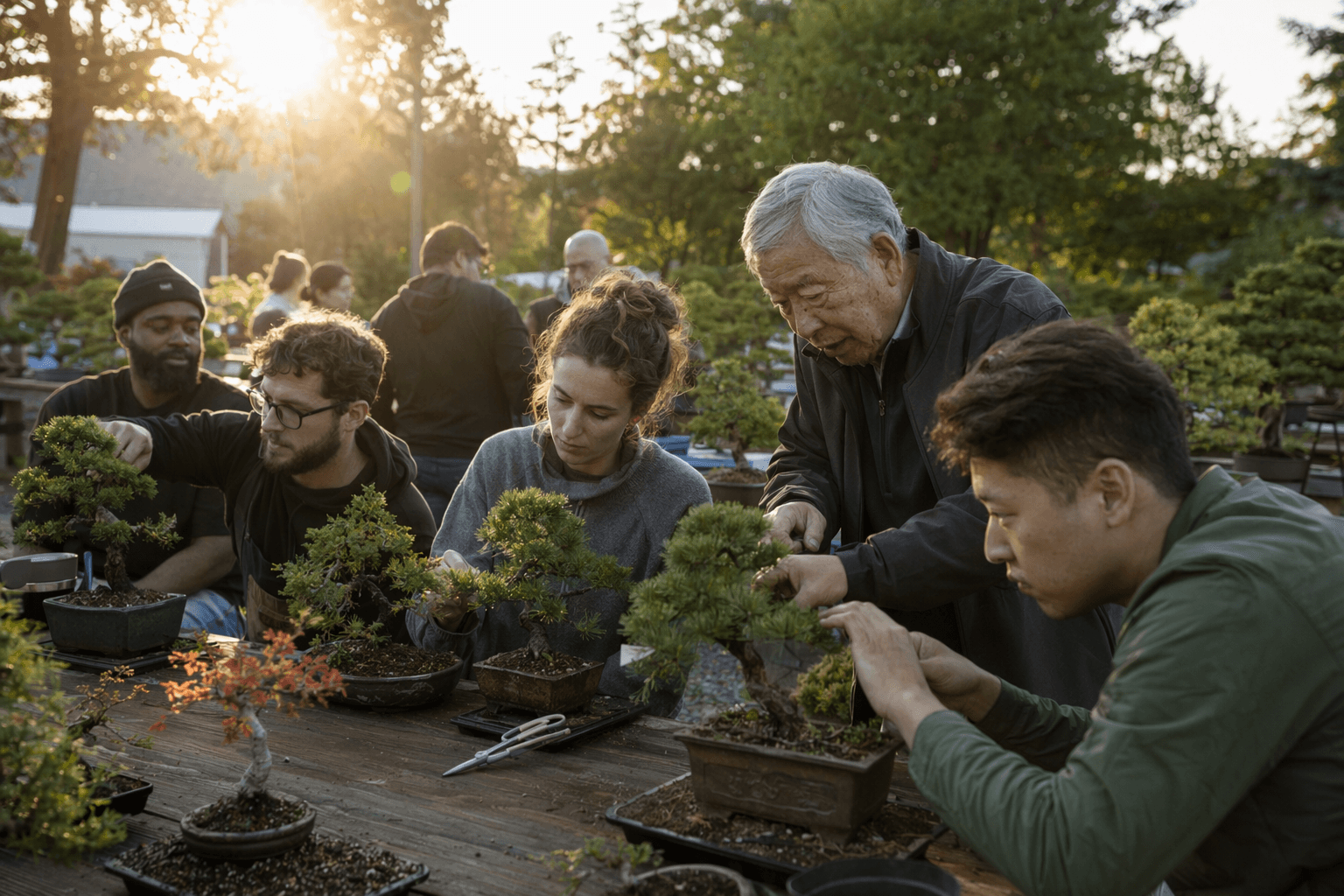
If you learn by looking, go to exhibits and public gardens
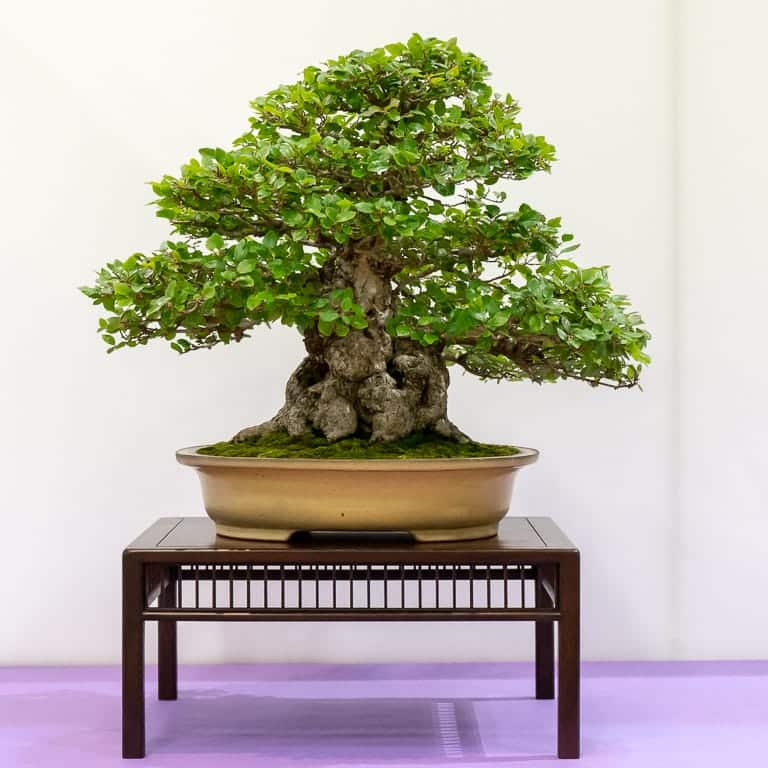
A lot of bonsai progress comes from training your eye. Dupuich’s guide correctly treats public gardens and exhibits as teaching tools, not just places to admire pretty trees. You learn proportion, pot choice, branch placement, taper, deadwood, and display by standing in front of trees that have already solved those problems.
The North Carolina Arboretum’s Bonsai Exhibition Garden is a strong example of why this lane matters. It opened in October 2005, displays up to 50 specimens at a time, and the Arboretum says its broader collection includes more than 100 specimens. The garden also runs seasonally in a way that keeps the visit fresh, with outdoor bonsai shown from mid-May through November and tropical bonsai shown indoors from November through April.
There is also a clear point of view behind the collection. Arthur Joura says the Arboretum’s bonsai program has been shaped by a regional Southern Appalachian interpretation of bonsai, which gives the garden a distinct identity instead of a generic museum feel. The garden itself took seven years to complete and was supported by $1.8 million in private donations, which tells you how seriously that institution treats bonsai as a public art form.
If your learner style is visual, the first step is a garden visit or show day. Stand in front of the trees long enough to notice what the photographs never fully show: the pot-to-tree relationship, the movement of the trunk, and the way a display changes the mood of the whole composition.
If you want inspiration at scale, watch the exhibition circuit
The public-show lane is where bonsai can feel bigger than your local bench. Dupuich’s ecosystem includes major exhibits, and the Pacific Bonsai Expo is a useful example of the kind of destination event that can reset your sense of what the hobby can be. The first expo took place in Oakland on November 12-13, 2022, as a juried exhibition and vendor event organized by Jonas Dupuich and Eric Schrader.
That matters because an expo is not just a display, it is a pressure test for standards. You see top-tier trees, meet collectors, and get a direct look at how the best modern bonsai is presented in public. The expo’s site now points to its next show on February 6-7, 2027, at the Alameda County Fairgrounds in Pleasanton, California, which makes it an obvious destination for anyone ready to turn admiration into ambition.
If you have been hovering at the edge of the hobby, an exhibition gives you the quickest education in what “finished” can look like. It is also one of the best ways to find the people whose trees, advice, and judgment are shaping the scene right now.
If you want to study on your own, start with books and photo books
Dupuich’s guide does not treat reading as a substitute for the community. It treats reading as one of the tools that makes the community legible. The page expands on material from Chapter 6 of The Little Book of Bonsai, and that is no accident: bonsai learning is cumulative, and reference material helps you recognize what you are seeing when you finally stand in front of a tree.
Books and photo books are especially useful when you are trying to decode styling choices, seasonal work, and the difference between a tree that is merely healthy and one that is well composed. If your schedule keeps you away from club nights or public collections, this is the lane that keeps momentum alive between in-person sessions.
The practical move here is to build a small working library, not a pile of random inspiration. Pair reading with one visible objective, such as improving one tree’s branch structure or learning how a species is normally shown before you attempt your own styling choices.
If you want to go deeper, follow the material trail to Japan and to the source of your trees
Dupuich’s next-steps page also points toward bonsai in Japan and toward finding material for bonsai, two lanes that remind you the hobby is not only about finished trees. It is also about how material is sourced, selected, and developed over time. That is one of the biggest mindset shifts for beginners: the tree in front of you is part of a longer process, not an isolated object.
That lens is useful whether you are shopping for your first nursery stock, refining raw material, or studying the standards that shape high-level bonsai abroad. The deeper you go, the more you realize that good bonsai is built through long attention, not one dramatic decision.
The real next step is to choose one lane and show up
The strength of Dupuich’s guide is that it treats bonsai as a network of entry points, not a test you either pass or fail. You can begin with a club if you need people, a class if you need structure, a garden if you need visual clarity, or an exhibit if you need a bigger benchmark. The hobby has the infrastructure to meet you wherever your curiosity is strongest.
That is the point of the page, and of the wider bonsai world behind it: once you know where to go, bonsai stops being a passive interest and becomes a practice with places, people, and a next appointment on the calendar.
This article was produced by Prism’s automated news system from verified source data, official records, and press releases, then run through automated quality and moderation checks before publishing. The system is built and supervised by the people who set the standards it runs under. Read our full AI policy.
Did this article answer your question?