Bonsai Society of Southwest Florida reports strong auction, features dwarf schefflera
A $6,320.92 auction gives the Bonsai Society of Southwest Florida real momentum, and dwarf schefflera is the species turning that money into hands-on learning.
Auction cash sets the tone for the month
The Bonsai Society of Southwest Florida is not just reporting activity, it is showing a club with real lift. The April auction brought in total proceeds of $6,320.92, with $3,195 returned to sellers through the 80/20 split and a net gain of $3,012.57 for the club after expenses. That is the kind of result that tells members the engine is working: trees are moving, buyers are active, and the club has enough participation to turn material into programming.
That financial strength matters because bonsai clubs live or die on exactly this mix of circulation and reinvestment. An auction that clears more than six thousand dollars is more than a ledger entry. It gives the club room to keep building meetings, workshops, and educational events without drifting into the kind of thin, one-note calendar that leaves members waiting for the next big thing.
Dwarf schefflera takes center stage
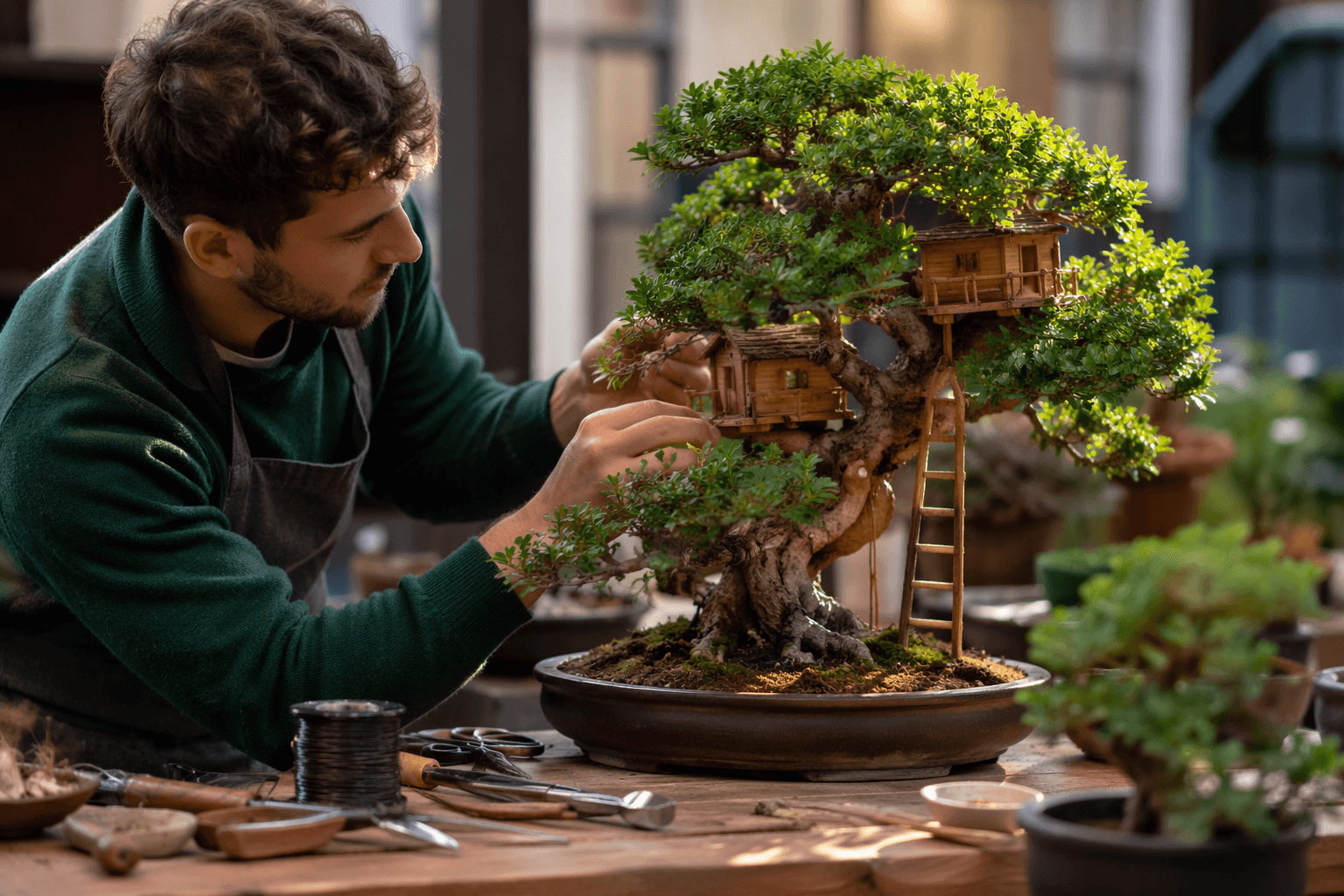
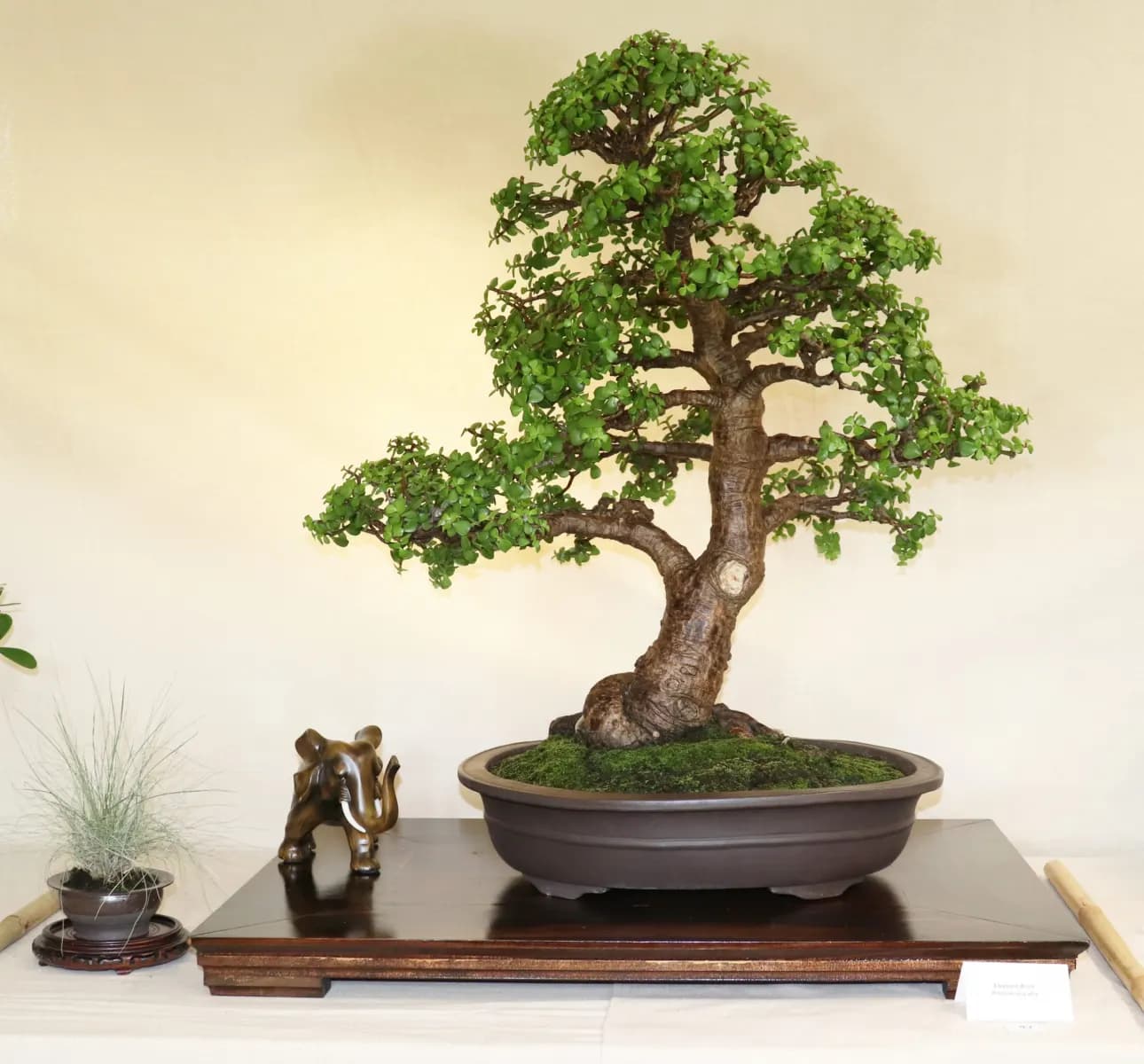
The featured tree in the May newsletter, Martha’s Corner, is dwarf schefflera, and that choice is smart for Southwest Florida right now. The species, Schefflera arboricola, is a tropical evergreen shrub or small tree native to Taiwan, but it is also one of the most approachable tropical bonsai subjects in local cultivation. It is common in South Florida nurseries, responds well to hard pruning, and adapts easily to the kind of controlled growth bonsai demands.
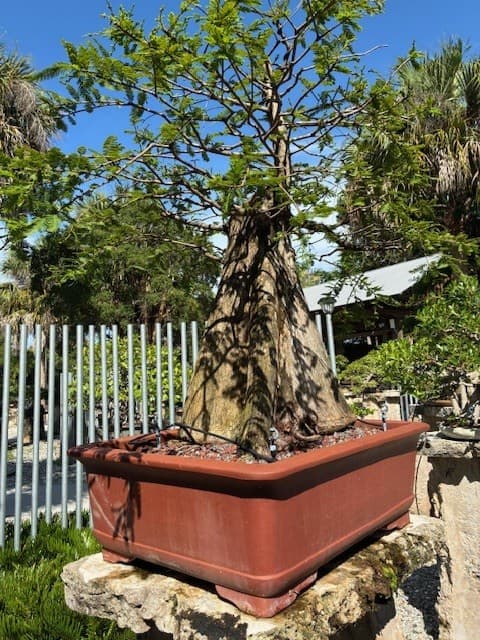
That makes it especially relevant for growers working in warm, humid conditions. Schefflera’s aerial roots are one of its signature bonsai traits, and humid weather encourages those roots to develop. In a region like Southwest Florida, that opens the door to stronger nebari, heavier visual presence, and the kind of broad trunk line that makes a tropical tree look established rather than merely potted.
Why the banyan style fits the plant
The newsletter’s companion article on turning schefflera into a banyan-style bonsai is more than a styling exercise. It matches the biology of the plant with a form that makes sense for the material. A banyan presentation leans on descending roots and a wide, pillar-like structure, which is exactly where schefflera can shine when grown with patience and moisture.
Missouri Botanical Garden notes that Schefflera arboricola can reach 10 to 25 feet in tropical climates and is often pruned to control its size. That growth habit explains why the species transitions so naturally into bonsai work. The tree already wants to push, branch, and respond to reduction. In bonsai terms, that means local growers can use pruning not just to contain it, but to shape it into a design that suggests age, spread, and stability.
For readers in Southwest Florida, the practical lesson is clear: schefflera is not a compromise tree. It is a genuine tropical candidate with enough vigor to recover from strong cuts and enough root behavior to reward experimentation. If you want a species that can carry both a classroom lesson and a long-term project, dwarf schefflera has the right mix of resilience and design potential.
Timing works in the club’s favor
The May timing of the newsletter also fits the growing cycle. Florida Gardening describes late spring as the start of the rainy season and a favorable period for planting trees and shrubs. That seasonal window is useful for tropical bonsai work because it supports new growth and gives material a better chance to establish quickly after heavy pruning or root work.
That is one reason a schefflera workshop in May makes so much sense. Members are not being handed abstract theory. They are being pointed toward a species that is active, available, and responsive right when Florida conditions are favorable for pushing growth. For a local club, that is how education becomes useful instead of merely informative.
- The species is easy to source in South Florida nurseries.
- It tolerates hard pruning and responds quickly to structure work.
- Humidity helps promote aerial roots, which are central to banyan styling.
- Late spring conditions support root activity and vigorous recovery.
From club auction to future programming
The auction result and the schefflera feature are really part of the same story. The club is using income from member participation to support exactly the kind of instruction that keeps bonsai practice moving forward. A strong auction means stronger programming; stronger programming keeps members engaged; engaged members bring in better material, better turnout, and better trees.
The newsletter also says the club will return to a normal meeting format in May with a workshop on the featured tree. That shift matters because it turns the monthly tree profile into a working subject instead of a static showcase. Members can study the plant, see how it behaves, and then apply the lessons in a workshop setting while the material and the season are both on their side.
Statewide convention puts local work into a bigger frame
The club’s May update also points members toward the 2026 Bonsai Societies of Florida convention, scheduled for May 22-24 in Orlando at the Florida Hotel and Conference Center. This year’s theme is small, with mame, shohin, and chuhin among the focal categories. That is a meaningful pairing with the club’s own schefflera focus, because both are about scale, refinement, and making strong design choices within limited size.
BSF describes the convention as including workshops, demonstrations, exhibits, and a vendor marketplace, which gives the event real depth beyond a date on the calendar. It is where club-level momentum can spill into statewide learning, where the auction dollars, workshop energy, and species focus all feed a larger bonsai network.
Taken together, the May newsletter shows a club that is financially healthy, instructionally active, and tuned to the material that makes sense in its climate. The auction proved the membership is willing to buy, sell, and support. The dwarf schefflera feature shows what that support can become next: better trees, better technique, and a stronger local path into tropical bonsai.
This article was produced by Prism’s automated news system from verified source data, official records, and press releases, then run through automated quality and moderation checks before publishing. The system is built and supervised by the people who set the standards it runs under. Read our full AI policy.
Did this article answer your question?