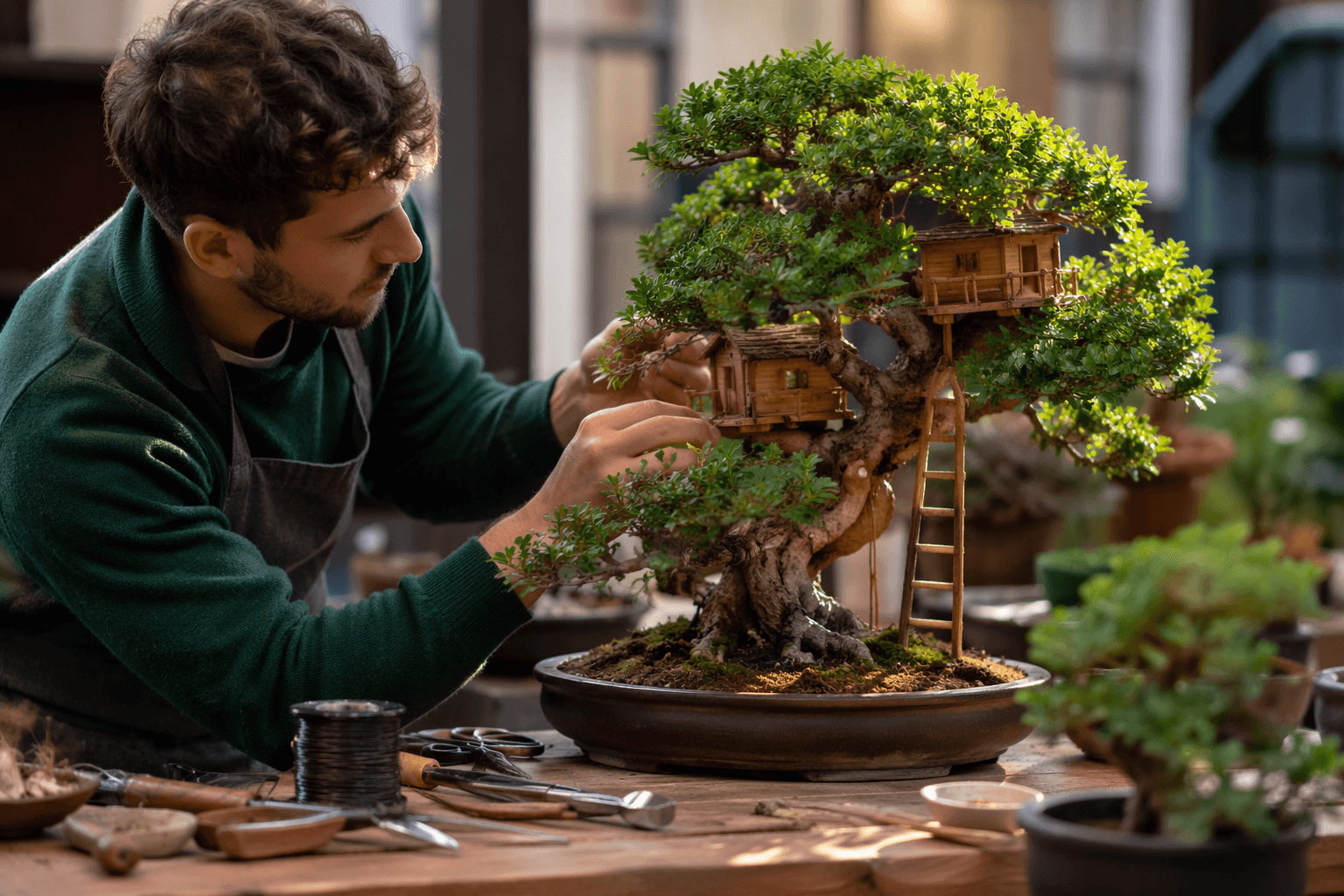
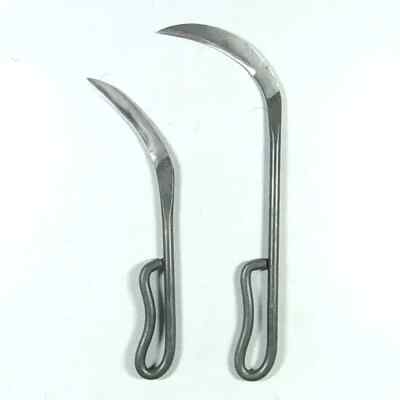
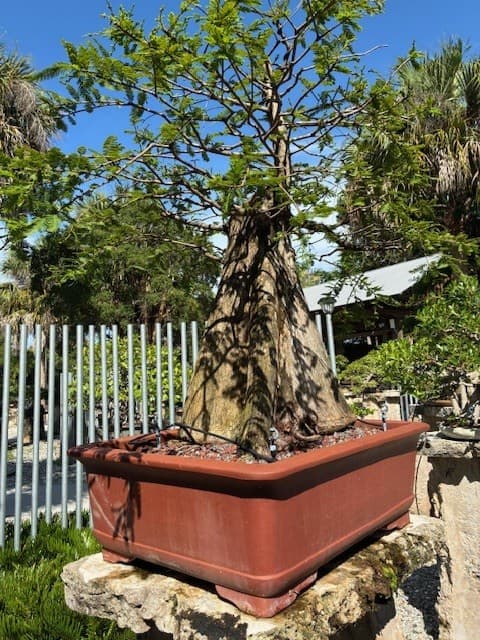
Bonsai, time, and the artist’s changing eye over decades
Bonsai never stands still: the tree, the weather, and the artist’s eye all change together, and Min Hsuan Lo’s White Mountain lesson shows why patience wins.
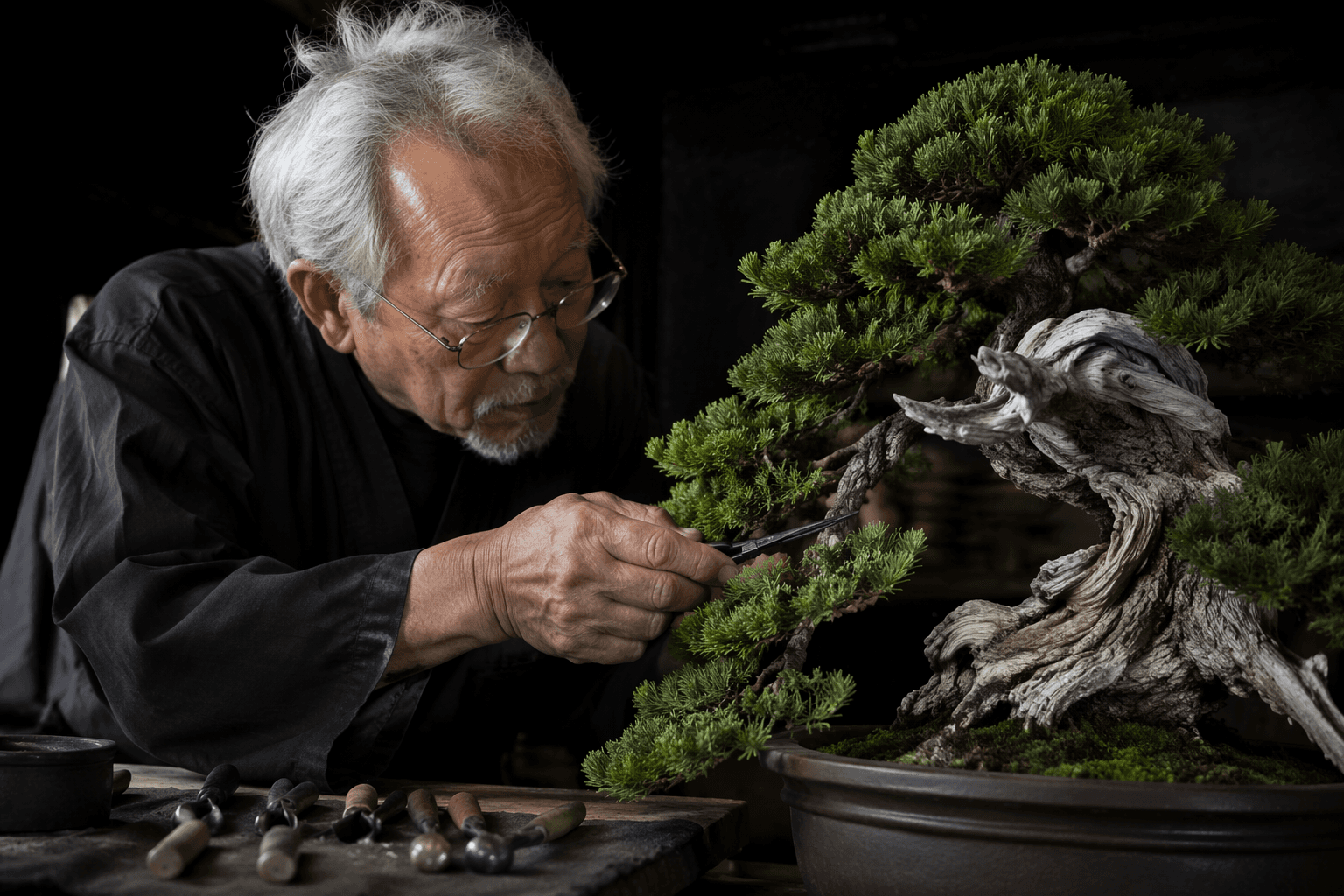
Bonsai does not preserve a single moment. It records every season, every cut, every stretch of growth, and every revision in judgment, which is why Min Hsuan Lo frames time as the most important material in the art. In his essay, the tree changes under weather, memory, and human intervention, while the artist changes just as visibly through the years of looking and making.
Time as a design material
That idea runs through nearly two decades of work. The real shift is not only in the branches, roots, or deadwood, but in the creator’s inner life, where experience slowly changes what feels possible and what feels forced. The lesson for any serious bonsai practice is plain: a good plan matters, but a living tree will keep revising the plan for you.
Lo pushes that point beyond sentiment. He treats development as something that can only be understood after repeated making, because each season reveals different demands. Form is never fixed, species never read the same way forever, and restraint becomes a skill rather than a compromise.
White Mountain as a turning point
The clearest image in the essay comes from California in November 2005, when Lo traveled with bonsai master Ernie Kuo before a Golden State Bonsai Federation demonstration. During that trip, White Mountain left the deepest mark on him, and he describes the Bristlecone Pine there as the place where his strongest inspiration arrived. The essay’s phrasing is direct: “the most profound inspiration came from the Bristlecone Pine at White Mountain!”
That reaction makes sense once you stand the bristlecone against its own landscape. The U.S. Forest Service describes the Ancient Bristlecone Pine Forest in the White Mountains as a place to learn about some of the oldest trees in the world, and living trees there exceed 4,000 years of age. The National Park Service says the oldest known living bristlecone pine from the White Mountains was dated to 5,065 years old, and its rings preserve long climate records. For a bonsai artist, that is more than natural history. It is a library of endurance, scar tissue, and survival rendered in twisted wood and weathered color.
The design lesson is immediate. Bristlecones do not look precious in a conventional sense; they look earned. Their trunks, deadwood, and contorted movement show what happens when time is not hidden but read as structure, which is exactly the kind of visual language bonsai tries to compress into a pot.
What the artist’s eye learns over decades
Lo’s essay is not only about one mountain or one trip. It uses that experience to argue that the eye itself evolves, especially when a practitioner keeps traveling, studying, and making trees across many years. What once looked like a finished silhouette starts to read as a stage in a longer conversation. What once seemed like a problem can become the most interesting part of the tree.
That shift matters because bonsai culture is never isolated from wider currents. Lo points to the early 21st-century rise of Taiwan juniper as an example of how fashion moves through the field, changing what people admire and how they style. At the same time, bonsai history has always been shaped by regional species and local growing conditions, as the art moves through Chinese penjing, Japanese bonsai, and international institutions like the National Bonsai & Penjing Museum in Washington, D.C.
The U.S. National Arboretum says that museum was established in 1976, and that date matters because it marks bonsai as a public, cross-cultural collection, not a private studio practice. Once the art sits beside a museum, a school, and a federation demonstration, the message is clear: bonsai is built through exchange, adaptation, and translation, not through a single fixed style.
How Lo turns reflection into practice
Lo’s own career gives the essay weight. Bonsai Clubs International identifies him as the founder of Lo Bonsai School in 2008, and says he taught bonsai classes from 1992 to 2022. It also says more than 500 students have learned bonsai in his school every Saturday since 2008. That is not the profile of a theorist speaking from a distance. It is the record of a teacher who has spent decades watching students confront the same basic truth: trees keep changing after you think the design is settled.
For day-to-day bonsai work, that means a few hard rules become easier to accept:
- Let the tree revise your plan when growth, weather, or back budding changes the structure.
- Study old trees like the bristlecones for proportion, movement, and deadwood language, not just age.
- Treat trends, like the Taiwan juniper wave Lo recalls, as reminders that taste shifts and should not dictate every decision.
- Build with the long view in mind, because a tree that needs more time is not a failed tree.
That is where Lo’s idea of “the traces of dreams” becomes practical. The trace is the visible mark of all the choices made before the tree reached its present state, and the dream is whatever shape you are still trying to see without forcing it too early.
Bonsai rewards the artist who can work without demanding instant completion. White Mountain offered Lo a model of beauty that came from endurance, and his own decades in teaching show the same pattern in human form. The tree keeps changing, the artist keeps changing, and the work becomes stronger when both are allowed to do so.
This article was produced by Prism’s automated news system from verified source data, official records, and press releases, then run through automated quality and moderation checks before publishing. The system is built and supervised by the people who set the standards it runs under. Read our full AI policy.
Did this article answer your question?