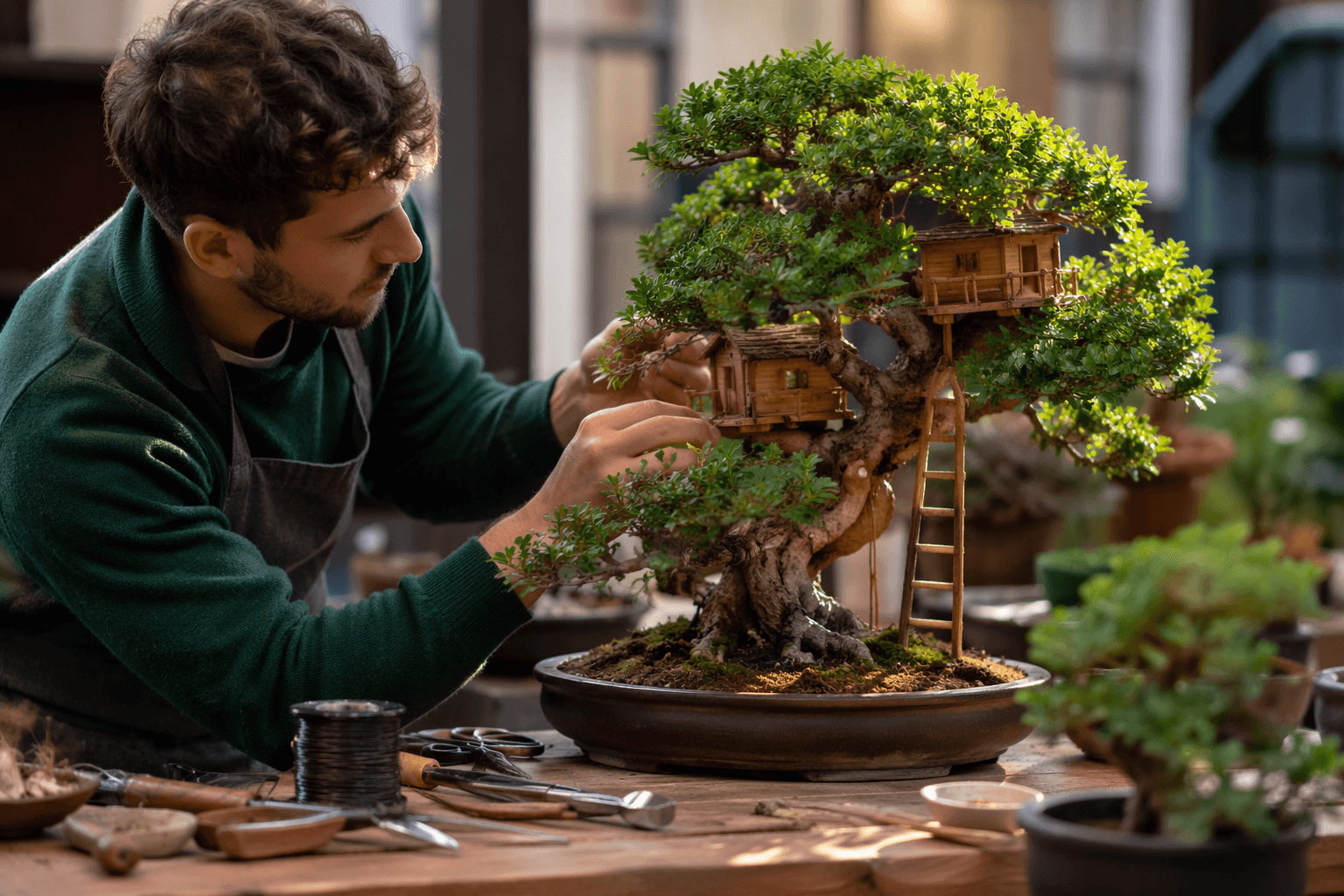
Huntington bonsai workshop lets students shape 50-year-old boxwood trees
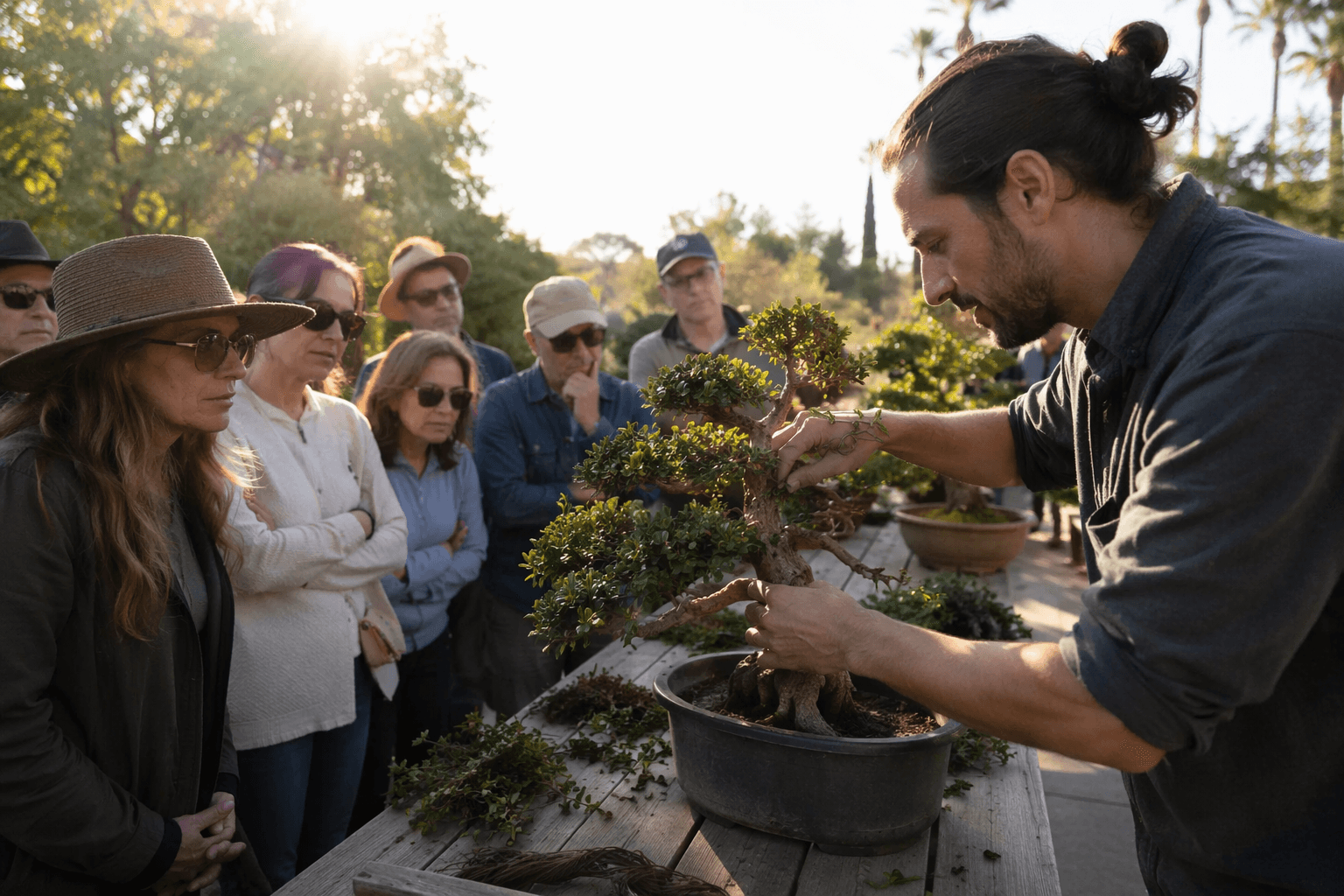
At The Huntington, students shaped 50-year-old boxwood from the Rose Garden with assistant curator Daniel Deephouse in a hands-on, collection-based workshop.
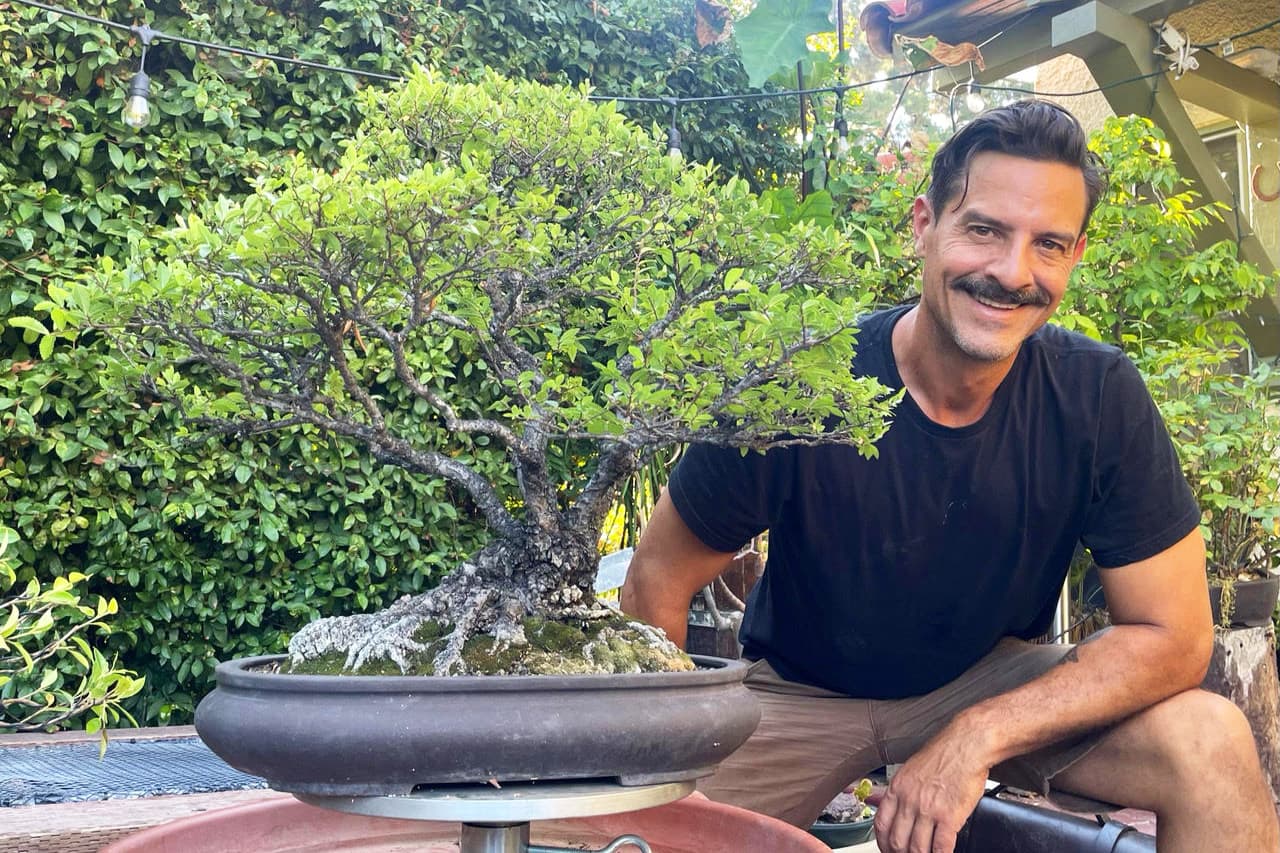
At Ben Oki Bonsai Nursery in San Marino, The Huntington put students to work on something far beyond nursery stock: fifty-year-old boxwood trees collected from The Huntington’s Rose Garden. The June 7 workshop, led by Daniel Deephouse, the institution’s assistant curator of the bonsai collection, ran from 10 a.m. to noon and carried a premium price tag of $325 for the public and $300 for members.
A workshop built around real collection material
That cost and the setting tell the story immediately. This was not a casual drop-in class or a broad introduction to bonsai basics. It was an immersive session built around mature plant material, where the trees themselves set the level of instruction. With boxwood that had already spent half a century developing structure, participants were not learning how to start a bonsai from scratch. They were learning how to read age, line, movement, and pre-existing character before making design calls.
That is where the workshop becomes especially valuable. In a class built around young stock, a teacher spends much of the time showing how to create shape. In a class built around fifty-year-old material from a museum collection, the focus shifts toward judgment: what to keep, what to reduce, what to preserve, and how to work with a tree that already has a voice.
Why boxwood makes sense for this kind of session
Boxwood is a practical choice for that kind of hands-on teaching. It responds well to clipping and refinement, and it suits compact broadleaf design, which makes it useful for working through styling decisions in real time. That matters in a workshop like this, because participants can make visible progress without needing to force the material into an artificial shape.
The bigger advantage is the age of the trees. Fifty-year-old material lets students see how bonsai design changes when the starting point already carries decades of growth. A curator can point to live tissue, old cuts, branching structure, and trunk character and discuss what the tree is already offering, instead of treating every decision as a blank slate. That is the kind of learning that comes from using collection-grade material, not a standard class bench.
The Huntington’s collection gives the workshop its weight
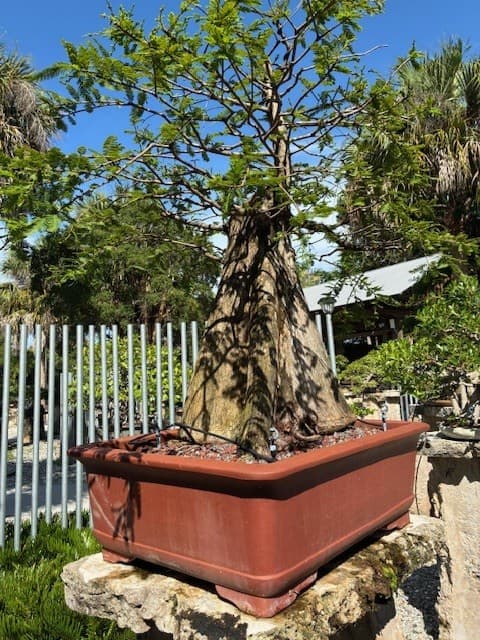
The workshop also sits inside one of the most established bonsai programs in the country. The Huntington says its bonsai collection is one of the largest in the United States. One Huntington description puts the collection at more than 400 bonsai, while more recent local coverage has described it as about 500 plants strong. Some of the trees are believed to be more than 1,000 years old.
That range matters because it shows the depth behind a single workshop. The collection is not just large; it spans species, styles, and ages, from centuries-old twisted junipers to pines and elm forests. When a class comes out of that environment, it carries the authority of a living collection that has been built, maintained, and interpreted over time.
The institutional roots go back decades. The Huntington Botanical Gardens developed a Bonsai Court in 1968, and in 1993 The Huntington joined with the Golden State Bonsai Federation to expand and improve the collection. Those milestones help explain why the current program feels more like a cultivated institution than an isolated hobby offering. The collection has a history, a volunteer base, and a public-facing identity that reaches beyond one room or one season.
A curatorial tradition, not a one-off class
Deephouse’s role also fits into a longer line of teaching at The Huntington. Ted Matson joined the institution in 2010 and later served as head curator of the bonsai collection. He also created and taught Bonsai Gakko, or Bonsai Academy, an introductory course for fine art bonsai, while overseeing the volunteer program that supports the collection.
That matters because it shows the workshop was not a standalone event dropped into an otherwise static program. It was part of an ongoing educational structure in which collection care, public instruction, and curator-led teaching overlap. A Golden State Bonsai Federation newsletter said Deephouse was hired before Matson’s retirement in December 2025 and then took leadership of the collection, making the transition feel continuous rather than abrupt.
The Huntington’s 2026 Bonsai Celebration reinforces that same model. Proceeds support the Golden State Bonsai Federation’s collection at The Huntington, and the event includes exhibitions by the California Bonsai Society. In other words, the workshop sits inside a broader ecosystem of collection support, show culture, and shared expertise.
Bonsai as museum interpretation
The Huntington has also used bonsai as a way to interpret its own history. In 2021, the institution staged Lifelines/Timelines: Exploring The Huntington’s Collections Through Bonsai, an exhibition that compared the ages of selected California juniper bonsai with milestones in the museum’s 100-year history. That approach puts bonsai in a larger frame, where age, patience, and stewardship become part of the story the collection tells.
The June 7 workshop follows that same logic. Participants were not simply styling a tree. They were working inside a collection where the material comes with provenance, institutional care, and years of accumulated character. The fact that the trees came from The Huntington’s Rose Garden gives the session an additional layer of meaning, because the workshop was literally built from the institution’s own landscape.
That is why the class stands out in the current bonsai landscape. A strong bonsai education opportunity is often defined not by convenience, but by access to better material and better judgment. At The Huntington, students got both, and the fifty-year-old boxwood made the lesson visible from the first cut.
This article was produced by Prism’s automated news system from verified source data, official records, and press releases, then run through automated quality and moderation checks before publishing. The system is built and supervised by the people who set the standards it runs under. Read our full AI policy.
Did this article answer your question?