Longwood Gardens’ bonsai collection grows from 13 trees to nearly 200
Longwood’s bonsai story now stretches from 13 Yoshimura trees to nearly 200, and the collection’s care, scale, and festival schedule make this a must-see stop.
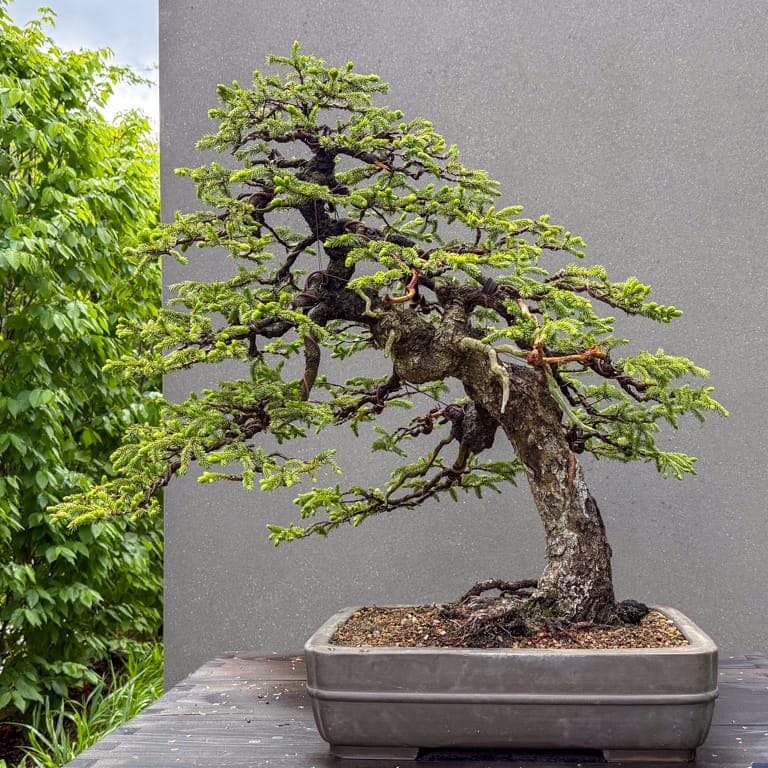
Longwood Gardens is showing bonsai the way major public gardens do it best: not as a handful of pretty minis, but as a living archive that has been built, protected, and expanded over decades. What began with 13 trees in 1959 has grown into a nearly 200-tree collection spread through a 12,500-square-foot Bonsai Courtyard, and the timing could not be better for a visit.
A collection built for the long view
The Longwood story starts with Yuji Yoshimura and a 1959 acquisition that gave the gardens 13 trees, four of which still remain: Japanese zelkova, ginkgo, crape-myrtle, and Chinese elm. That origin matters because it frames the collection as something more than display horticulture. It is a record of continuity, with six curators carrying the work forward since then and keeping the line of care unbroken.
Longwood also makes clear how much the collection has changed over time. A 2015 history post said the bonsai had grown to 40 trees at that point, and the collection page now describes nearly 200 miniature trees arranged in the Bonsai Courtyard, with rotating displays of 50 to 60 specimens. For anyone used to seeing bonsai in small club benches or private yards, that scale changes the whole experience. You are not looking at a single artist’s bench. You are moving through a public institution’s decades-long commitment to the art.
Why the trees feel different here
The standout quality of Longwood’s collection is not simply size. It is the sense that every tree has been allowed to accumulate history. Dupuich points to individual specimens whose work began in 1930, 1949, 1970, 1995, and 2004, which is exactly the kind of time span that makes major public collections so compelling. In a private setting, a bonsai may reflect one caretaker’s lifetime. At Longwood, the tree can outlast several generations of staff and still remain under active refinement.

That long arc becomes even more vivid in Longwood’s 2026 installation Seeking Light: Bonsai Illuminated, where eight dwarf junipers more than 150 years old are presented as part of the collection’s current public life. The message is subtle but powerful: bonsai is not frozen in time. It changes slowly, deliberately, and often under institutional stewardship that has to think far beyond a single exhibition season.
The care story behind the courtyard
Kevin Bielicki has curated Longwood’s bonsai collection since January 2018, and his background helps explain why the collection feels so coherent. He spent more than 12 years working with The Kennett Collection before taking on Longwood’s trees, which means the collection is being shaped by someone who understands both the art and the maintenance burden from the inside.
That burden becomes especially clear in Longwood’s recent acquisition from The Kennett Collection. Started in 1999 by Doug Paul, The Kennett Collection grew into 1,200 specimens and was described by Longwood in 2022 as the finest and largest private collection of bonsai and bonsai-related objects outside Asia. The bequest brought 150 bonsai and a $1 million endowment for continued care, and Longwood says the gift more than doubles its bonsai collection. The garden also says the bequest will make it the leading collection of bonsai trained in Japan on public view in the United States.
For hobbyists, that last point is worth lingering on. A public garden does not just acquire bonsai and park them under nice lighting. It has to budget for decades of repotting, pruning, pest management, display rotation, and staffing continuity. The endowment is part of the story because it acknowledges the basic truth of high-level bonsai: a tree is only as permanent as the commitment behind it.
Why now is the right time to go
Longwood’s inaugural Bonsai Festival runs June 24 to 29, 2026, and it gives the collection a rare burst of activity. The six-day event is free with Gardens admission, though timed admission is required, and the schedule includes an exceptional bonsai display, demonstrations, lectures, vendors, an auction, and awards. Participating clubs include the Bonsai Society of the Lehigh Valley, Brandywine Bonsai Society, Deep Cut Bonsai Society, New Jersey Bonsai Societies, Pennsylvania Bonsai Society, and Susquehanna Bonsai Club.
The artist lineup is equally strong, with Chase Rosade, Bill Valavanis, Bob Mahler, Sergio Cuan, Sean Smith, and Owen Reich among the names on the schedule. Longwood’s June 26 programming includes an introductory bonsai presentation, plus a 2:00 pm lecture by Sergio Cuan and a 4:00 pm lecture by Owen Reich. For anyone who wants to see how club culture, teaching, and public display intersect, the festival turns the courtyard into an active scene rather than a static gallery.
What you can take home from a visit
Longwood is a useful model because it shows bonsai as a public language of patience. The original Yoshimura demonstration drew such demand that 11 classes of seven students filled quickly and 30 people were turned away, which tells you how much appetite there has always been for the craft when it is presented with energy and credibility. That same energy is still visible now, but it is paired with institutional scale, careful curation, and the infrastructure to keep the trees alive.
If you want to understand what it takes to sustain bonsai over decades, Longwood is worth seeing now because the collection makes the answer tangible. You can stand in front of a tree begun in 1930, then turn and see how a modern gift, a curatorial hand, and a public-garden budget can keep the art moving forward. That is the real attraction of the Bonsai Courtyard: not just that it is full, but that it proves long-term bonsai care can become a living public institution.
This article was produced by Prism’s automated news system from verified source data, official records, and press releases, then run through automated quality and moderation checks before publishing. The system is built and supervised by the people who set the standards it runs under. Read our full AI policy.
Did this article answer your question?