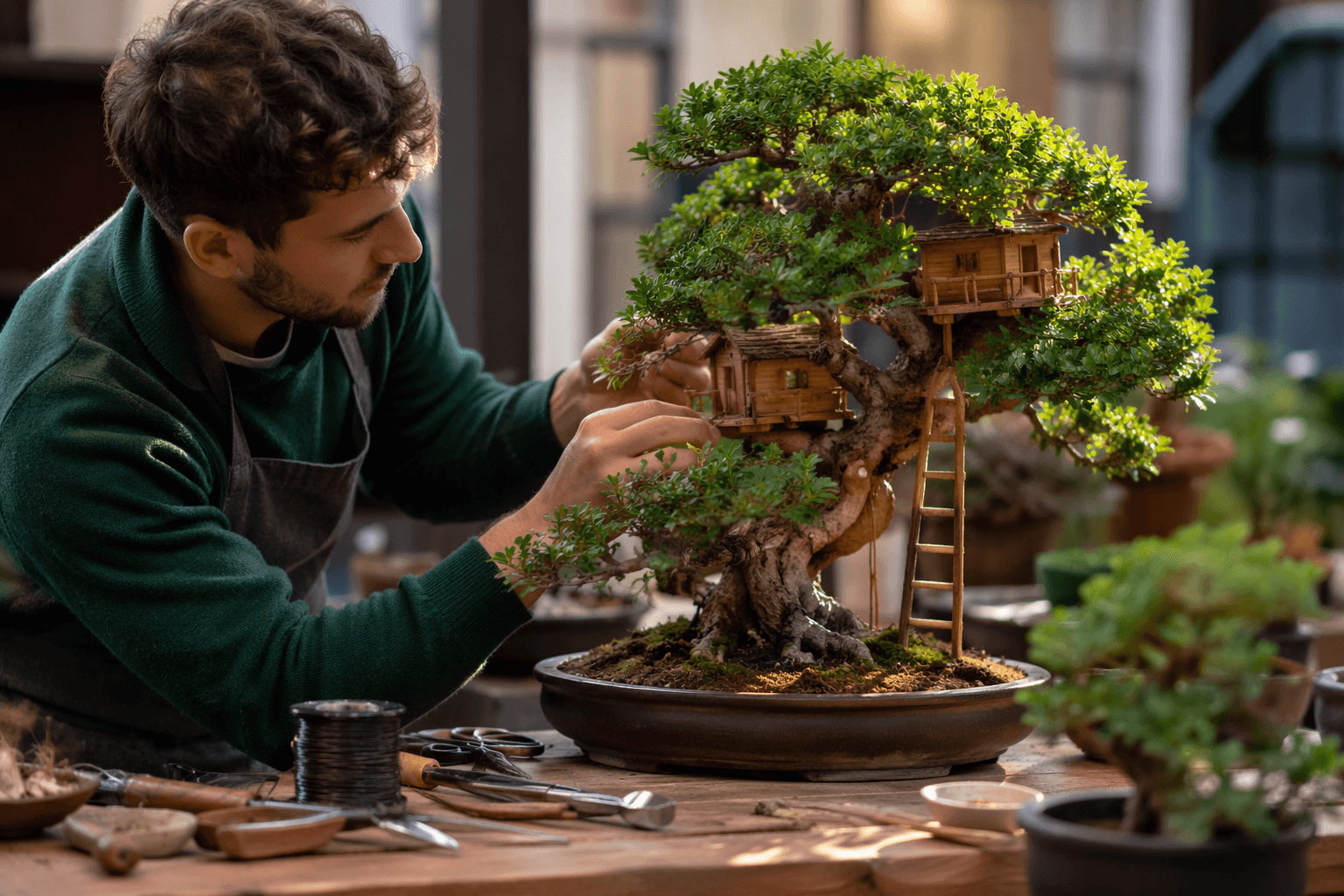
Longwood Gardens spotlights the artistry of bonsai pots
Longwood Gardens makes a strong case that the pot is part of bonsai art, not an accessory. Its 500-plus vessel collection shows how shape, texture, and glaze change a tree’s emotional reading.

Longwood Gardens is putting the pot at the center of bonsai, where it belongs. In a June 17 feature, the garden makes the case that a tree or kusamono is only half the composition, because the vessel determines whether the display feels grounded, airy, severe, or serene.
The pot sets the tone
That idea runs through Longwood’s own collection, which includes more than 500 artisanal bonsai and kusamono pots, ranging from historic Chinese pieces to contemporary work by artists from around the world. The garden’s Bonsai Workshop, adjacent to the Bonsai Courtyard, prepares and refines nearly 200 bonsai trees and houses that pot collection, which gives the staff a working library of form, finish, and surface to match against live material.
The scale matters because bonsai is never just about the tree in isolation. Longwood’s Bonsai Courtyard is a 12,500-square-foot outdoor gallery built for rotating displays of about 50 to 60 specimens at a time, so the container has to do real visual work. A pot that is too assertive can flatten the tree; one that is too plain can drain a composition of energy.
How shape changes the reading
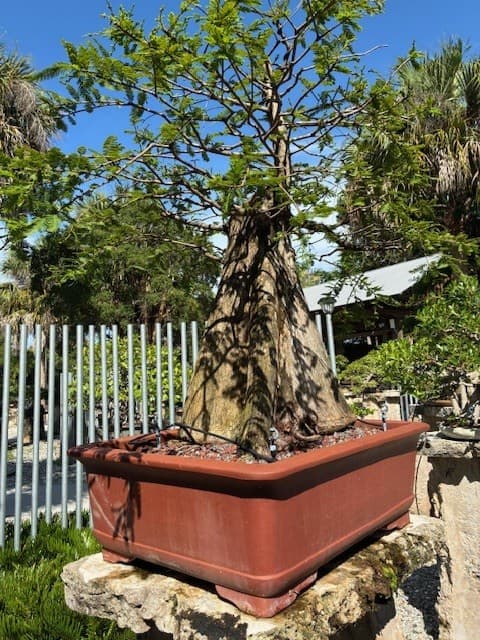
Shape is the first decision that changes the mood of a display. A broad, low container can make a tree feel stable and old, while a taller or more upright vessel pushes the eye upward and can sharpen the sense of movement. In practice, that means the pot does not merely support the tree physically, it establishes the emotional key.
Longwood uses Gayle Fiato’s work to show how that happens. Her containers are natural, organic, and subtly varied in color and patina, the kind of restraint that lets the planting lead without erasing the pot. One of her pieces, Earth’s Cradle, is a nurturing form with bark-like texture and a forest-floor feel, exactly the sort of vessel that can make a tree seem rooted rather than staged.
Texture, glaze, and restraint
Texture can matter as much as silhouette. Fiato’s organically shaped, textured, wood-fired pots show why bonsai pottery is often judged by what it does not do, not how loudly it announces itself. Bark-like surfaces, uneven patina, and softened edges help a container echo trunk line, nebari, and the weathered character that bonsai artists spend years building into the tree.
Glaze changes that effect again. A subtle glaze can cool a composition, warm it, or shift it toward seasonality, while an unglazed or more muted finish can keep attention on bark, branch structure, and the tree’s deadwood. Fiato’s work avoids chemicals and relies instead on wood fire, clay, ash, woods, and minerals, which gives the surface a natural variation that suits bonsai’s preference for controlled irregularity.
That wood-fired approach is not just aesthetic, it is philosophical. Longwood presents Fiato as seeing wood-firing as unpredictable, shaped by natural forces, and that attitude mirrors the bonsai impulse to work with living material instead of forcing it into rigid repetition. In bonsai, the best pot often feels discovered rather than selected.

Longwood’s collection shows the range
The scale of Longwood’s bonsai program gives that lesson weight. The garden says its bonsai collection dates to 1959, and today it includes more than 150 trees in 14 distinct styles, with rare Japanese species and specimens trained by leading bonsai masters. That kind of collection demands vessels with different personalities, because a rugged conifer, a refined deciduous tree, and a kusamono tray each ask for a different visual frame.
Longwood’s 2022 gift of 150 bonsai from the Kennett Collection, along with a $1 million endowment for care, underscores how serious and expensive this stewardship is. Pots are part of that long-term care, not decoration added at the end. They protect roots, shape presentation, and help keep a collection coherent as trees move through exhibitions, refinements, and seasonal rotations.
Kusamono deserves the same attention
Kusamono, the Japanese term for potted grasses and flowers displayed alone or as seasonal companions to bonsai, is a useful reminder that smaller plantings also depend on vessel choice. The container can make a simple seasonal planting feel delicate and intentional, or heavy and overbuilt. In that setting, proportion becomes everything: the pot has to support the sense of spontaneity without turning the composition into clutter.
- Does the pot echo the tree’s trunk movement or fight it?
- Does the glaze deepen the seasonal mood or distract from it?
- Does the texture reinforce age, softness, or ruggedness?
- Does the proportion make the tree feel settled and complete?
That is why Longwood’s emphasis on pots is so useful for everyday display. When you are choosing for your own bench or show table, the questions are practical:
Those questions apply whether the subject is a formal upright, a windswept conifer, or a kusamono planting meant to act as a seasonal accent. The pot is part of the story the moment the composition is viewed from a distance.
A collection built for the community
Longwood is also widening the frame beyond its own displays. Its inaugural Bonsai Festival is scheduled for June 24 to 29, 2026, and the six-day event will bring in regional clubs from the tri-state area along with demonstrations, lectures, vendors, an auction, and awards. That makes the pot conversation more than an internal curatorial idea, because it turns the garden into a gathering place where technique, display, and material culture all meet.
The lesson is simple and easy to carry back to the bench: bonsai is not a tree placed in a container, it is a relationship built between living material and the vessel that holds it. Longwood’s collection, and Fiato’s quietly expressive pots, show that the best displays do not separate those two halves. They let the pot complete the tree, and the tree justify the pot.
This article was produced by Prism’s automated news system from verified source data, official records, and press releases, then run through automated quality and moderation checks before publishing. The system is built and supervised by the people who set the standards it runs under. Read our full AI policy.
Did this article answer your question?