Midland Bonsai members visit Japan for Kokufu-ten exhibition lessons
Kokufu-ten’s two-part format is the quiet lesson: Midland and Redditch members saw how repeat viewing sharpens display judgment at Japan’s top show.

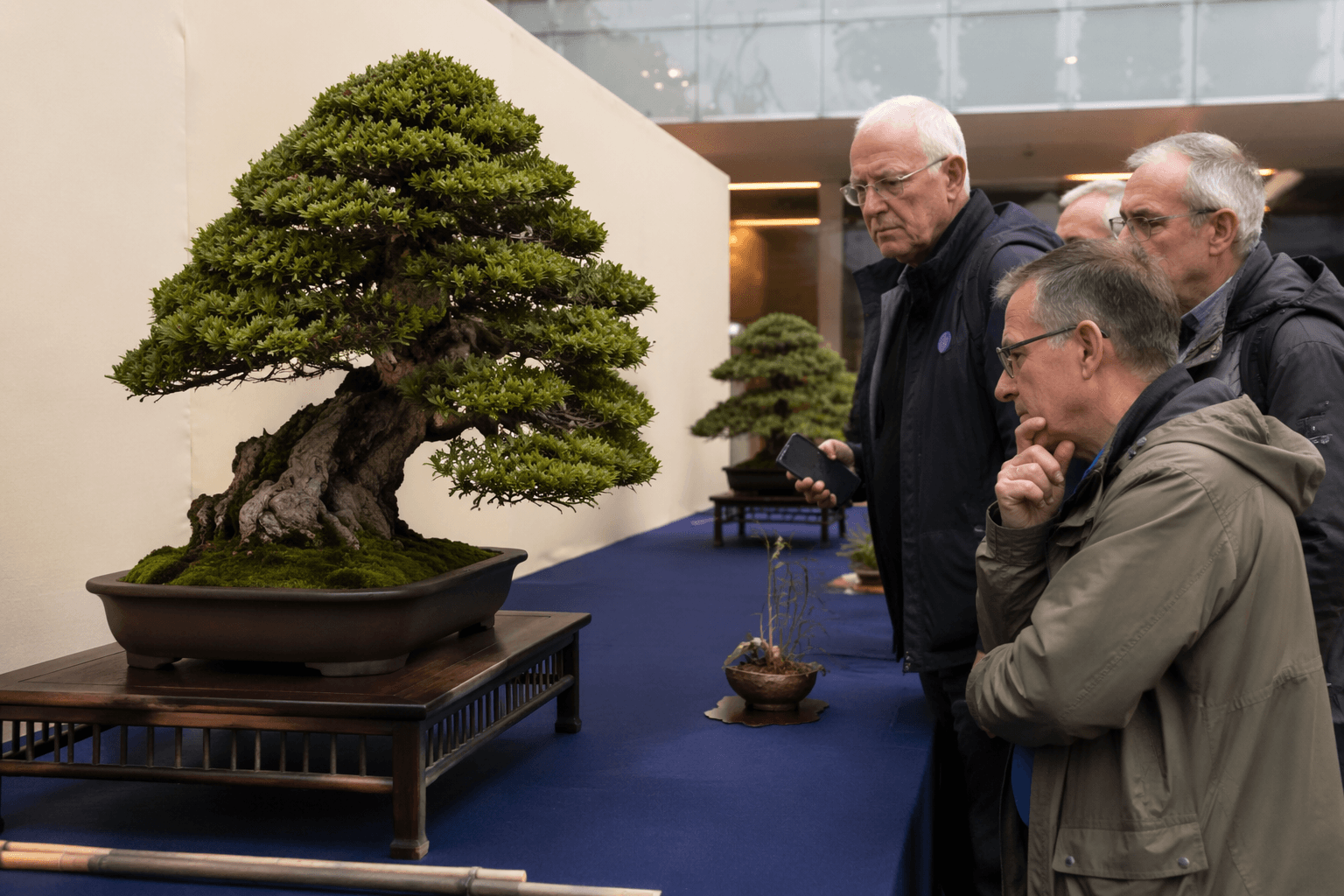
The most revealing thing about Kokufu-ten is not a single famous tree, but the way the show is staged twice. The exhibition splits into two halves, with a break in between and a full change of trees for the second round, and that structure turns a visit into a lesson in comparison, pacing, and discipline. For Midland Bonsai Society and Redditch members in Japan, that meant the show was not just something to admire once, but something to study properly.
Why Kokufu-ten rewards a second look
Kokufu-ten began in 1934 and has grown into Japan’s highest-level, highest-prestige bonsai exhibition. The 100th edition in 2026 used the two-part format that has been in place for the past twelve years, with Part 1 at the Tokyo Metropolitan Art Museum in Ueno Park from February 8 to 11 and Part 2 from February 14 to 18, with February 16 set aside as a closure day for the reset. That reset is the key detail many visitors miss until they are there in person: the show is not a fixed wall of trees, but a carefully edited sequence that changes midstream.
For Western club members, that matters because it reveals how much of exhibition bonsai is about timing and presentation, not only horticulture. A tree can be strong on its own, but Kokufu-ten shows how selection, display pairing, and the rhythm of the room shape what you notice first and what you only understand after a return visit. The 100th show featured 181 displays in each half, 362 in total, which makes the comparison culture of the exhibition impossible to miss.
A club trip built around observation
Midland Bonsai’s April 2026 newsletter turns the Japan trip into a practical travel log for serious learners. The group flew to Tokyo on February 5 after a 3 a.m. start, picked up a fourth traveler in Frankfurt, and stayed in a guest house about 10 minutes from Ueno Park. That proximity made the Kokufu-ten visit central rather than incidental, and it gave the members room to experience the exhibition on opening day instead of trying to squeeze it into a broader sightseeing schedule.
The itinerary also included Akihabara and a huge flea market at Tokyo Racecourse before the Kokufu-ten visit, which speaks to how bonsai people often learn by looking at objects beyond the main show. The trip then continued to Tokoname, Wakayama, Osaka Castle, and a last-minute day trip to see Mount Fuji after the group felt the journey would not be complete without Fujisan. In bonsai terms, that is not random tourism: it is a way of building visual literacy through museums, markets, historic sites, and landscape.
What stood out inside the exhibition
The Midland newsletter singles out apricot and plum trees, along with a popular hinoki forest, as exhibition highlights. Those are the kinds of details that matter to club growers because they show how Kokufu-ten values seasonal feeling, species choice, and the strength of a group planting just as much as dramatic trunk size. The takeaway is not that one tree type wins attention, but that the show rewards a broad eye trained to read composition as well as refinement.
Weather became part of the memory too. The travelers had 15C daytime temperatures on the first day, then later saw overnight snow flurries, which gave the trip a sharply seasonal edge even before the trees did. Snow and warm sake may sound like travel color, but in this setting they underline how closely bonsai observation is tied to atmosphere, timing, and the feeling of place.
The ceremony behind the centennial
The 100th Kokufu-ten was marked with more than the exhibition itself. The Japan Bonsai Association held a commemorative ceremony at the Imperial Hotel Tokyo on February 13, with bonsai demonstrations, special display trees, a memorial video, and traditional performing arts. That ceremony frames the centennial not as an isolated show, but as a formal milestone in a long exhibition culture that still knows how to put stagecraft, history, and live demonstration in the same room.
That wider context matters because Kokufu-ten was originally created to present bonsai as a distinctly Japanese cultural art form. The show’s prestige now comes not only from its age, but from the discipline of its presentation and the standards it sets for display. For a club member standing in Ueno Park, the lesson is visible in the spacing, the pairings, the reset between halves, and the expectation that you pay attention more than once.
What club members bring home
The Midland and Redditch visit shows how a club trip can do more than generate photos. By combining Kokufu-ten, the museum in Omiya, Tokyo’s markets, and the broader travel through Tokoname and Wakayama, the group turned a journey into a working syllabus on display quality and cultural context. The visit also sat alongside another design-minded Midland post titled Spot the mame, which suggests a club culture that keeps moving from small-tree display to major exhibition without losing the thread.
That is the real value of seeing Kokufu-ten in person: it teaches repetition, restraint, and the habit of looking again after the reset. A split show with two rotations of trees may sound like a logistical detail, but for bonsai it becomes the whole point, because the art is often clearest when you watch how the best work changes, disappears, and returns under a different light.
This article was produced by Prism’s automated news system from verified source data, official records, and press releases, then run through automated quality and moderation checks before publishing. The system is built and supervised by the people who set the standards it runs under. Read our full AI policy.
Did this article answer your question?