Milwaukee Bonsai Society adapts ancient art to northern climate
Milwaukee’s bonsai scene turns World Bonsai Day into a climate lesson, with Joe Thorstensen showing why local species, timing, and technique matter in the North.
Joe Thorstensen’s bonsai lesson starts with the weather
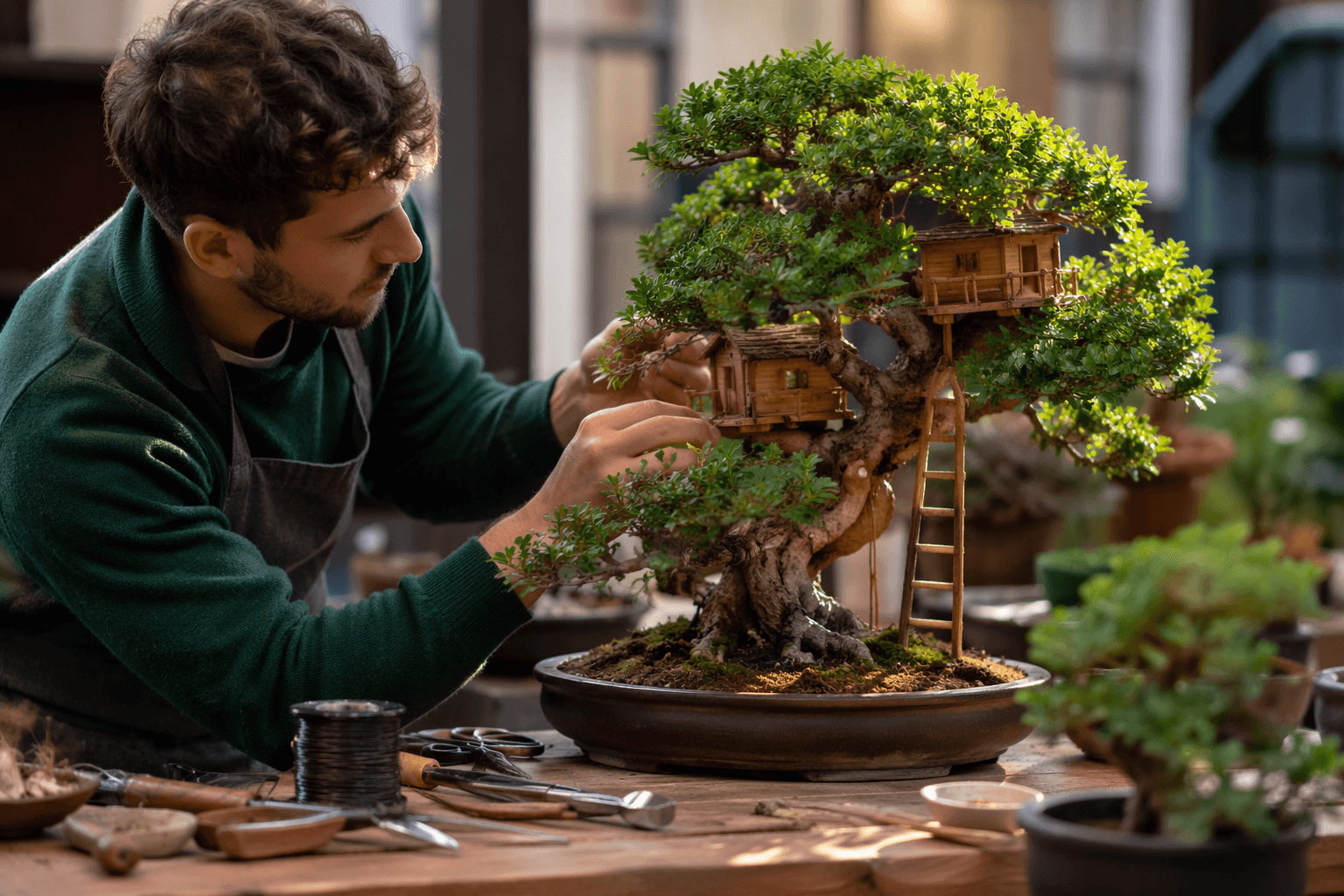
Joe Thorstensen talks about bonsai with the calm precision of someone who has spent years reading trees, not just styling them. As president of the Milwaukee Bonsai Society, he frames the art as miniature trees grown in containers and shaped over years by balancing water, sun, soil, pruning, and design, then asks the question Milwaukee forces on every grower: what actually survives and thrives here?
That northern-climate reality is the story behind the city’s World Bonsai Day observances, which turn a global celebration into a practical local tutorial. In Milwaukee, bonsai is not presented as a museum piece. It is a living craft, adjusted for cold winters, regional materials, and a style that often leans more naturalistic than the strict formal traditions associated with Japanese bonsai.
World Bonsai Day becomes a local entry point
World Bonsai Day lands on the second Saturday of May, and the observance was established in 2010 by the World Bonsai Friendship Federation to honor Saburo Kato, the third-generation owner of Mansei-en in Omiya, Japan. That international history gives the day real weight, but in Milwaukee it also serves a very practical purpose: it opens the gates and invites newcomers to see what bonsai looks like when a northern city makes the art its own.
This year’s public face of the celebration centered on two showcase sites, Boerner Botanical Gardens in Hales Corners and Lynden Sculpture Garden. Each site was expected to display roughly 15 to 20 trees, making the event feel approachable rather than overwhelming. Boerner also offered live demonstrations at 10 a.m. and 1 p.m., the kind of schedule that turns passive curiosity into a first step toward participation.
What changes when bonsai is taught in Milwaukee
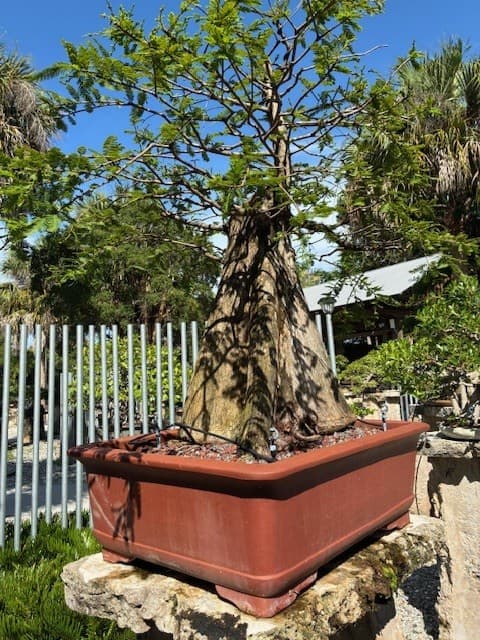
Thorstensen’s biggest teaching point is that bonsai begins with fit. The Milwaukee Bonsai Society works to help growers choose species that match the region instead of trying to force a tree into a setting it was never meant to handle. His practical example is a native tree such as tamarack, a choice that signals how local material can be just as compelling as imported expectations.
That regional approach changes the look of the work too. Japanese bonsai carries deep roots and strict formal traditions, but Thorstensen notes that American growers often lean toward a more naturalistic look. In Milwaukee, that tension is not a flaw in the culture. It is the source of its energy, because it lets the community respect the tradition while still adapting it to local climate, local species, and local taste.
A few Milwaukee-specific takeaways stand out:
- Species selection matters from the start, and tamaracks are one practical local answer.
- Regional materials matter too, including North American sourced substrate and Wisconsin-made wound paste.
- Style often bends toward a more naturalistic look, rather than pure formalism.
- Seasonal judgment matters, because a tree has to be managed for the climate first and the display bench second.
A club built around education, not just display
The Milwaukee Bonsai Society’s teaching culture is one of the strongest signs that the hobby here is still expanding. Founded in the summer of 1969, the club now counts more than 260 members and says it sponsors two major shows each year: a three-day annual exhibit and a judged show at the Wisconsin State Fair. That calendar shows a group that treats public display as part of a larger pipeline, moving people from first look to active study.
Its 2026 program reinforces that idea. The schedule includes workshops on making bonsai pots, bonsai hacks, burning bush styling, kusamono creation, and Chinese elm, which tells you the society is not organizing around a single aesthetic. It is building a working curriculum, one that covers containers, composition, companion plantings, and species-specific technique alongside display.
A living collection, not a static museum
Thorstensen’s own yard makes the same point on a more personal scale. He has a couple hundred trees, but only a small fraction meet his standard for true bonsai when judged by size, style, and artistry. His oldest tree is a ponderosa pine estimated at about 100 years old, a detail that turns the hobby into a long stewardship story rather than a quick decorative project.
That sense of care echoes across the local institutions. Lynden Sculpture Garden says the Milwaukee Bonsai Society’s 2026 annual exhibit is its fifth at the site, and more than forty trees are expected to be housed under two tents. The exhibit is judged by visiting experts and typically comes with vendors, raffles, food trucks, and demonstrations, which makes it feel like a full community gathering rather than a narrow specialist show.
The Milwaukee Bonsai Foundation says the Bonsai Collection at Lynden is a collaboration among the foundation, Lynden Sculpture Garden, and the Milwaukee Bonsai Society. The pavilion that houses the collection is open Wednesdays, Saturdays, and Sundays from May to October after the World Bonsai Day reopening, so the exhibition footprint extends well beyond one weekend. In Milwaukee, bonsai is supported by institutions that keep the conversation going long after the public celebration ends.
Why the local version matters
What makes the Milwaukee scene distinctive is that it treats bonsai as both art and adaptation. The club’s exhibits, its dense workshop calendar, its collaboration with Lynden, and its reliance on regional materials all point in the same direction: this is a community that understands the craft as something shaped by place. World Bonsai Day gives the public a reason to notice, but the deeper story is the one Thorstensen keeps telling through his trees.
In Milwaukee, bonsai is not frozen in a single tradition. It is being translated, taught, and practiced for a northern climate, one species and one season at a time.
This article was produced by Prism’s automated news system from verified source data, official records, and press releases, then run through automated quality and moderation checks before publishing. The system is built and supervised by the people who set the standards it runs under. Read our full AI policy.
Did this article answer your question?