Penjing’s ancient roots trace 4,000 years of Chinese landscape art
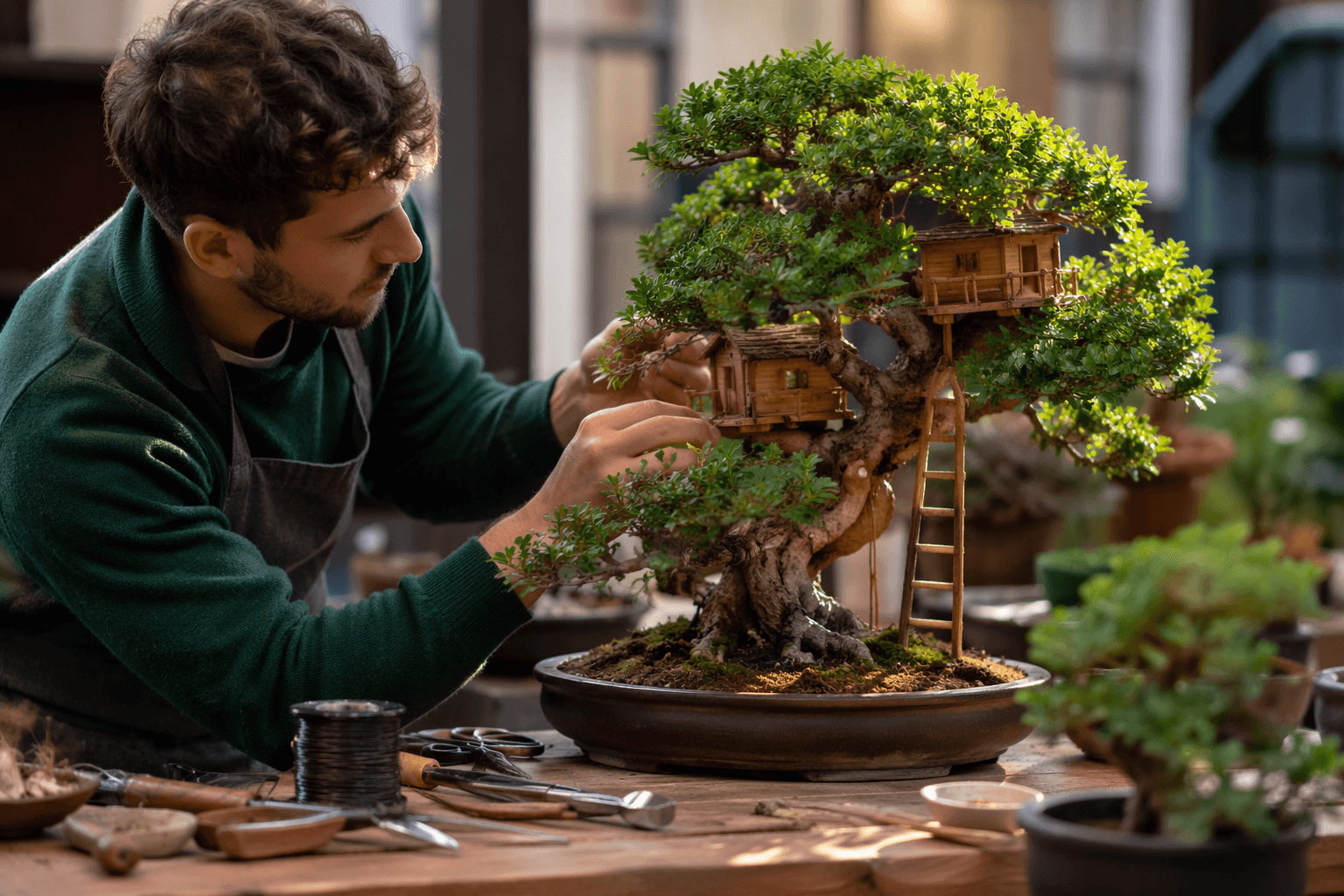
Penjing began as landscape art, and that changes everything on the bench: each stone, tree, and gap carries the scale of a larger world.
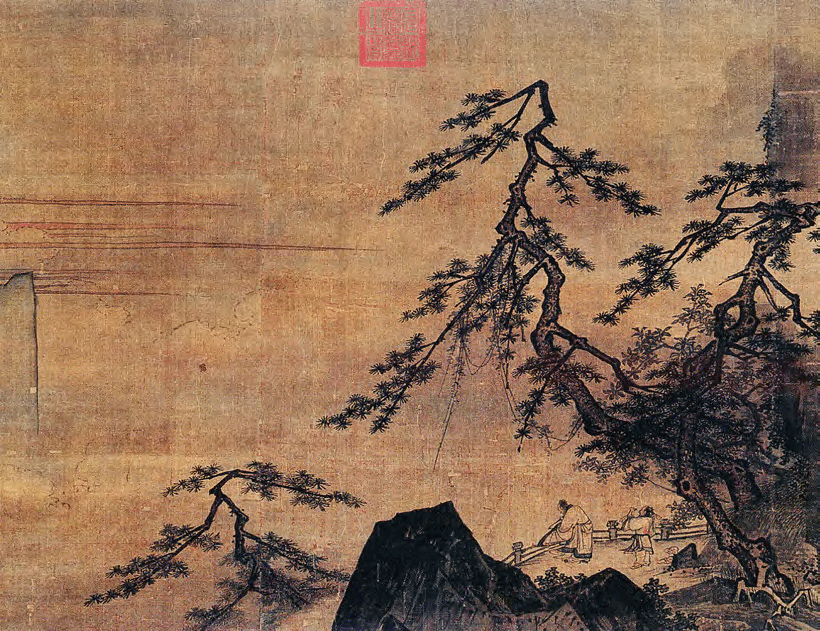
Penjing is easiest to understand when you stop treating it as a tiny potted scene and start reading it as compressed landscape. Its roots reach back more than 4,000 years in Chinese garden art, where imperial gardens were built to imitate distant mountains, waters, and other scenic variety for rulers and elites. That old logic still matters today because it explains why a good penjing composition feels like a place, not just an arrangement.
Landscape before miniature
Long before penjing became a recognizable tray landscape, Chinese visual culture was already teaching artists to think in terms of terrain, rhythm, and symbolic scale. Around 500 BCE, poetry and painting began shaping those natural ideas more deliberately, and Confucian and Taoist thought deepened the spiritual relationship between people and nature. In practical terms, that means penjing was never only about making something small. It was about distilling a world view into a controlled space.
The Metropolitan Museum of Art adds another crucial layer to that story. Chinese collectors were already valuing fantastic rocks in Han dynasty China, and by the early Song dynasty, small ornamental rocks had become scholar’s-study objects. The Met also notes that portrayals of individual rocks with old trees or bamboo became a lasting pictorial genre in China. That is not a side note for modern bonsai and penjing work. It is the source of the familiar visual language you still see on the bench: stone as mountain, tree as age, bamboo as line and restraint.
What the old traditions teach the modern composition
This historical background changes how you read scale. In penjing, scale is not just size reduction. It is narrative compression. A single tree can imply a slope, a grove, or a far horizon. A stone can carry the mood of an entire mountain system. Empty space is not filler between objects, but the distance that lets the scene breathe.
That is why the article’s emphasis on scholars’ aesthetics matters. Penjing developed as a cultural expression rooted in the taste of educated elites and in the desire to condense large emotional and geographic ideas into small compositions. When you place material today, you are working inside that same logic. The strongest tray landscapes do not simply display specimens. They suggest weather, terrain, time, and memory in one contained frame.
That older landscape mindset also helps explain why bonsai and penjing are related but not identical in feeling. Bonsai often centers the tree with great force and discipline. Penjing keeps the broader scene in view, with rocks, water, and planting relationships carrying as much expressive weight as the tree itself. If you want the composition to read clearly, the historical model says to think like a landscape painter and a gardener at the same time.
A tradition that survived interruption
Penjing’s history is not a smooth upward line. The art suffered through the nineteenth and twentieth centuries as China endured war, foreign pressure, unequal treaties, internal instability, and cultural upheaval. That disruption matters because it explains why penjing’s later revival carries such emotional weight. The tradition did not simply continue untouched. It had to survive rupture.
The renaissance that began in the 1980s is best understood as recovery, not reinvention. That recovery restored a deeply old tradition that had been interrupted, and it put penjing back into view as something larger than decorative horticulture. Its survival became part of the art’s meaning. Memory, balance, and contemplation are built into the form because the form itself lived through historical pressure and came back.
China’s push for UNESCO intangible cultural heritage recognition in October 2023 fits that same story. The bid cited the long history of penjing, abundant resources, skilled craftsmen, numerous associations and organizations, and seven state-level recognitions of penjing as intangible cultural heritage. Those details show an art that is institutionally organized, not just admired in private collections. Penjing is still being named, protected, and argued for at the cultural level.
Regional schools and living institutions
Penjing is not one uniform style, and Shanghai makes that especially clear. Shanghai Museum says Shanghai-style penjing has a history of more than 400 years and calls it a treasure in the city’s humanistic tradition. Official Shanghai government heritage material describes Shanghai-style penjing as a key school of the art, recognized for its unique flair. That regional identity matters because it shows how penjing developed into distinct schools rather than a single fixed formula.
The contemporary museum world keeps reinforcing that continuity. In September 2024, Shanghai Museum East hosted an exhibition of scholar’s rocks and Shanghai-style penjing, alongside a new roof garden. That pairing is revealing: the old scholar’s aesthetic is still being shown in a public architectural setting, not sealed off as a relic. The art remains visible, contextual, and part of current cultural life.
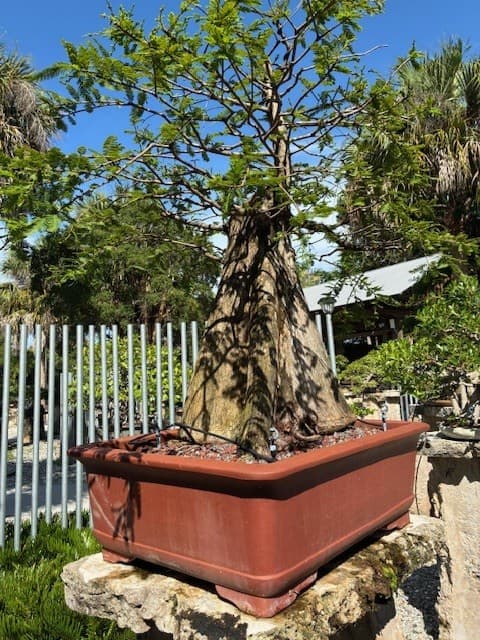
Penjing also has a place far beyond China. The National Bonsai Foundation describes the National Bonsai & Penjing Museum in Washington, D.C. as the world’s first and finest bonsai museum. That institutional presence matters because it places penjing inside the broader international bonsai conversation, where Chinese landscape thinking sits beside Japanese bonsai practice and helps sharpen the distinctions between them. The art’s influence is not abstract. It is physically preserved, exhibited, and interpreted.
What penjing leaves you with is a different way of seeing composition. A tree is not just a tree, a rock is not just a rock, and a tray is not just a container. The oldest Chinese landscape ideas still ask you to build a world small enough to hold in your hands, but large enough to suggest mountains, waters, poetry, and time. That is why penjing’s ancient roots still shape what happens on the bench now.
This article was produced by Prism’s automated news system from verified source data, official records, and press releases, then run through automated quality and moderation checks before publishing. The system is built and supervised by the people who set the standards it runs under. Read our full AI policy.
Did this article answer your question?