Portland Japanese Garden spotlights bonsai as family art and teaching tradition
Andrew and Jeffrey Robson turned a Father’s Day demo into a live lesson in bonsai technique, family teaching tradition, and Japanese arts lineage at Portland Japanese Garden.

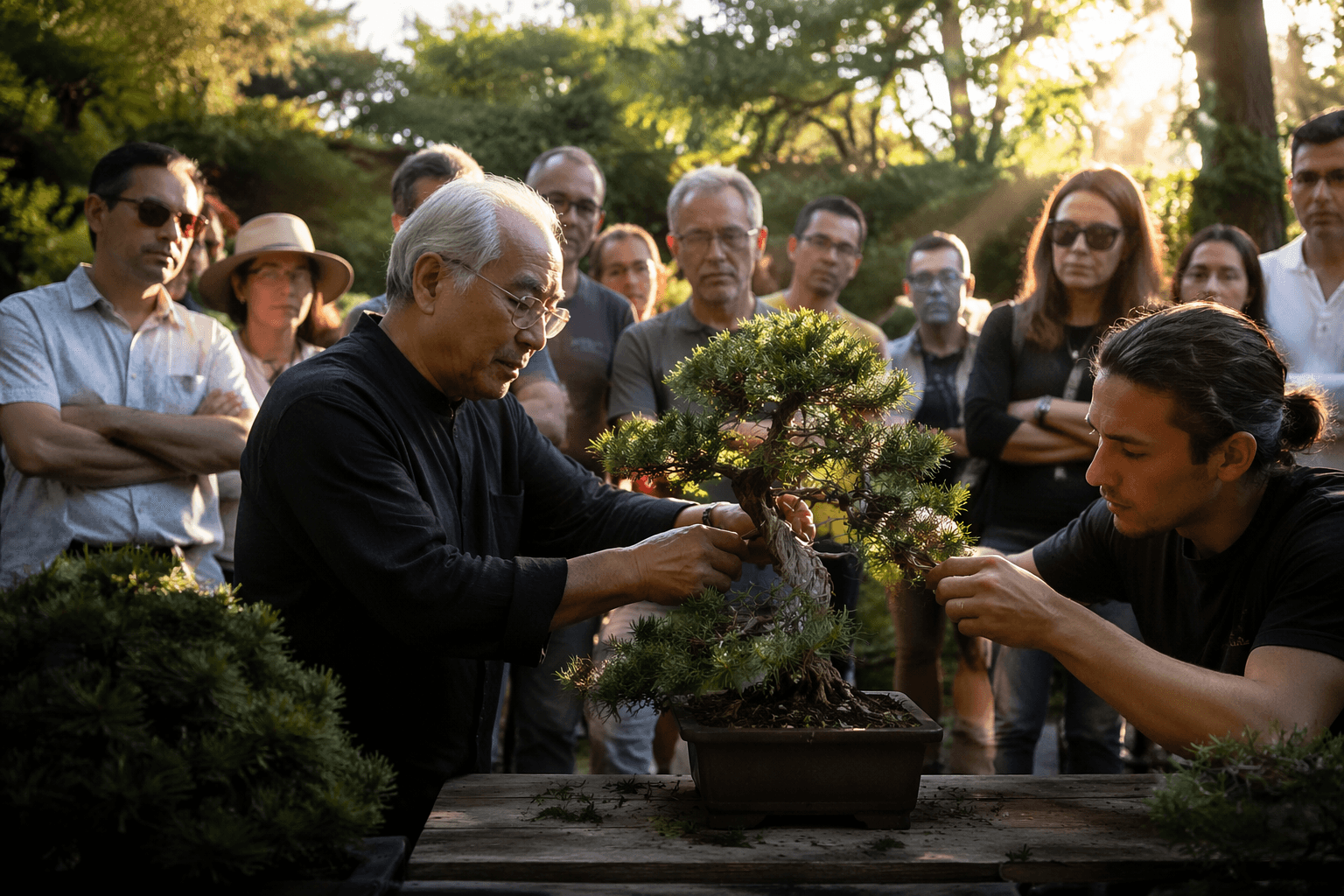
Bonsai came off the pedestal at Portland Japanese Garden and into a working lesson. The June 21 cultural demonstration put Andrew and Jeffrey Robson in front of visitors inside the Cathy Rudd Cultural Corner at the Jordan Schnitzer Japanese Arts Learning Center, where the Garden framed the art as something taught, explained, and practiced in public rather than simply admired.
A public demo that works like a benchside lesson
The setting mattered as much as the trees. Portland Japanese Garden included the demonstration with admission or membership, which made it part of the regular visitor experience instead of a specialist-only program. The Garden defines bonsai as the art and science of miniature trees, and it gives newcomers a clear way into the practice without needing to arrive already fluent in the language of styling, repotting, or seasonal care.
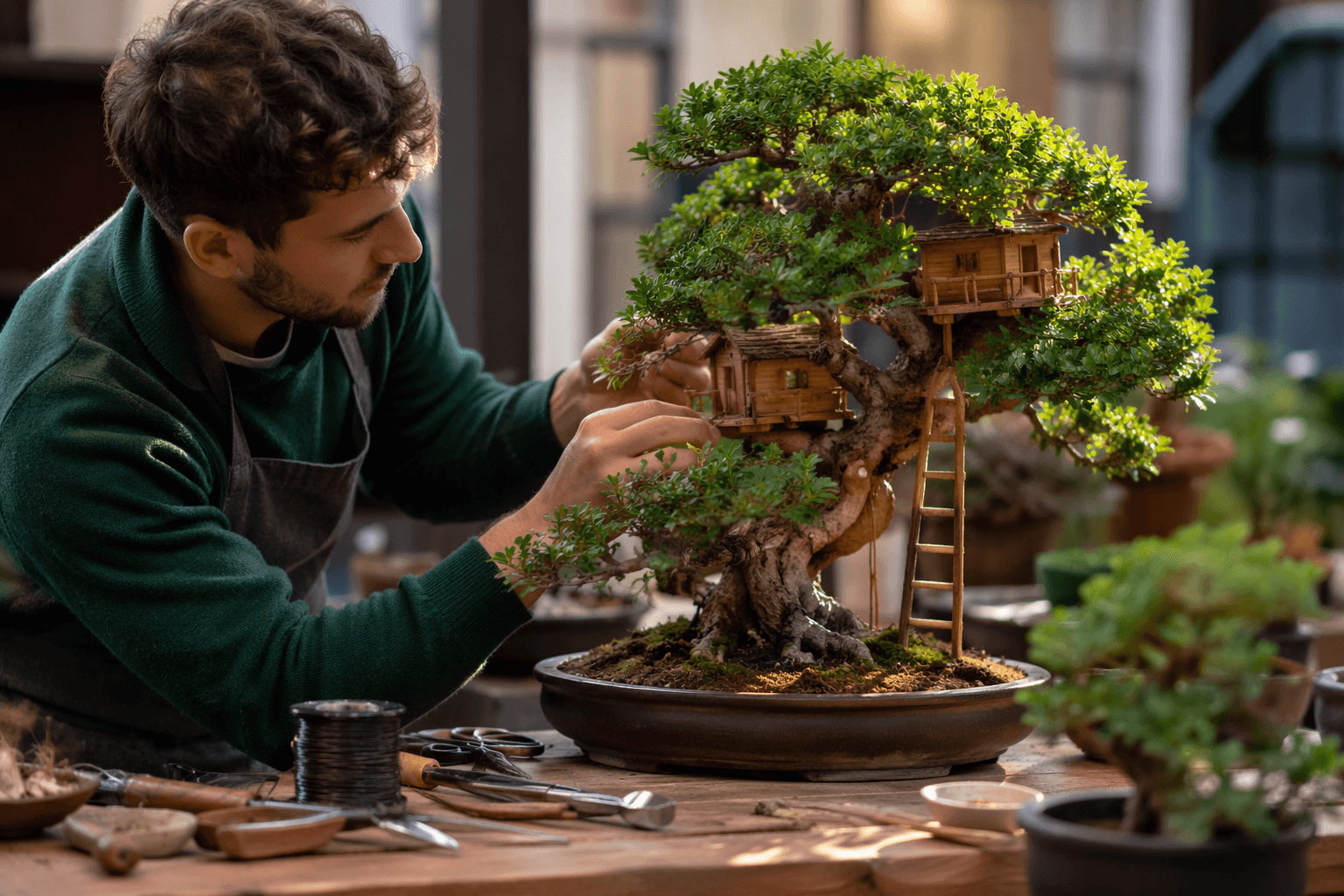
The Robsons’ presentation also carried the feel of a family workshop. Andrew and Jeffrey work together at Rakuyo-en in Milwaukie, Oregon, a bonsai garden and living classroom, and the Garden used their appearance to show how instruction happens in real time. For visitors, the point was not only to see a refined tree, but to hear how each decision gets made and why that decision matters for the next stage of the tree’s development.
Why the Robsons’ credentials matter at the bench
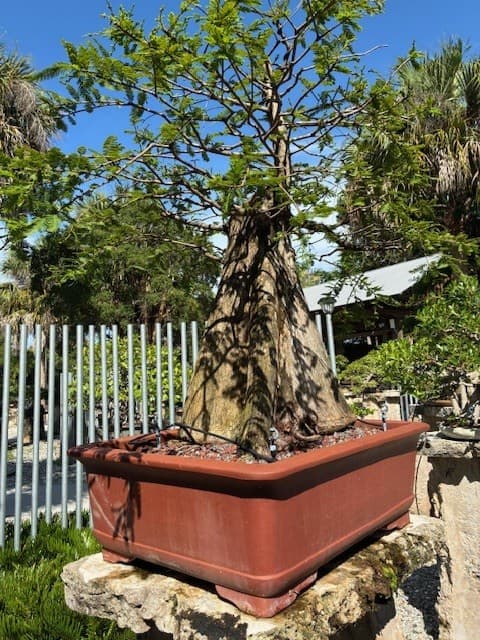
Andrew Robson brings deep technical authority to that kind of public teaching. He is a deciduous bonsai artist, the president of the Bonsai Society of Portland, and a lecturer and exhibitor with long ties to the American bonsai community. His biography also notes a three-year apprenticeship with Michael Hagedorn after graduating from Yale University, plus a past role on the American Bonsai Society board.
That background gives weight to the lessons visitors hear in a live demo. A tree on the bench is not just a finished object, it is evidence of process, and Andrew’s experience in deciduous work makes him especially useful when the discussion turns to growth, branching, and seasonal structure. The Bonsai Society of Portland is the largest bonsai club in the United States, which helps place the Robsons inside a broader local network rather than as isolated artists working alone.
The club promotes bonsai through monthly meetings, mentoring classes, library resources, and social events. That mix mirrors the public demonstration model at the Garden: technical knowledge is shared socially, one conversation and one tree at a time.
Jeffrey Robson adds a Japanese arts lens
Jeffrey Robson brings another layer to the demonstration. His biography highlights a broader relationship with Japanese arts, including bonsai, suiseki, and ikebana, and notes that he began studying Ikenobō ikebana in 2016. He has attained the rank of Kakyo, Assistant Professor 3rd grade, which places him inside a formal teaching lineage rather than a casual hobby track.
Ikenobō began in 1462 at Kyoto’s Rokkaku-do Temple, a detail that gives this father-and-son presentation historical depth without turning it into a museum piece. In practice, that lineage shows up in the way the Robsons frame bonsai alongside other Japanese arts traditions, reinforcing that the work on the bench is part of a much larger vocabulary of form, restraint, and seasonal attention.
What a visitor can learn by watching them work
The strongest part of a live bonsai demo is that it shows the thinking, not just the result. Portland Japanese Garden’s notes point to several fundamentals the Robsons teach at Rakuyo-en, and those are exactly the kinds of lessons that make a public demonstration worth watching.
- Repotting shows how much of bonsai happens below the surface, where root work shapes the tree’s future.
- Growth management makes clear that the tree is always being steered, not merely maintained.
- Styling choices reveal when to pull back, when to commit, and how a deciduous tree’s structure changes with the seasons.
- Verbal explanation turns each cut and adjustment into a step readers can recognize the next time they stand over their own bench.
That combination of demonstration and commentary is especially useful for newer growers who are trying to decide whether a public bonsai event is meant to inspire, instruct, or sell something. This one read as all three: a Father’s Day public talk, a live demo, and a doorway into the Robsons’ own teaching practice.
Why Portland Japanese Garden keeps returning to bonsai
The June 21 event also fits into a longer pattern at the Garden. In a June 2025 profile, Portland Japanese Garden said Andrew and Jeffrey Robson had been demonstrating there for several years, and tied their work to the institution’s mission of “cultural diplomacy.” That same profile noted that the Garden offers volunteer bonsai docents daily to answer questions, which keeps the learning active even when a formal demonstration is not underway.
The display program itself is built for rotation, with bonsai typically shown from mid-April through mid-November and changed seasonally. Add in Bonsai Week and later 2026 appearances, including a July visit by Japanese master Shinji Suzuki, and the pattern is unmistakable: the Garden is using bonsai as an ongoing public-facing educational platform.
This article was produced by Prism’s automated news system from verified source data, official records, and press releases, then run through automated quality and moderation checks before publishing. The system is built and supervised by the people who set the standards it runs under. Read our full AI policy.
Did this article answer your question?