Redditch Bonsai Society highlights moss, accent plants and suiseki
Redditch turned a club night into a display clinic, showing how moss, accent plants and suiseki give a bonsai its setting, scale and season.

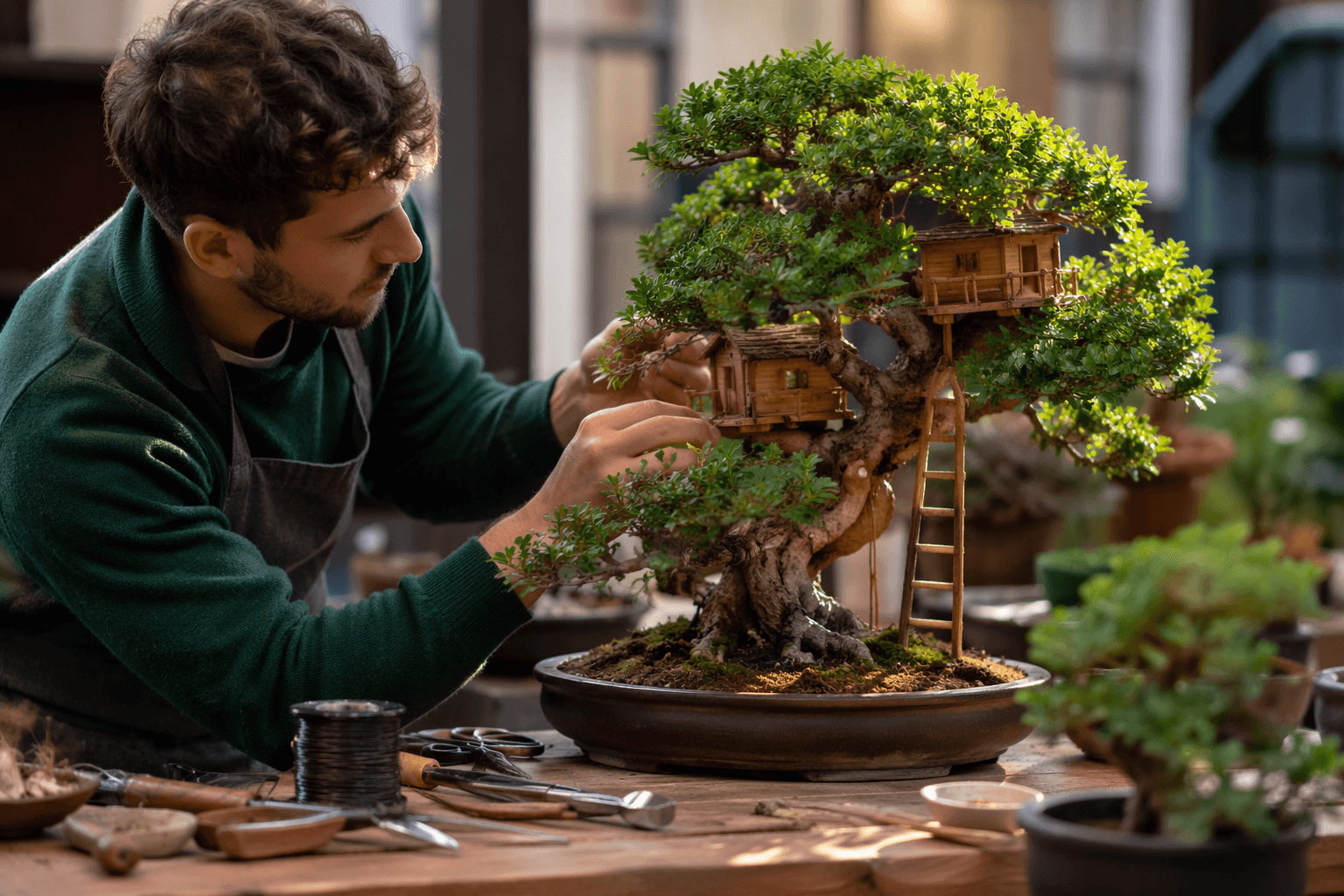
The tree may be the headline, but Redditch Bonsai Society used its June 18 meeting to make the case that a finished display lives or dies on the supporting cast. Mosses, ferns, accent plants and suiseki took centre stage, and the message was clear: if you want a composition that feels believable, you have to think beyond the trunk and branches.
Why the supporting elements matter
The club’s focus was on the quiet work that makes a bonsai feel complete. Moss and ferns soften the base of the tree, accent plants add seasonal context, and suiseki introduces another natural form without pulling attention away from the main subject. That matters because the most convincing display does more than show a tree in a pot, it suggests a place, a mood and a moment in the season.
Redditch framed the session as a practical reminder that the finishing layer is not decoration for decoration’s sake. The right companion piece can establish scale, hint at habitat and help the eye move through the composition, while the wrong one can flatten the whole display. In a club that describes itself as friendly, knowledgeable and supportive of every experience level, that is exactly the kind of topic that helps bridge the gap between tree care and presentation.
Accent plants are part of the story
Accent planting, often called kusamono in bonsai circles, is one of the most overlooked tools in display work. In traditional tokonoma arrangements, the tree is usually paired with a scroll and an accent plant, and the best of those plantings stay subordinate to the tree while adding a clear sense of season or setting. That balance was central to the Redditch discussion.
The useful lesson is simple: choose a companion that supports the tree rather than competing with it. Accent plants can be flowering plants, bamboo, grasses, ferns, moss varieties or even mushrooms, but they work best when they echo the world the tree seems to come from. A flowering kusamono can suggest spring, a grass or fern can suggest a damp woodland edge, and a restrained moss planting can make a rugged tree look rooted rather than staged.
For display prep, that means paying attention to scale, colour and texture before you worry about novelty. A companion plant should help the viewer understand the tree, not become the thing they remember most.

Moss and ferns do more than fill space
The Redditch meeting gave mosses and ferns the same respect as the more formal accent plant. That is useful because these smaller elements do a lot of visual labour in a display. Moss can unify the base of a tree, hide awkward transitions and suggest age, while ferns can add movement and softness without breaking the landscape feel.
If you are preparing a bench display or a show entry, moss and ferns are worth treating as design decisions, not afterthoughts. They can reinforce a woodland image, make a shallow pot look more grounded and keep an arrangement from feeling bare. The club’s hands-on format, with members encouraged to bring mosses, ferns, accent plants, display examples, planting trays, shallow pots and even photos of previous arrangements, shows how much value there is in comparing these choices side by side.
That kind of sharing is especially useful when you are trying to decide whether a composition needs more surface texture, a stronger seasonal cue or simply less visual clutter.
Suiseki brings landscape into the display
Suiseki, the Japanese art of stone appreciation, received equal attention at the meeting. In bonsai display, a naturally formed stone can evoke mountains, waterfalls, islands or other landscapes, giving the tree a wider world to inhabit. The key is restraint, because a stone that is too dramatic can overpower the tree it is meant to support.
Presentation matters here too. Suiseki are often shown on daiza wooden stands or in dobans trays, and at many exhibitions they are displayed and judged separately from bonsai trees. That separation reflects the art form’s independence, but it also explains why the stone has to work in harmony with the tree when the two are shown together.

The Redditch discussion is a reminder that a stone is not there simply because it is beautiful. It has to belong in the scene. If the tree is the main character, the suiseki is the landscape that frames the story.
A hands-on meeting in the right club setting
The meeting format made sense for the subject. Rather than a lecture-only evening, the society encouraged members to bring materials and compare ideas in person, which is exactly how display skills improve. For newcomers, that creates a low-pressure way to learn how the parts of a display fit together. For more experienced members, it becomes a chance to test ideas before a show or refine a bench presentation.
That practical spirit fits the club’s long-running identity as a small, friendly group meeting at Webheath Village Hall on the third Thursday of each month at 7.30pm. The 2026 programme also places the June 18 session inside a full year of meetings, workshops, critiques, auctions and seasonal displays, which tells you this was part of a wider push to keep the club active and varied.
Why the timing mattered in a busy June
The Redditch session also landed in the middle of a busy regional bonsai calendar. The Federation of British Bonsai Societies diary listed the Midland Bonsai Society show for June 7, 2026, and South Staffs Bonsai Society’s display at Gardeners’ World Live from June 18 to 21, 2026. In that setting, a meeting about presentation was more than a side topic. It was timely preparation.
That is the useful takeaway from Redditch’s evening. Bonsai does not finish when the tree is wired, watered and healthy. The display feels complete only when the ground plane, the companion planting and the stone all help the viewer believe in the world around it.
This article was produced by Prism’s automated news system from verified source data, official records, and press releases, then run through automated quality and moderation checks before publishing. The system is built and supervised by the people who set the standards it runs under. Read our full AI policy.
Did this article answer your question?