Victorian Native Bonsai Club advances native species study and workshops
From Preston City Hall to Hobart, the Victorian Native Bonsai Club spent the season widening the native palette and sharpening its technique. The clearest signal: members are testing more local species, not fewer.

Native bonsai momentum at the Victorian Native Bonsai Club is showing up in the trees, the speakers, and the field trips. The club’s latest program update reads like a season map for anyone watching native-species bonsai gain ground: a March exhibition, practical talks in April and May, a nursery visit in late May, and a June meeting built around unusual plants that rarely get a full bonsai hearing.
A season built around native material
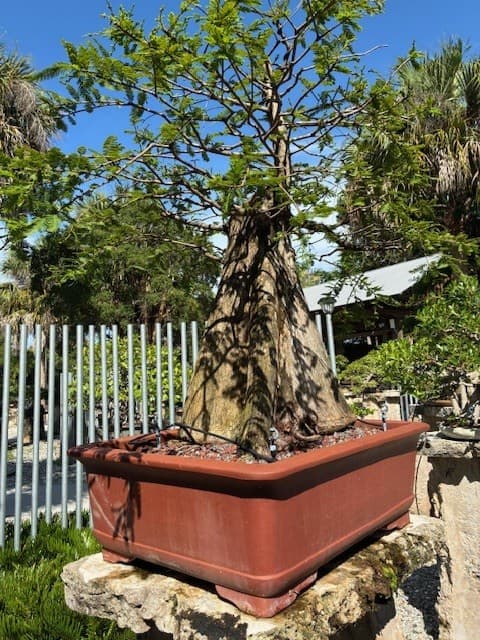
The club’s year opened in public view with its annual exhibition on March 20-21 at Preston City Hall. That show set the tone for everything that followed, with Australian native species on display across a broad palette that included sheoaks, eucalypts, acacias, kunzea, melaleucas, tea trees, banksias, and more. It was the kind of exhibition that makes the club’s direction easy to read: this is not a group dabbling in native material at the margins, but one working across a wide range of local trees and treating them as serious bonsai subjects.
That breadth matters because native bonsai often advances one species at a time, through repeated observation and shared trial rather than through a single breakthrough. The Victorian Native Bonsai Club’s calendar shows exactly that kind of slow accumulation of knowledge. Each month added another layer, from styling concepts to feeding, from nursery stock to experimental species, and then toward conifers that are only now getting fuller attention.
April put technique front and center
At the April meeting, Barry Woods presented on developing native species bonsai as mini-sized trees in small containers. That framing gets to the heart of a challenge many growers know well: native material does not always behave like the traditional species that dominate much of the global bonsai conversation. Small containers, small tree size, and native growth habits require a careful hand, and Woods’ topic pointed the club toward that reality without losing the practical bonsai focus.
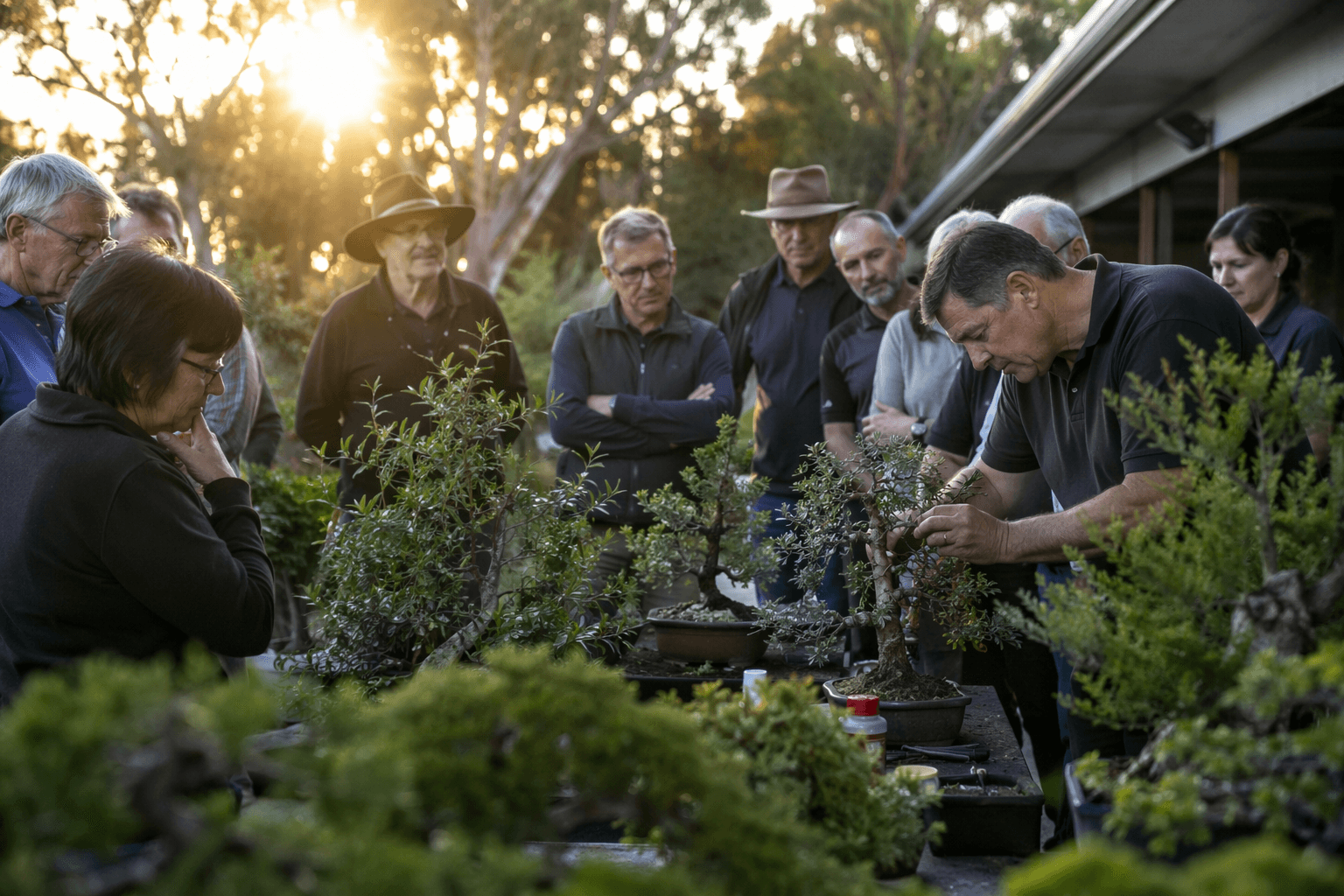
The emphasis on mini-sized trees also says something about the club’s priorities. Rather than treating native species as novelty material, the presentation placed them squarely inside the same disciplined design and refinement process used for any serious bonsai. For members, that means learning how trunk movement, ramification, and container choice have to work together when the species in question comes from Australian flora rather than imported stock.
May turned the club toward nutrition and follow-up
May brought two different kinds of learning. First came a presentation on Neutrog fertilizers, giving members a direct look at nutrition and feeding choices for trees under training. Then the club reviewed the progress and changes on trees that had been the subject of earlier demonstrations, which is the sort of follow-through that turns a talk into actual improvement.
That combination is especially useful in native bonsai, where club members are often working through long timelines and watching how a tree responds over multiple seasons. A fertilizer presentation gives the theory; the review of demonstration trees gives the proof. Together, they reinforce the club’s practical culture: ideas are judged by how the trees respond, not by how good the advice sounds in the moment.
Kuranga offered a living classroom
Later in May, the club visited Kuranga Native Nursery in Mt Evelyn and was hosted by managing director Ben Sharp. The visit gave members a chance to walk through a major native-plant resource and imagine new bonsai possibilities from stock already in cultivation. Kuranga says it offers more than 3,500 native plant species and cultivars, and Visit Victoria describes it as an award-winning specialist nursery in the foothills of the Dandenong Ranges, which gives the outing a clear sense of scale and context.
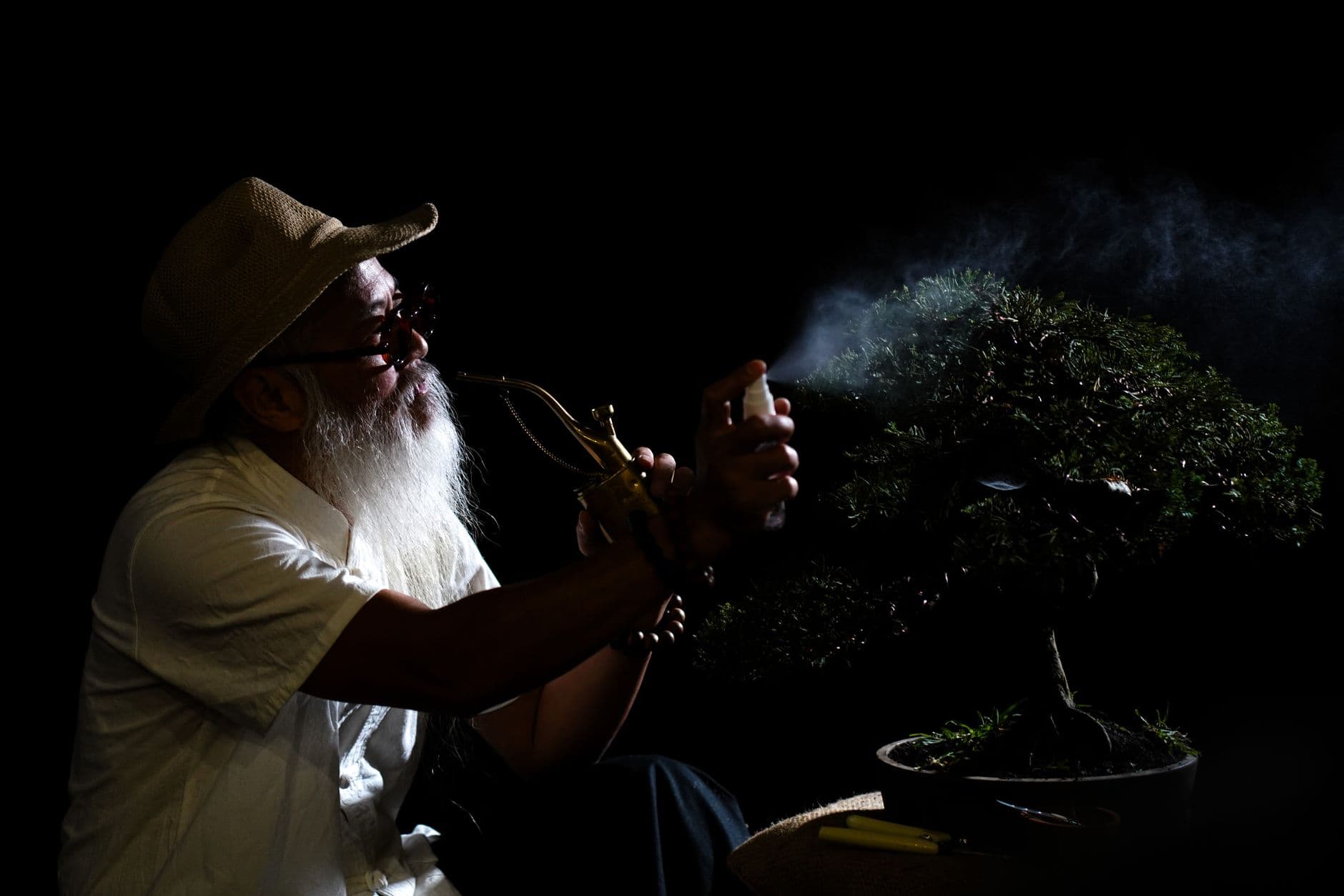
For bonsai growers, that kind of visit is more than a social stop. It is a scouting trip, a species education session, and a reminder of how much usable material exists outside the usual bonsai bench staples. A nursery with that breadth invites questions about trunk movement, foliage size, back budding, and the long game of selecting material that can be trained rather than merely admired in the ground. In a native-bonsai context, it also sharpens the eye for what may become the next serious study tree.
Hobart widened the conversation again
The June meeting then moved into more unusual species and genera, including examples members brought home from the 38th Australian National Bonsai Convention in Hobart. That convention ran from May 1 to May 4, 2026, at the Wrest Point Conference Centre, and reports from the event described a sales area packed with native Tasmanian trees, stock trees, starters, pots, suiseki, and exotic trees. For the Victorian club, that kind of convention haul matters because fresh material often opens the door to fresh debate.
What stands out here is not just the abundance of material, but the range. Native Tasmanian trees alongside starters and stock trees make it clear that the convention was serving both established bonsai makers and people looking for something they could still shape from the beginning. That explains why the June meeting could so easily pivot into unusual species and genera: the club had new trees in hand, and with them, new questions about what native bonsai can become.
The July focus points to native conifers
The next stop on the club calendar is a discussion of Australian native conifer species as bonsai. The club notes that Australia has around 40 native conifer species, stretching from tropical regions through drier inland landscapes and down to the cooler southern alpine areas in Tasmania. Many of those species are already being grown as bonsai, and the July meeting will look at how they have responded to training while also considering other species worth trying.
That is a strong sign of where the field is heading. Conifers carry their own baggage in bonsai culture, but this update suggests the club is not approaching them as a novelty detour. It is treating them as a serious next chapter in native-species work, one that can expand both the design vocabulary and the regional identity of the hobby.
What the calendar reveals about the club’s direction
Taken together, the program update shows a club moving with purpose. The exhibition established the visual range of native bonsai already in play. The talks on mini-sized trees and fertilizers grounded the work in technique. The nursery visit expanded the source material, and the Hobart convention brought in fresh trees and fresh ideas. The coming conifer discussion closes the loop by pointing toward the species still waiting for fuller attention.
That is the real story of the Victorian Native Bonsai Club’s year so far: native-species bonsai is not being treated as a side interest, but as a living, expanding practice. The club’s season has already moved from the public display at Preston City Hall to the work of study, testing, and experimentation, and the next chapter is set to begin with conifers and whatever they teach the bench next.
This article was produced by Prism’s automated news system from verified source data, official records, and press releases, then run through automated quality and moderation checks before publishing. The system is built and supervised by the people who set the standards it runs under. Read our full AI policy.
Did this article answer your question?