Buddhist practice helps a daughter navigate faith and family conflict
A daughter’s painful text-message clash becomes a practical lesson in staying with practice when family does not share the path, with dokusan giving the conflict somewhere to land.
Daisy Lin turns a family rupture into a working map for practice: her mother saw the word Buddhist on social media, read it as betrayal of her Christian devotion, and sent a text that cut straight to the nerve of religious difference inside one home. The power of the piece lies in what it refuses to do next. Instead of staging a clean victory for the daughter or a simple condemnation of the mother, Lin uses the moment to ask how Buddhist commitment survives when the people closest to you do not approve of it.
The real conflict is not belief alone
Lin’s essay, “Drawing from the Wellspring Within,” appeared on July 10, 2026, in Tricycle’s Personal Reflections section, and Tricycle identifies her as an Emmy Award-winning journalist, a longtime member of the Caretaking Council of Los Angeles Compassionate Heart Sangha, and a student at Mountain Cloud Zen Center in Santa Fe, New Mexico. That mix matters, because the piece is not written from a detached editorial perch. It comes from someone already embedded in Buddhist community life, trying to live that life in the middle of family friction rather than outside it.
The mother is not flattened into a symbol. Her early encounter with Christianity and the central place religion holds in her life give the conflict shape, especially when she reads “Buddhist” as a rejection of what she treasures. That detail keeps the story from becoming a generic interfaith drama. It is about a daughter trying to tell the truth without severing the relationship that still matters.
Lin also frames the issue through her own history of loss. Her Zen practice sustained her through divorce and helped her stay open when she wanted to shut down. That is the practical core of the essay: practice does not erase the ache, but it can keep the heart from hardening around it.
Why this lands in Zen and insight communities
For readers used to mindfulness language, the essay’s value is its refusal to separate inner work from family life. Lin shows how quickly practice can become abstract if it is only discussed in terms of calm, clarity, or insight. In the home, the real test is whether you can remain present when identity, loyalty, and grief are all being pressed at once.
That is why the piece resonates beyond one mother-daughter exchange. In mixed-belief households, the pressure often comes from ordinary things: a social-media post, a holiday gathering, a passing remark that lands as disloyalty. Lin’s story names that friction directly. Buddhist practice, in her telling, is not a way to win an argument over religion. It is a way to avoid turning pain into a permanent wall.
A previous Tricycle essay shows the same pattern. When Lin once sought guidance from Valerie Forstman during a layoff crisis, Forstman answered, “And yet, you’re still alive.” The line is blunt, but it points in the same direction as the new reflection: return to immediate reality, not the story of what the crisis says about your worth.
Dokusan gives the conflict a place to go
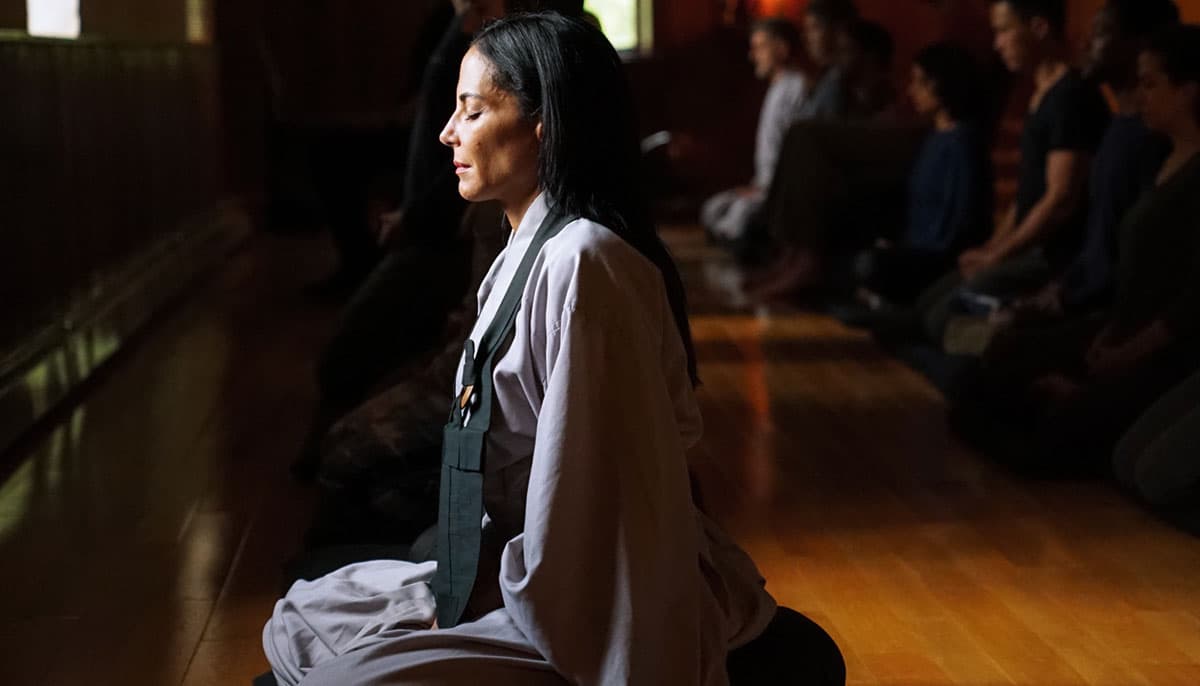
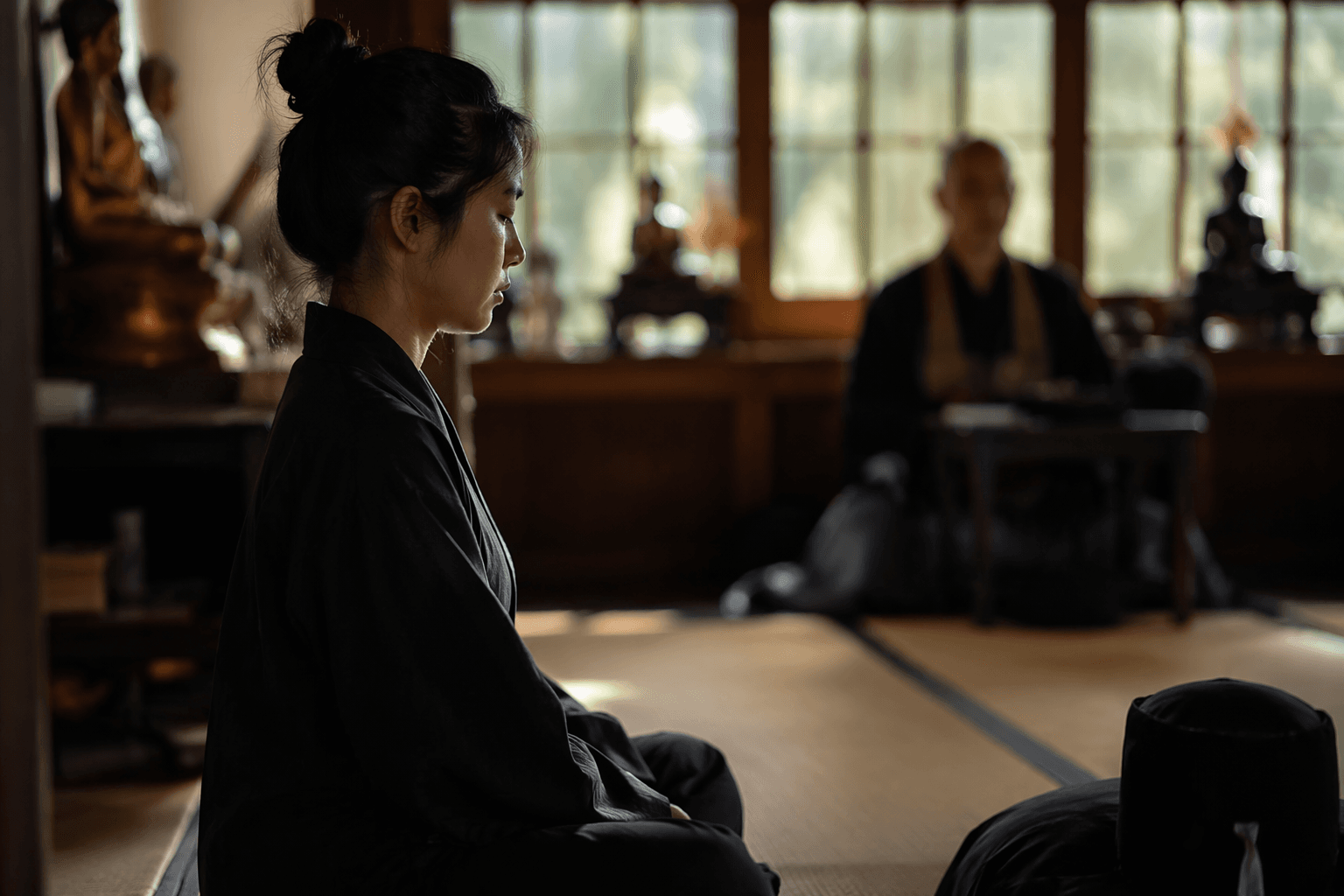
Lin brings her question to dokusan, the one-on-one Zen interview with a teacher that is central to Zen training and often used for koan work or questions about practice. Mountain Cloud Zen Center says Valerie Forstman, Lin’s teacher, is its Guiding Teacher and an Associate Zen Master of the Sanbo Zen lineage, and that she offers dokusan to more than 50 students a week while also running sesshin and zazenkai. That is a striking reminder that the private interview is not a literary flourish. It is a normal part of an active training community.

Mountain Cloud says Forstman began co-teaching with Henry Shukman in 2020 and took his place as Guiding Teacher in late 2022. The center also traces its roots through the Sanbo Zen lineage, whose influence reaches back to Philip Kapleau’s 1965 book, *The Three Pillars of Zen*. For practitioners, that history matters because it places Lin’s dilemma inside a living line of transmission, where personal questions are expected to be carried into form rather than solved in isolation.
Her teacher’s role also adds discipline to the piece. When a conflict is brought to dokusan, the point is not to tidy it up into a polished story. It is to present what is actually happening: the shame, the loyalty, the resistance, the urge to defend, the fear of losing connection. Lin’s essay suggests that this kind of truth-telling is itself a practice.
What to do when practice and family collide
Lin’s story offers a usable path for anyone trying to keep Buddhist practice alive in a household that does not share it:
- Bring the most charged sentence to practice first. In Lin’s case, the trigger was her mother’s text and the word Buddhist read as betrayal.
- Name the relationship you are trying not to lose. The essay keeps returning to the fact that love still matters, even under strain.
- Take the contradiction to dokusan if you have that structure. Zen training gives you a place to speak the tangled part out loud before it hardens.
- Let family history stay human. Lin’s mother is shaped by her Christian life, not reduced to it.
- Measure practice by whether it keeps you open under pressure. In Lin’s account, that openness was what helped her move through divorce and keep from shutting down.
That is the larger gift of the essay. It does not promise harmony, and it does not ask the daughter to give up her path for the sake of ease. It shows what Buddhist practice can look like when approval is not available: honest speech, steady contact with a teacher, and the discipline of staying present with the family tension that first made the question unavoidable.
This article was produced by Prism’s automated news system from verified source data, official records, and press releases, then run through automated quality and moderation checks before publishing. The system is built and supervised by the people who set the standards it runs under. Read our full AI policy.
Did this article answer your question?