Mindfulness meditation starts with breath, wandering mind, and gentle return
The breath is only the beginning: wandering, returning, and noticing again are where insight starts.

In Buddhist Insight Meditation, the moment you notice the mind has drifted is the practice. You place attention on the breath and notice when the mind has wandered. That gentle return is not a mistake to fix.
Start with what is here, not with what should disappear
Mindfulness, in the plainest sense, means paying attention to the present moment without judgment, and meditation is one of the main ways that capacity gets trained. The beginner’s temptation is to treat meditation like a test of concentration, as if success means silencing thought. This practice points in a different direction: the mind wandering is normal, and the act of noticing wandering is already a meaningful moment of awareness.
Instead of chasing calm as a trophy, you learn to observe experience as it unfolds, breath by breath. The breath works well as the first anchor because it is always available, always moving, and easy to notice, which makes it a practical home base whether you have five minutes or fifty.
The return is where the practice lives
The core move is not dramatic. You notice the inhale, the exhale, the tightening of attention, the drift into planning or memory, and then you come back. Repetition is what strengthens the skill, not getting it right the first time. That is why a beginner can sit down with a wandering mind and still be practicing correctly.
Each return becomes a clean look at reactivity: the pull toward distraction, the irritation at distraction, the urge to judge the sitting, the impulse to make the moment different. When you keep returning without adding a story about failure, you begin to see how quickly the mind forms habits and how quickly those habits fade.
Why this is more than relaxation
The National Center for Complementary and Integrative Health says mindfulness meditation may help people manage anxiety, stress, depression, pain, and some withdrawal symptoms, and that meditation and mindfulness practices may improve quality of life. Those benefits explain why so many people come to the cushion, but insight meditation asks you not to stop there.
The breath changes. Sensation changes. Mood changes. Even distraction changes. The practice is about seeing that all states arise and pass.
A trainable skill, not a one-time achievement
Mindfulness practice is trainable, not something you either have or lack. The American Psychological Association describes mindfulness-based stress reduction, or MBSR, as an 8-week program with weekly group classes and daily home practice. That structure reflects a basic truth of the path: attention gets steadier through contact, repetition, and recall, not through a single inspired session.
For a Buddhist practitioner, that framing is familiar. The mind is not being improved by force; it is being educated through practice. You sit again after restlessness. You begin again after sleepiness. You observe again after a day when concentration feels thin.
What the tradition is pointing toward
Meditation has roots going back thousands of years in Eastern traditions. In Buddhist terms, the breath is not just a calming object. It is a field for seeing body and mind together, moment by moment, without grabbing at pleasant states or pushing away unpleasant ones.
Calm can happen, and clearer attention can happen, but the deeper work is learning to watch how experience is constructed: sensation, feeling tone, reaction, and the impulse to identify with it all.
The body’s stress response makes the case for practice
MedlinePlus says chronic stress can contribute to high blood pressure, headaches, stomachaches, anxiety, and depression. It can also raise blood pressure, heart rate, and blood glucose through the body’s fight-or-flight response.
For beginners who arrive expecting an empty mind and leave with more awareness of tension than they wanted, that is useful information. The jaw tightens, the chest contracts, the breath shortens, the mind reaches for the next task, and all of it can be known without turning it into a drama.
A simple way to sit this week
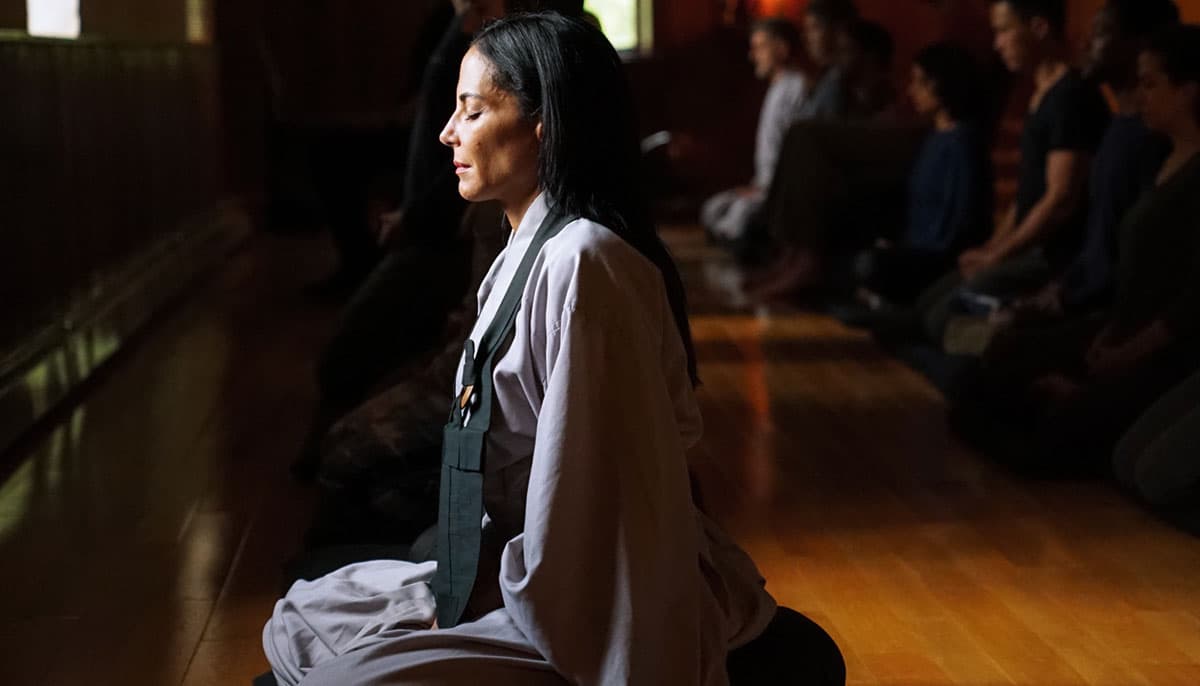
If you are just starting, keep the frame plain. Sit in a stable, comfortable position. Feel the breath where it is easiest to notice. When attention wanders, recognize it without judgment and return. If you notice a body sensation, a mood, or a burst of planning along the way, let that be part of the field you observe rather than a reason to stop.
This article was produced by Prism’s automated news system from verified source data, official records, and press releases, then run through automated quality and moderation checks before publishing. The system is built and supervised by the people who set the standards it runs under. Read our full AI policy.
Did this article answer your question?