Zen stillness crosses continents, linking monasteries online and in person
Monastic stillness can travel online, but only part of Zen survives the screen. Crestone and Schwarzwald show what hybrid practice keeps, and what it cannot.
A wooden han marks dawn at Crestone Mountain Zen Center in Colorado’s San Luis Valley, and the same practice reaches students in Germany through livestreams and online courses. Tatsudo Nicole Baden Roshi frames Zen today around that tension: stillness can cross continents, but it stays alive only when tied to real bodies, real schedules, and real community. For lay meditators looking for authentic training, the question is not whether technology helps. It is what survives the translation, and what disappears when practice becomes something you watch from afar.
Stillness that can cross a screen
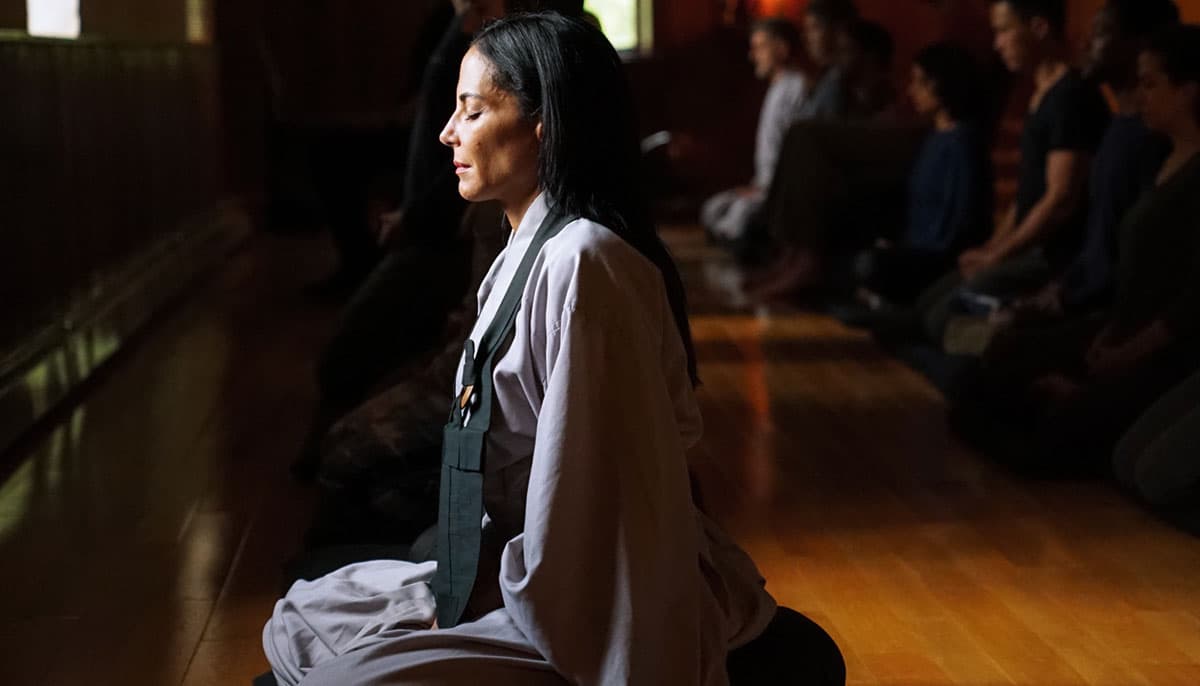
At Crestone Mountain Zen Center, practice is a craft of mind and body realized through stillness and nonduality. The center sits in southern Colorado above the San Luis Valley on the western slope of Crestone Peak, and the day begins with sound, silence, and seated attention rather than with messages or screens. That same rhythm appears at Zen Buddhist Center Schwarzwald in the Black Forest, Germany, which begins and ends the day with meditation and silence.
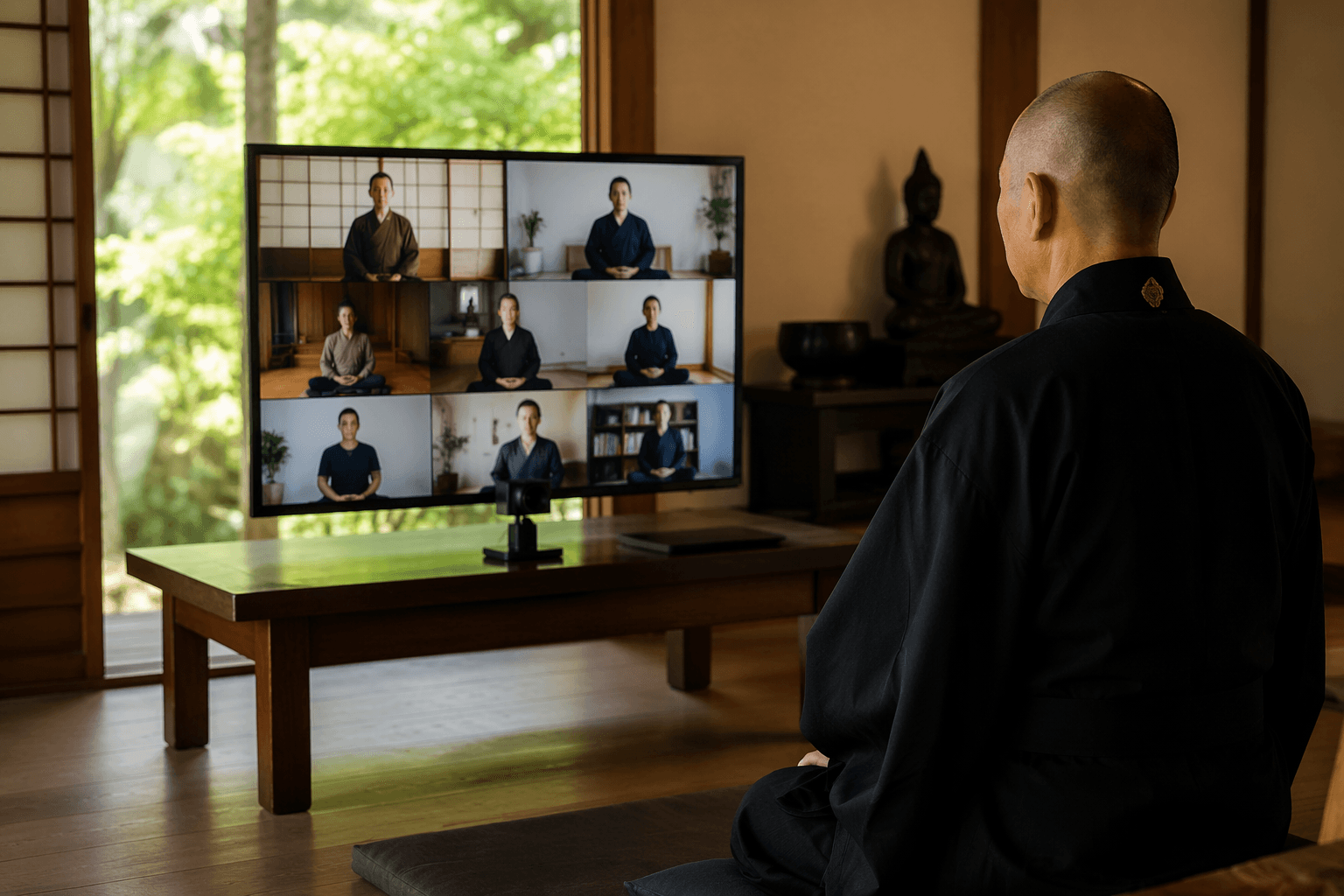
The German center is explicitly a lay and monastic practice center, led by Tatsudo Nicole Baden Roshi and Zentatsu Richard Baker Roshi. Its online program is built to make Zen and meditation available from home or while traveling, with live talks and courses streamed from either the Black Forest center or Crestone Mountain Zen Center.
What still travels well online
The strongest parts of Zen translate when the form is simple and disciplined. A live talk, a scheduled sitting, or a course connected to an actual practice center can carry the timing and accountability that many home practices lose.
The form matters because it disciplines attention. If a program is designed around real hours, real teachers, and a shared practice container, then distance does not erase the basics. The mind still learns to arrive on time, settle down, and listen.
What the screen cannot replace
Still, the monastery is more than a feed. Monastic life is built on reliability, not on shared opinions. People keep showing up, face themselves, and refine conduct together.
The author recalls a dark morning during a 90-day ango at Crestone, a practice period that can be physically, mentally, and emotionally demanding. Residential students are expected to participate in work, study, zazen, and other monastic roles. In that setting, the smallest gesture mattered: during kinhin, or walking meditation, a warm look, a smile, and a small nod from another practitioner shifted the emotional atmosphere at once.
There is also a practical difference in cost and access. Dharma Sangha offers sponsorships for some students who cannot afford the full cost of longer stays. Even so, the center’s model still asks for immersion. Work, study, silence, and zazen are part of the training package.
How to use hybrid Zen without flattening it
The clearest way to approach hybrid Zen is to treat online access as a doorway, not a destination. A center that streams live talks and courses from an actual practice site gives you continuity with a lineage and a schedule. But if the aim is deep training, the decisive marker is whether that online access points back toward embodied practice, residential discipline, and a community that keeps silence together.
A simple checklist helps when you are choosing between programs:
- Look for live instruction tied to an established center, not only prerecorded content.
- Check whether the community also practices in person with daily meditation and silence.
- See whether the training includes zazen, work, and study, not just talks.
- Ask whether there is a path into longer residential practice, including support for those who need sponsorship.
This article was produced by Prism’s automated news system from verified source data, official records, and press releases, then run through automated quality and moderation checks before publishing. The system is built and supervised by the people who set the standards it runs under. Read our full AI policy.
Did this article answer your question?