Call of Duty began with World War II, then reinvented itself with Modern Warfare
Call of Duty's leap was bigger than a setting change: it became a connected blockbuster ecosystem. Modern Warfare, Warzone, and annual releases turned each launch into an event.
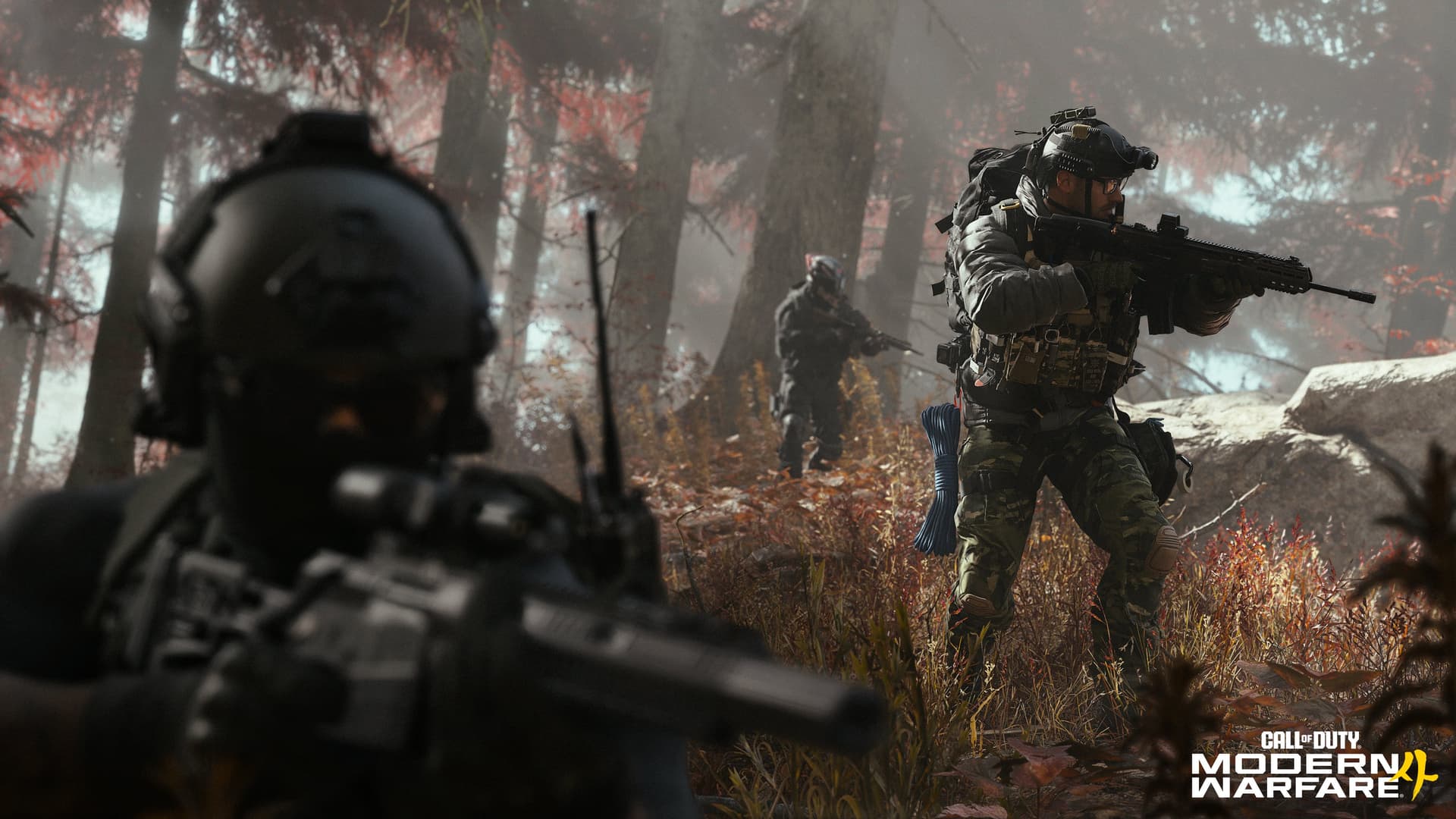
Call of Duty did not become a giant by staying in one era. It started as a World War II shooter with a campaign-and-multiplayer split that felt unusually sharp for 2003, then used Modern Warfare to remap the series around contemporary combat, annual releases, and eventually a free-to-play battle royale ecosystem. That sequence explains why the franchise became less like a single hit and more like a player habit.
From WWII to a new kind of shooter
Call of Duty launched on October 29, 2003 as Infinity Ward's debut, a studio founded in 2002 by former employees of 2015, Inc., the team behind Medal of Honor: Allied Assault. The original game followed American, British, and Soviet soldiers through World War II, but the real break from the pack was structural: it paired scripted campaign missions with arcade-style human-vs-human multiplayer at a time when many shooters still treated those as separate experiences.
Britannica describes that mix as part of what gave the first-person shooter genre new life. The audience-facing shift was simple but powerful: you were not just buying a war story, you were buying a game that could keep going after the campaign ended. That helped Call of Duty feel like an answer to an established rival from the start, rather than a new name searching for a lane.
Modern Warfare changed what a Call of Duty launch meant
Call of Duty 4: Modern Warfare arrived in November 2007 and moved the action into a modern conflict involving the United States, the United Kingdom, and Russia. Infinity Ward made it in roughly two years, and Britannica says it became the best-selling game of 2007. The setting change mattered, but the bigger shift was how the series now sold itself: Call of Duty was no longer a specialist WWII brand. It had become a contemporary blockbuster with enough pace, spectacle, and multiplayer pull to sit at the center of the shooter conversation.
Modern Warfare 2 turned that momentum into launch-week ritual. The game generated more than $550 million in worldwide sales in its first five days and drew more than two million Xbox Live users in a single day. Black Ops kept the pace going in 2010 with more than $360 million in first-day sales. These numbers are the clearest proof that Call of Duty stopped being just a good annual sequel and became a calendar event, the kind of release people planned around because everyone knew the multiplayer grind would define the next stretch of play.
Britannica notes that Modern Warfare 2 and Black Ops helped cement the franchise as a yearly habit, not just a one-off hit. That mattered because it changed how people bought the series. Instead of treating each entry as a self-contained boxed game, players started expecting a recurring appointment with new maps, new weapons, and a new meta to learn.
The studio machine made annualization possible
Call of Duty's dominance also came from the way Activision organized the work. The franchise recap centers Infinity Ward, Treyarch, Sledgehammer Games, Raven Software, and supporting teams, and that multi-studio structure is a huge part of the story. Once the series could spread premium development across multiple teams, it stopped depending on one studio's rhythm and started behaving like a machine built for recurring releases and ongoing support.
That structure is why the series could keep pace with the audience without collapsing under its own size. One team could lead the boxed campaign-and-multiplayer release while others fed the live-service side, handled content support, and kept the wider ecosystem moving. Modern-era marketing for Call of Duty: Modern Warfare also pushed cross-play and free maps and modes, which signaled that the franchise was adapting to how people actually played together, not just how often a sequel hit shelves.

Returning to WWII without going backward
Call of Duty never abandoned its roots, but it learned how to revisit them without freezing in place. Call of Duty: WWII launched on November 3, 2017 and sent the series back to its origins, while Black Ops 4 followed in 2018 with the franchise's first battle royale mode. That was a very different promise to players: not just a campaign to finish, but a broader multiplayer ecosystem that could hold more kinds of play inside one brand.
Black Ops 4 still sold more than $500 million in sell-through worldwide in its first three days. That kind of opening showed that the series could stretch into new formats without losing its launch power. The point was not nostalgia for its own sake. It was proof that Call of Duty could change the wrapper while keeping enough of its identity intact to make the switch feel natural.
Warzone made Call of Duty a platform
Warzone was the biggest audience-facing pivot in the franchise's modern life. It launched on March 10, 2020 as a free-to-play standalone battle royale, with support for up to 150 players and cross-platform progression. That changed the entry point for the series overnight. You no longer had to buy the annual premium release to be inside Call of Duty's world, and once you were in, your progress could follow you across platforms.
That is the move that turned Call of Duty from a blockbuster shooter into a platform. The annual boxed game was still there, but now it existed alongside a permanent free-to-play space that could pull in new players, hold existing ones, and keep the ecosystem active between premium launches. It also made the franchise feel less sealed off, because the game your squad played in one season could still connect to the next one without everyone starting from zero.
The modern ceiling keeps rising
Modern Warfare II in 2022 showed how far that ecosystem could scale. Activision said it posted more than $800 million in sell-through worldwide in its first three days and crossed $1 billion in 10 days, the fastest opening in franchise history. By then, Call of Duty was not just shipping games. It was coordinating premium releases, free-to-play battle royale, cross-play, and shared progression in a way that kept the brand recognizable even as the format kept changing.
That is the through-line from the 2003 debut to Warzone. Call of Duty began as a World War II shooter with a strong multiplayer idea, then became bigger every time it changed the way people bought it, played it, or stayed inside it. The setting changed, the studio structure changed, and the business model changed. The loop stayed fast, and that is why each reinvention felt less like a detour than the next reason to log back in.
This article was produced by Prism’s automated news system from verified source data, official records, and press releases, then run through automated quality and moderation checks before publishing. The system is built and supervised by the people who set the standards it runs under. Read our full AI policy.
Did this article answer your question?