Call of Duty Faces Lawsuits Over Allegedly Addictive Game Design
Plaintiff firms are recruiting clients for product-liability suits alleging Activision intentionally engineered Call of Duty to be compulsive, comparing the legal wave to tobacco litigation.
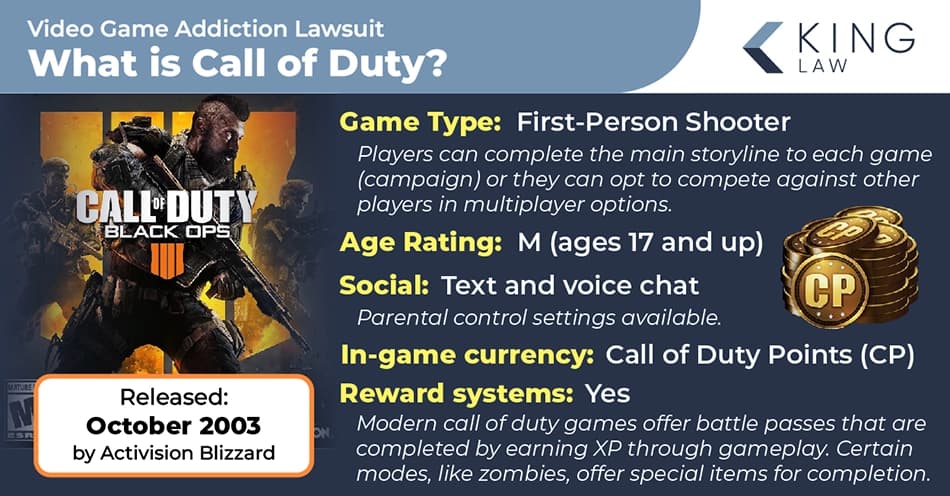
Activision is facing an expanding set of product-liability claims and consumer-protection investigations over allegations that Call of Duty was deliberately engineered to hook players, particularly minors, through psychological manipulation. Law firms and legal trackers updated public guidance pages in mid-March 2026 summarizing what plaintiff-side attorneys are calling an emerging wave of litigation targeting major game publishers.
The central allegation is pointed: that games like Call of Duty are intentionally designed with compulsion mechanics, that publishers knew or should have known about the resulting harms, and that individuals and families across the country have suffered genuine mental health injuries as a result. Titles beyond Call of Duty are also named in this wave, with Grand Theft Auto cited alongside it as a target of suits being filed by affected players and their families.
TruLaw, a plaintiff-side firm led on these cases by attorney Jessica Paluch-Hoerman, is publicly recruiting clients and offering instant case evaluations through its website. Paluch-Hoerman and her partner law firms have framed their approach around working with litigation leaders and mental health professionals to establish how deliberately addictive design features caused concrete harm.
The legal framing draws an explicit parallel to tobacco litigation. According to TruLaw's public guidance materials, both the tobacco and video game industries share the same structural vulnerabilities in court: internal knowledge of harm, marketing aimed at vulnerable populations, and a product-liability framework applied to an addictive product. That comparison is significant, because tobacco litigation eventually produced some of the largest corporate settlements in American legal history.

Plaintiff attorneys also acknowledge the litigation is still early-stage. Gaming addiction suits trail the more established social media addiction multi-district litigation, which has already built out legal infrastructure, scientific evidence frameworks, and regulatory pressure points. That MDL is now being used as a template. According to TruLaw's materials, those same forces, legal infrastructure, scientific evidence, and regulatory pressure, are now converging to create what the firm describes as substantial exposure for Activision.
What is not yet public is the full scope of the filings. No specific docket numbers, court jurisdictions, plaintiff names, or regulatory agency actions were identified in the materials circulating as of March 18, 2026. Activision has not issued a public response to the allegations. The claims described remain allegations, and no court has made findings on the merits.
For a community that has spent years debating whether mechanics like SBMM, battle pass progression loops, and operator skin unlock timers are designed to maximize engagement at the expense of the player experience, the legal framing will feel familiar. The question courts will eventually have to answer is whether familiar feels like proof.
This article was produced by Prism’s automated news system from verified source data, official records, and press releases, then run through automated quality and moderation checks before publishing. The system is built and supervised by the people who set the standards it runs under. Read our full AI policy.
Did this article answer your question?