New to Call of Duty Ranked Play? A Beginner's Guide to Climbing Skill Brackets
Ranked Play rewards structure over raw talent, and knowing the system before you queue can be the difference between climbing and spinning your wheels.
Jumping into Call of Duty Ranked Play for the first time feels like stepping onto a competitive stage without a rehearsal. The matches are faster, the callouts are sharper, and every death feels more consequential than it does in casual playlists. But here's the thing: the players who climb consistently aren't necessarily the ones with the best aim. They're the ones who understand the system, build repeatable habits, and make smarter decisions at every level, from their monitor settings to their in-game movement.
This guide breaks down exactly how to approach Ranked Play as a newcomer, and how to build a sustainable path upward through the skill brackets.
Understand what Ranked Play actually measures
Before you touch a single setting or fire a single shot, it helps to understand what the mode is testing. Ranked Play in Call of Duty isn't a pure aim duel. It uses a structured skill rating system that rewards consistent, team-oriented performance across objective-based game modes. You're being evaluated on your ability to contribute to wins, not just your kill count. That shift in framing matters enormously. A player who hard-rushes for frags but ignores the hill in Hardpoint will stall out far faster than one who plays with purpose and communicates effectively.
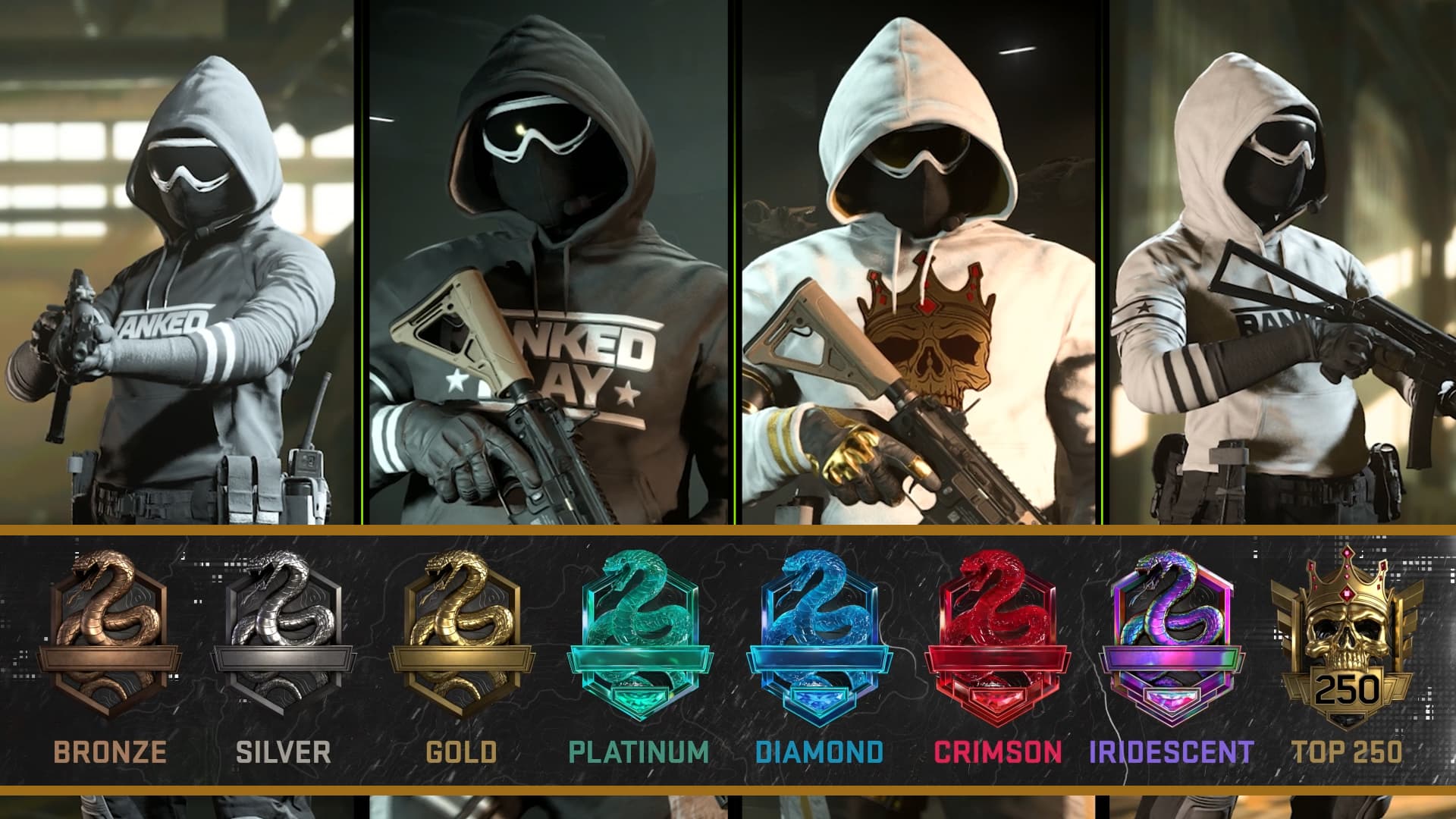
The skill brackets themselves are tiered, and each threshold you cross represents a meaningful jump in opponent quality. Entering matches with a clear picture of where you are and what's expected at each tier helps you set realistic short-term goals rather than burning out chasing a rank that's several brackets away.
Get your settings right before you grind
One of the biggest mistakes new ranked players make is treating settings as an afterthought. Your controller or mouse settings, visual clarity, and audio configuration are foundational tools, not cosmetic choices. Dial these in before you start grinding, because changing them mid-climb creates inconsistency in your muscle memory.
For controller players, finding a sensitivity that lets you track moving targets without over-rotating is critical. Most competitive players land somewhere in a moderate range, but the right number is personal. Spend time in private matches or the firing range dialing it in until snap corrections and smooth tracking feel equally manageable. On the hardware side, a monitor with low response time makes a genuine difference in fast-paced engagements where frames and input lag determine who wins a gunfight.
Audio deserves equal attention. A quality headset and properly configured audio mix let you hear footsteps, reloads, and ability cues that lower-quality setups mask entirely. In Ranked Play, that information is often the margin between winning and losing a close fight.
Master the fundamentals before anything else
Ranked Play will expose every gap in your fundamentals ruthlessly and immediately. Before worrying about advanced tactics, build a strong floor in three core areas: movement, gunfight positioning, and map awareness.
Movement in Call of Duty at a competitive level means more than just running fast. Slide-canceling, corner-peeking with proper angles, and minimizing your exposure time in open sightlines are all skills that separate players who absorb damage from players who avoid it. Spending time in standard multiplayer lobbies specifically practicing movement, rather than just playing to win, accelerates this development faster than passive ranked grinding.
Gunfight positioning means understanding that winning most of your engagements happens before the fight starts. Taking the better angle, arriving to a position first, and avoiding predictable paths are positioning concepts that reduce the raw aim requirement for each fight you take. When you consistently out-position opponents, you're winning fights that better-aiming players would lose.
Map awareness ties these together. Knowing where enemies are likely to rotate, where the objective will push next, and where your teammates are holding creates a mental picture that informs every decision you make. In the competitive modes featured in Ranked Play, including Hardpoint, Search and Destroy, and Control, map awareness is arguably the most important skill at higher brackets.
Build a consistent routine around your sessions
Improvement in Ranked Play is cumulative, and that means your session habits matter as much as your in-match decisions. Short, focused sessions where you're fully engaged will produce more measurable growth than long, fatigued grinds where your play degrades after the first hour.
Consider a simple warm-up routine before queuing into ranked matches. A few minutes on the shooting range or in quick-play modes lets your hands and reaction time calibrate before you're playing for skill rating. Players who queue cold into Ranked Play often drop rating in early matches before they're mentally and physically dialed in, and those losses compound.
After sessions, a brief review habit helps enormously. You don't need to record and analyze every match, but asking yourself one or two honest questions after a loss, such as where you were consistently dying or which moments you played reactively instead of proactively, builds self-awareness faster than pure volume.
Manage your behavior and mental game
This section gets skipped in most guides, and it's why many players plateau. Ranked Play is a high-stress environment, and emotional responses to bad games, frustrating teammates, or losing streaks directly damage your performance in subsequent matches.
The specific behaviors to avoid are well-documented in competitive gaming communities: rage-queuing after a loss, playing while visibly tilted, typing in chat instead of calling out, and blaming teammates instead of identifying your own adjustable mistakes. None of these make you play better, and most make you play significantly worse.
Discipline here looks like taking breaks when frustration spikes, treating losses as data rather than indictments, and maintaining the same communicative, objective-focused approach whether you're winning or getting rolled. The players who climb through the brackets are rarely those with zero tilt; they're the ones who've built enough self-awareness to recognize it and step away before it costs them rating.
Play the objective like your rank depends on it (because it does)
In casual playlists, ignoring the objective has minimal consequences. In Ranked Play, it's a fast track to stalled rating. The scoring systems in Ranked Play's featured modes reward objective contribution directly, and the win conditions are structured around securing and contesting specific positions.
In Hardpoint, time on the hill matters more than most mechanical stats. In Search and Destroy, plant and defuse attempts, information gathered, and economy decisions all influence round outcomes beyond raw gunfight results. In Control, zone capture and respawn efficiency shape the scoreboard in ways that pure slaying doesn't capture.
Learning the specific scoring logic of each mode and building your playstyle around it, rather than treating every mode as a deathmatch, will accelerate your climb faster than almost any mechanical improvement.
The path forward
Climbing Call of Duty Ranked Play isn't a mystery. It's a structured problem with structured solutions: dial in your settings once and leave them alone, practice fundamentals with intention, build session habits that keep you fresh and self-aware, control your mental game, and play for the objective every single match. The players who reach the higher brackets aren't outliers with superhuman reflexes. They're the ones who did the unglamorous work consistently and let the rating follow.
This article was produced by Prism’s automated news system from verified source data, official records, and press releases, then run through automated quality and moderation checks before publishing. The system is built and supervised by the people who set the standards it runs under. Read our full AI policy.
Did this article answer your question?