Anchors for catamarans: pick, size, and carry the best kit
Choose the best anchor you can afford to maximize holding and safety; seabed type, anchor design, and oversizing matter for catamarans.
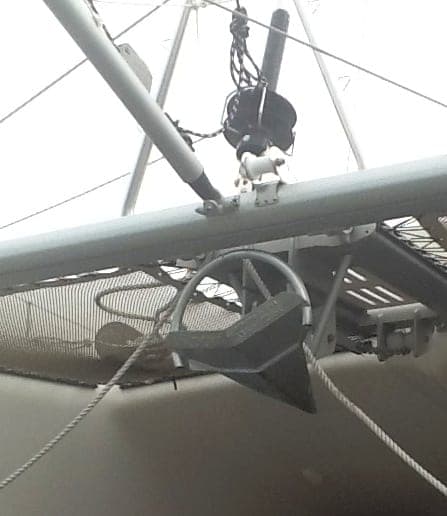
Anchoring remains one of the single biggest safety decisions for catamaran owners. The strongest single rule is simple: invest in the best anchor you can afford. Holding power depends less on weight and more on an anchor's ability to hook or bury into the seabed, so choosing the right design and size gives you real margin when wind, tide, and weather change.
Know the bottoms you frequent. Sand and mud let modern, self-burying designs bite and reset well. Grass and weed can foul fluke-style anchors, while rocky or coral bottoms often require setting on a hard point or using a heavier, hooking-style anchor. Matching anchor type to common local bottoms reduces dragging and the need for late-night repositioning.
Size and physical dimensions matter. Many owners oversize beyond manufacturer minimums for bluewater security; a bigger anchor gives more margin if conditions worsen or you need to scope out more rode. Chain length and diameter are part of that equation: heavier chain helps keep the pull angle low, improving set and holding. Inspect shackles, chain, and rode regularly and replace suspect components. Avoid cheap copies of anchors and hardware; anchoring gear is lifesaving equipment, not a place to cut corners.
Modern anchor designs such as the Rocna and other new-generation models rely on shape and setting behavior rather than sheer mass. In many bottoms these anchors set and reset more reliably than older plow or Delta types, providing faster engagement and better holding when winds shift. Real-world experience from owners led to swaps from undersetting Deltas to Rocnas because the newer designs improved initial set and re-setting after a break-out.
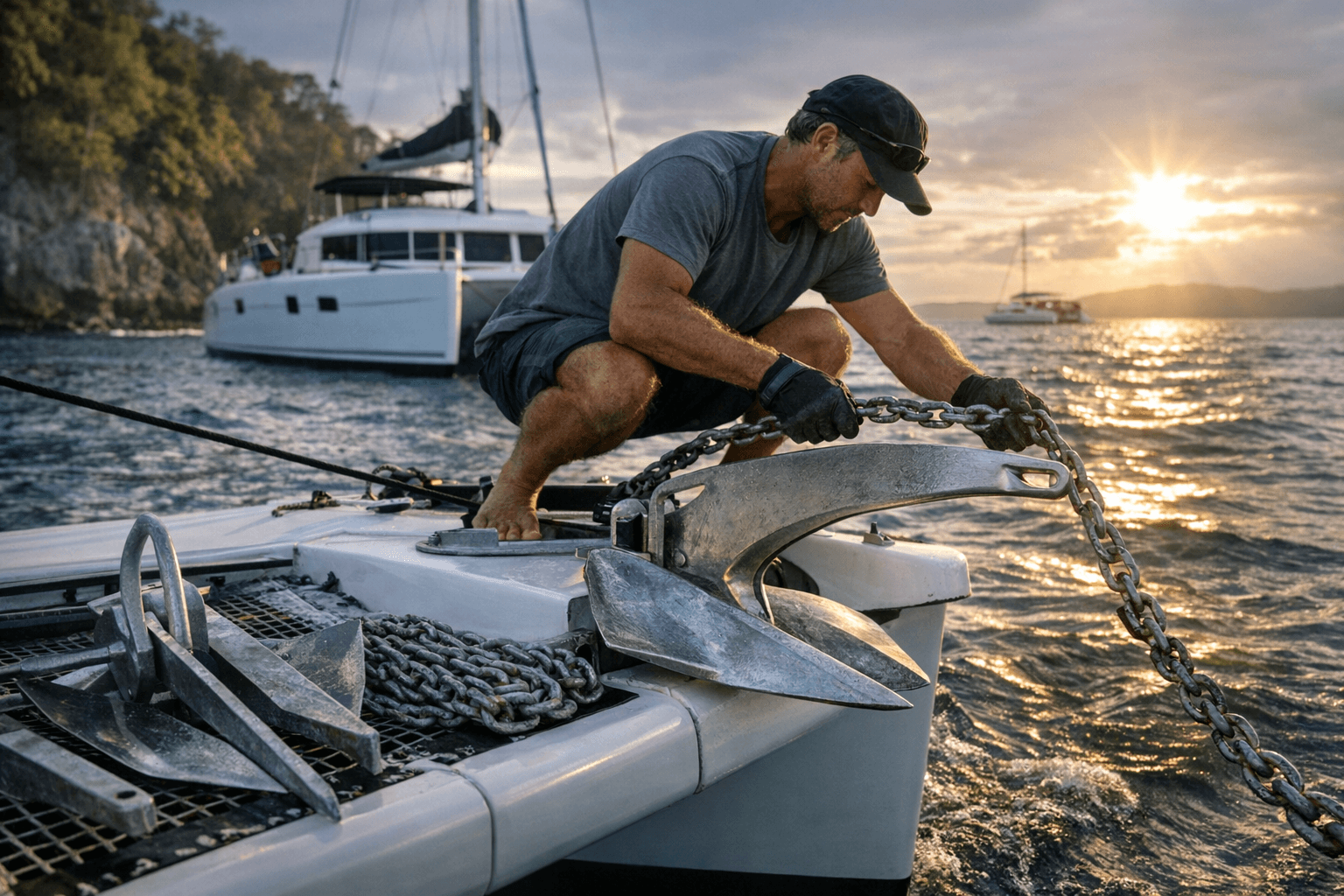
Carrying multiple anchors is common practice for catamarans because different situations call for different tools. A heavy, hooking primary can be backed up by a Bruce or claw-style anchor and a Danforth or fluke anchor for sand or as a storm rode option. For hurricane procedures or complex anchorages, having a secondary or even a third anchor tailored to specific bottoms and deployment patterns increases options and safety.
Practical checks before a cruise include confirming anchor fit in the locker, testing deployment and retrieval under power, checking chain for wear and pitting, and verifying shackles and swivels are certified and properly sized. Practice setting and resetting in moderate conditions so you know how your boat reacts and how much scope you need.
The takeaway? Spend where it counts. A well-chosen, properly sized anchor system paired with stout chain and quality hardware gives you peace of mind at anchor and keeps your cat where you want it when conditions change. Our two cents? Upgrade weak links first - chain and shackles - then pick a modern primary anchor that matches your cruising grounds and safety goals.
This article was produced by Prism’s automated news system from verified source data, official records, and press releases, then run through automated quality and moderation checks before publishing. The system is built and supervised by the people who set the standards it runs under. Read our full AI policy.
Did this article answer your question?