Australia Tops Global Battery-Powered Vessel Production, Fueled by Molslinjen Catamaran Order
A Danish ferry order single-handedly made Australia the world's largest producer of battery-powered vessels, outranking China and Turkey.
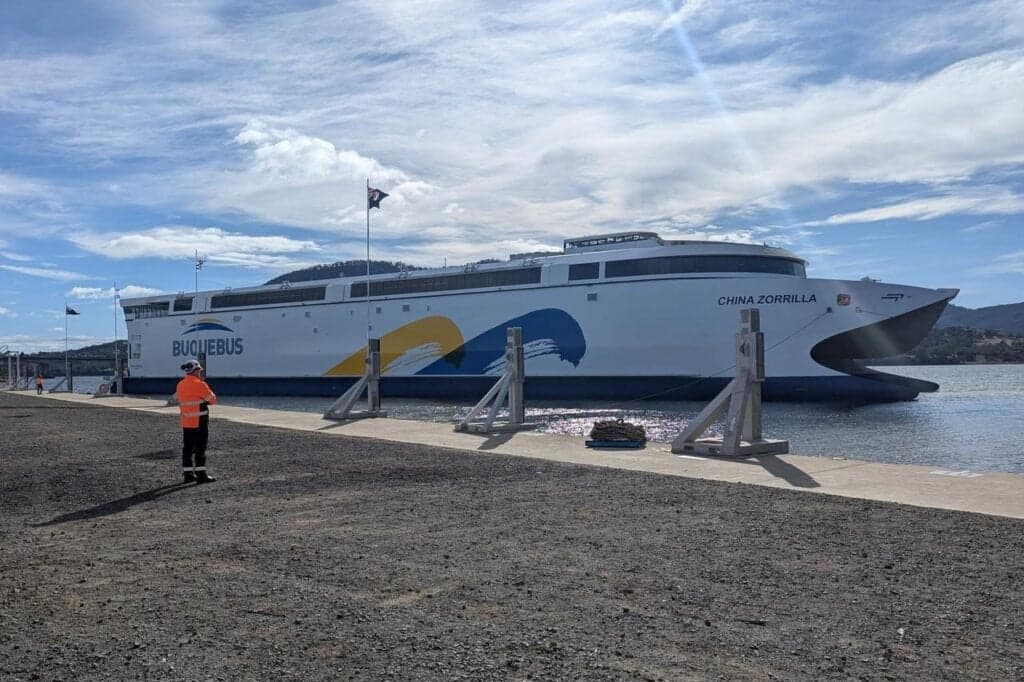
A Danish Shipping analysis published March 17 landed with an unexpected headline: Australia, not China or Turkey, had become the world's largest producer of battery-powered vessels. The cause was a single order from Danish ferry operator Molslinjen for up to three colossal battery-powered catamarans to be built at Incat Tasmania's shipyard in Hobart.
Molslinjen's order alone accounts for 47,325 gross tonnes of the 136,639 GT of battery-powered vessels currently under construction or on order worldwide, according to Danish Shipping's analysis. That concentration of capacity in one shipyard, on one island off the southern tip of Australia, was enough to push the country past every traditional maritime powerhouse on the planet.
The vessels are engineering landmarks in their own right. Each ferry stretches 129 metres, spans 30.5 metres in beam, carries 1,483 passengers and 500 cars, packs 45,000 kWh of battery capacity, and produces 70,650 horsepower. They are destined for what Molslinjen calls the "floating bridge" between Zealand and Jutland, crossing the Kattegat on a route that currently burns considerable quantities of fossil fuel. Once fully electrified, the Kattegat service is projected to save up to 132,000 tonnes of CO₂ per year.
Nordic Ferry Infrastructure, Molslinjen's parent company, has confirmed a Dkr1.0Bn (US$157M) order for two of the catamarans with Incat Tasmania, which previously built other vessels in Molslinjen's fast-ferry fleet. A third vessel is under active discussion, with Molslinjen engaged in talks with several shipyards capable of building a battery-powered catamaran to the same specification. The first ferry is expected to arrive in Danish waters at the turn of 2027-2028.
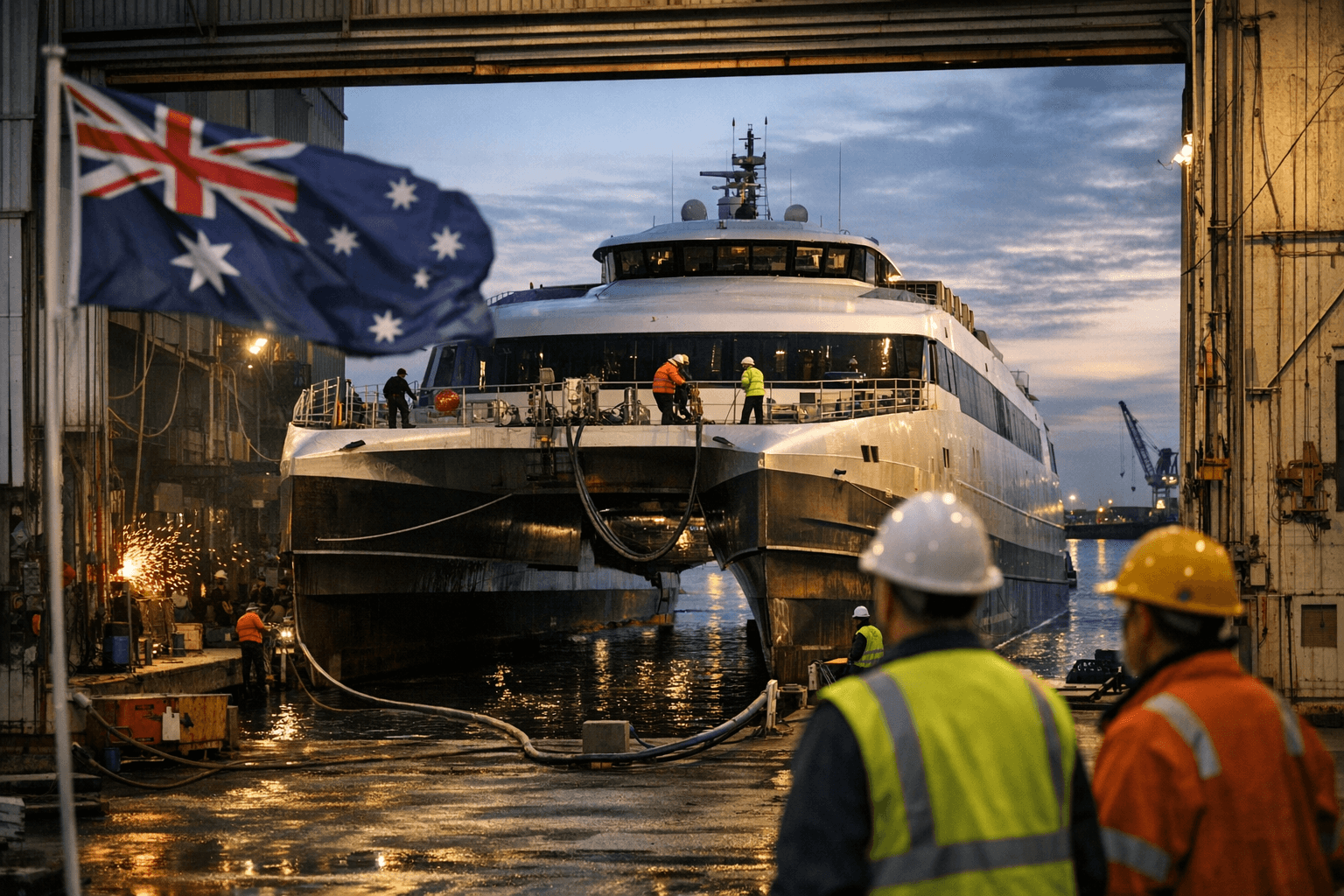
The scale of the ambition was not understated by Molslinjen CEO Carsten Jensen. "When we are building ferries that together constitute the world's largest electrification project at sea, we need a supplier with a high degree of innovation that can also deliver top quality on time. We have that in Incat Tasmania. Together with them, we are proud to push the boundaries of modern high-speed ferry operations," Jensen said.
Jacob K. Clasen, Deputy CEO of Danish Shipping, offered a note of proportion alongside the enthusiasm. "It really says something about Molslinjen's level of ambition that the company's order is having such a significant impact on the global market. Naturally, it also reflects that this is not yet a very large market. But it can and should become one."
The timing added a diplomatic dimension: on March 19, two days after Danish Shipping published its analysis, the King and Queen of Denmark visited Incat Tasmania as part of their state visit to Australia, a moment that underscored just how much political and commercial weight this particular build order now carries. If the third catamaran is confirmed and all three enter service on the Kattegat, Molslinjen's floating bridge will represent the largest maritime electrification project ever completed.
This article was produced by Prism’s automated news system from verified source data, official records, and press releases, then run through automated quality and moderation checks before publishing. The system is built and supervised by the people who set the standards it runs under. Read our full AI policy.
Did this article answer your question?