Catamaran Bow Shapes Explained: Speed, Comfort, and Safety at Sea
Your bow shape determines everything from cockpit dryness to storm safety; here's what separates an axe bow from a reverse, classic, or bulbous design.
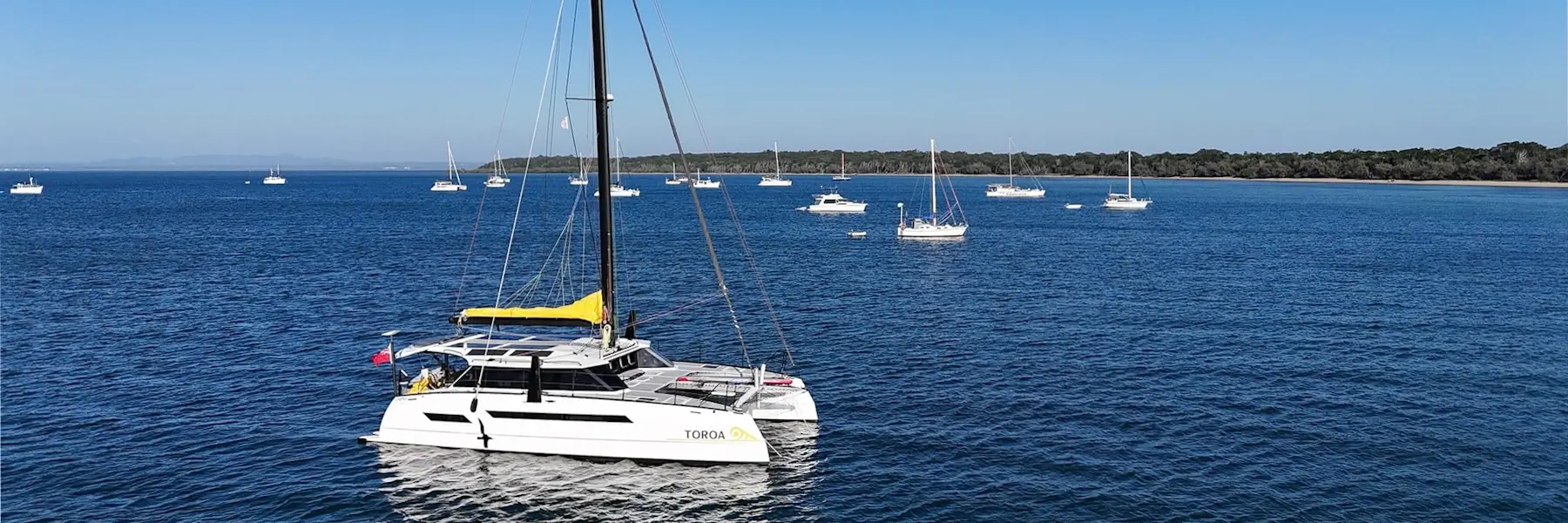
Before we sail anywhere, we need to talk about the front of the boat. The bow is where the hull meets the sea, and how that meeting is managed shapes everything: how fast you go, how dry your cockpit stays, how safe you are in a storm, and how much sail area you need to make progress.
That framing, direct and unambiguous, sits at the heart of catamaran naval architecture. Yet for all its importance, bow geometry remains one of the least discussed topics in sailing communities, buried under conversations about sail plans, electronics, and charter itineraries. This guide cuts through the noise, walking you through the four principal bow shapes found on modern and classic catamarans: the Axe Bow, the Reverse Bow, the Classic Bow, and the Bulbous Bow. Along the way, we'll borrow ideas from commercial shipbuilding, demystify the industry terminology, and dip into the physics that explain why shape matters so profoundly.
Why the Bow Deserves More Attention
Most sailors are familiar with the sensation without knowing the cause. A catamaran that buries its bows in a steep chop, sending a wall of spray across the trampoline, is experiencing the direct consequence of bow geometry in action. Conversely, a hull that slices cleanly through a two-metre swell, keeping the cockpit remarkably dry, is also telling you everything about how its designer approached those first few feet of hull shape. The bow is not merely aesthetic; it is the primary interface between your vessel and the sea state you're sailing through.
The Language of Bow Design: Key Terms
Before diving into the four shapes, it's worth grounding yourself in the terminology designers and naval architects use. These aren't abstract concepts; they're the levers a designer pulls when balancing speed, safety, and comfort.
*Rake* is the angle of the stem from vertical. Positive rake means the bow leans forward, which is the classic configuration. Negative rake means it leans backward, producing the reverse bow profile. A plumb bow sits at zero rake, perfectly vertical.
*Flare* describes the outward angle of the hull topsides above the waterline. High flare sheds spray effectively and keeps the deck dry; it also increases reserve buoyancy, the volume of hull available to resist further immersion when a bow digs in. Performance cats often have minimal flare, accepting a wetter ride in exchange for reduced windage and weight.
*LWL versus LOA* is a ratio that carries significant design implications. LWL is the Length at Waterline, the portion of the hull actually in contact with the water. LOA is the Length Overall, including any overhangs fore and aft. Minimising the gap between these two measurements is a key motivation for modern plumb bows. By contrast, a classic bow may have an LWL that is 5 to 10 percent shorter than its LOA, meaning a meaningful portion of the boat's stated length is doing no hydrodynamic work at displacement speeds.
*Entry angle* is the half-angle at which the bow waterlines meet the centreline in plan view. A fine, narrow entry cuts through waves with less resistance, which is why performance-oriented designs tend toward sharp, knife-like profiles. A blunt entry is more forgiving and better at absorbing impact loads, but it costs you speed.
*Reserve buoyancy*, closely tied to flare, refers to the additional buoyant volume above the waterline that a hull can deploy when forced deeper into the water. A bow with good reserve buoyancy resists pitch-poling and wave burial; a bow without it can submarine in heavy conditions.
The Classic Bow
The classic bow, with its positive rake and often generous flare, is the shape that defined catamaran design for decades. The stem leans forward over the water, creating an overhang that adds visual length to the vessel while the actual waterline length remains shorter. That gap between LWL and LOA, potentially 5 to 10 percent on a classic design, means the boat is effectively sailing on less hull than its measurements suggest at normal cruising speeds.
Where the classic bow excels is in wave forgiveness. The flare and forward rake deflect water outward and upward rather than allowing it to climb aboard, and the entry angle, while not as fine as modern racing designs, offers a comfortable, predictable motion in a seaway. This is a bow shape built for cruising comfort over outright speed.
The Axe Bow
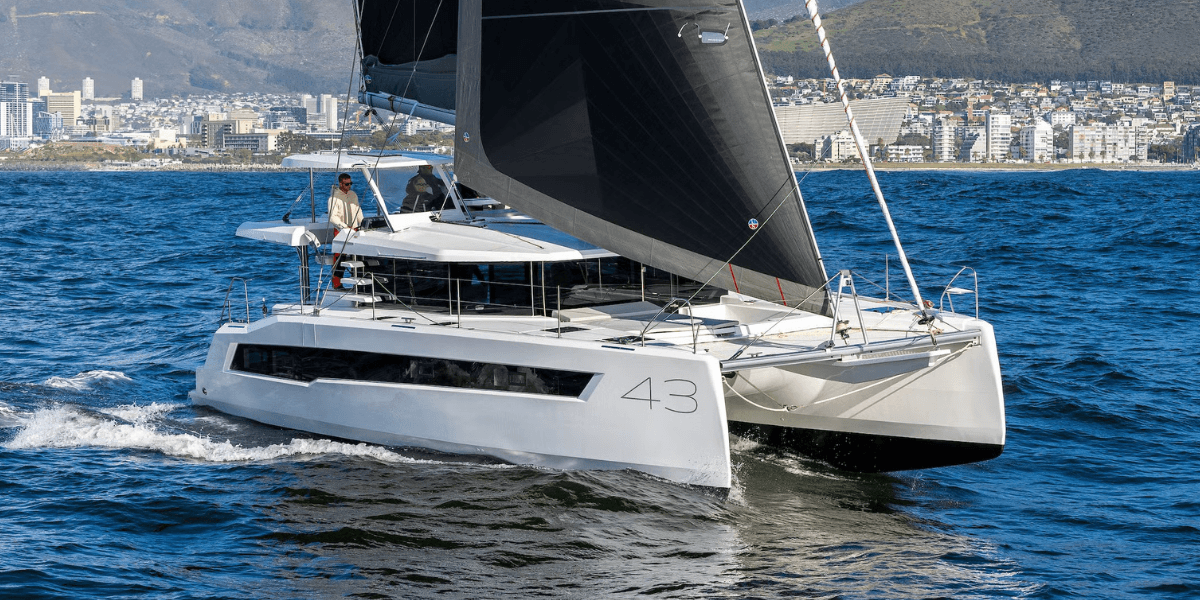
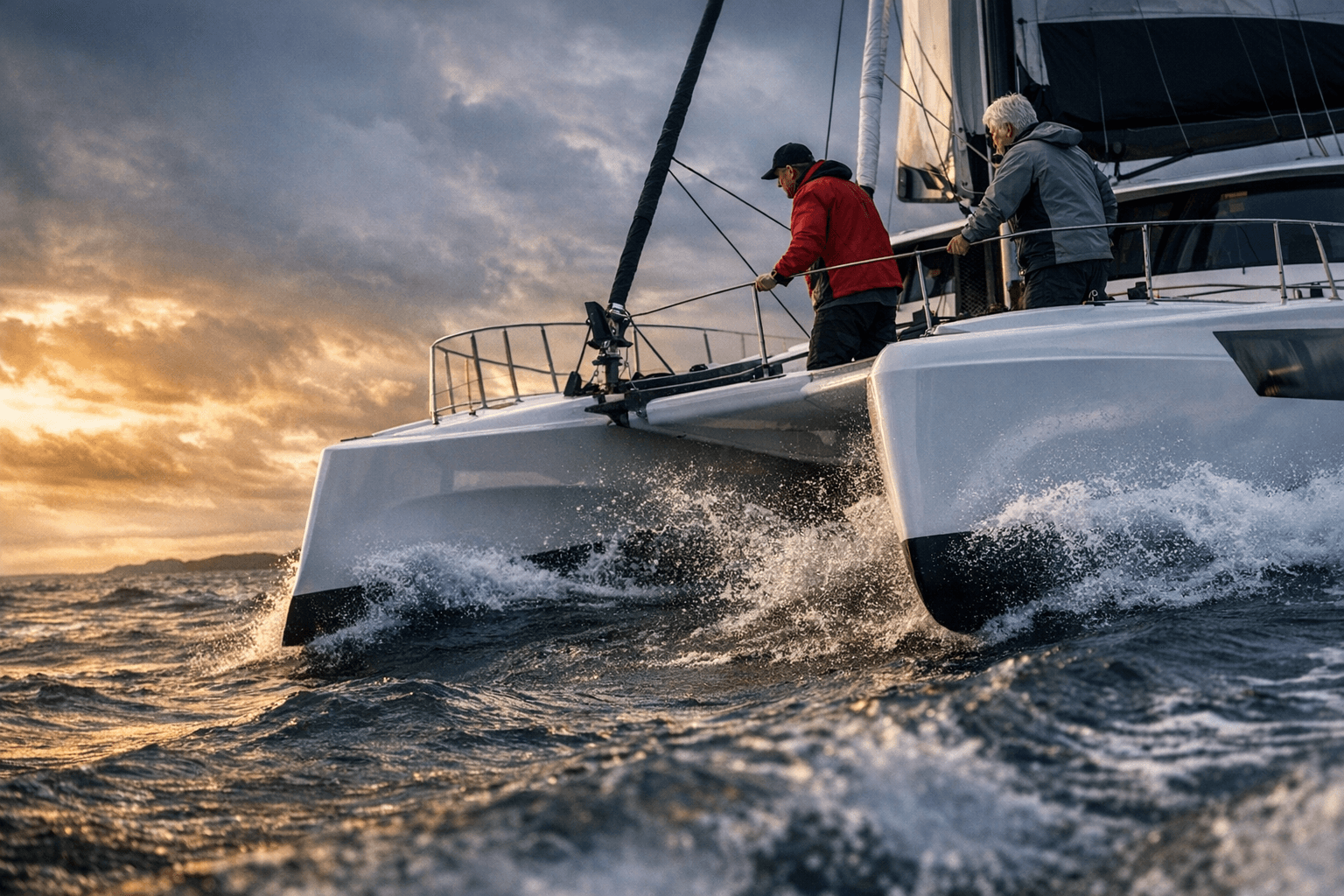
The Axe Bow borrows heavily from commercial shipbuilding, where the goal of moving large tonnages efficiently at sea drove designers toward near-plumb, fine-entry profiles. Applied to catamarans, the axe bow presents a very narrow entry angle and minimal flare. The stem is close to vertical, which means the LWL approaches the LOA: the entire length of the boat is working hydrodynamically.
The trade-off is reserve buoyancy. Strip away the flare, and you reduce the volume available to resist immersion. An axe bow that drives into a steep wave has less inherent resistance to going through it rather than over it. Designers who choose this profile typically pair it with other hull features to manage pitching behaviour, and the shape suits faster, more powerful cats where the speed itself helps lift the bow clear of oncoming waves.
The Reverse Bow
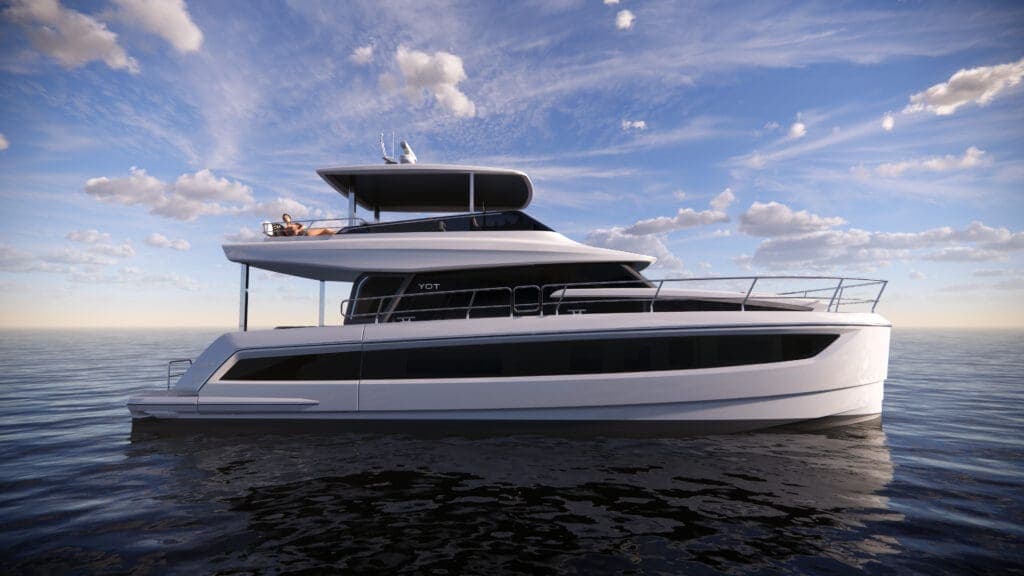
The reverse bow takes negative rake to its logical conclusion: the stem leans backward, overhanging the water in the opposite direction to the classic profile. This design has become increasingly common on high-performance production catamarans over the past decade, and its appeal is easy to understand. Like the axe bow, it maximises waterline length relative to LOA, but it also shifts buoyancy forward in the hull, which helps resist bow burial in a following sea or when driving hard to windward.
The visual signature is distinctive, the plumb or slightly overhanging stemhead giving modern catamarans their immediately recognisable profile. The physics reward the choice: more waterline length at a given LOA means more hull speed potential and often a finer, lower-resistance entry into waves.
The Bulbous Bow
The bulbous bow is the most direct borrowing from commercial shipbuilding, where it has been used on large vessels for generations to reduce wave-making resistance at specific speeds. A bulb projecting below the waterline creates a secondary wave system that partially cancels the bow wave generated by the hull, lowering resistance in a relatively narrow speed band.
On catamarans, its application is less common and more specialised. The bulbous bow makes most sense for vessels that spend the majority of their time at a consistent speed, whether motoring or sailing in steady conditions. Its benefits diminish outside that design speed range, and the added complexity below the waterline raises maintenance and vulnerability considerations. It's a shape borrowed with purpose, but applied selectively.
Reading the Bow Before You Buy
Understanding these four geometries changes how you assess a catamaran on the dock or in a brochure. The choice of bow shape is a declaration of design intent: a naval architect selecting a classic bow is prioritising comfortable motion and forgiving behaviour; one choosing a reverse bow is chasing waterline length and windward performance; an axe bow signals a lean, fast-passage machine; and a bulbous bow indicates a vessel optimised for a specific speed regime.
Rake, flare, entry angle, and reserve buoyancy are the variables in play, and every bow shape represents a different set of compromises among them. The boat that suits an ocean passage in the trade winds may not be the same boat you'd choose for short-tacking up a tide-swept estuary. Knowing what the bow is designed to do is the first step in matching the vessel to your sailing.
This article was produced by Prism’s automated news system from verified source data, official records, and press releases, then run through automated quality and moderation checks before publishing. The system is built and supervised by the people who set the standards it runs under. Read our full AI policy.
Did this article answer your question?