Catamaran Safety Lessons from a Ponce Inlet Capsize Rescue
This article breaks down a December 29, 2025 capsized catamaran rescue off Ponce Inlet, Port Orange, and explains how coordinated local resources returned the operator safely. You’ll get a clear timeline of the response, the gear and agencies involved, and practical steps to reduce risk and improve rescue outcomes for catamaran operators and coastal communities.
1. Incident overview and location
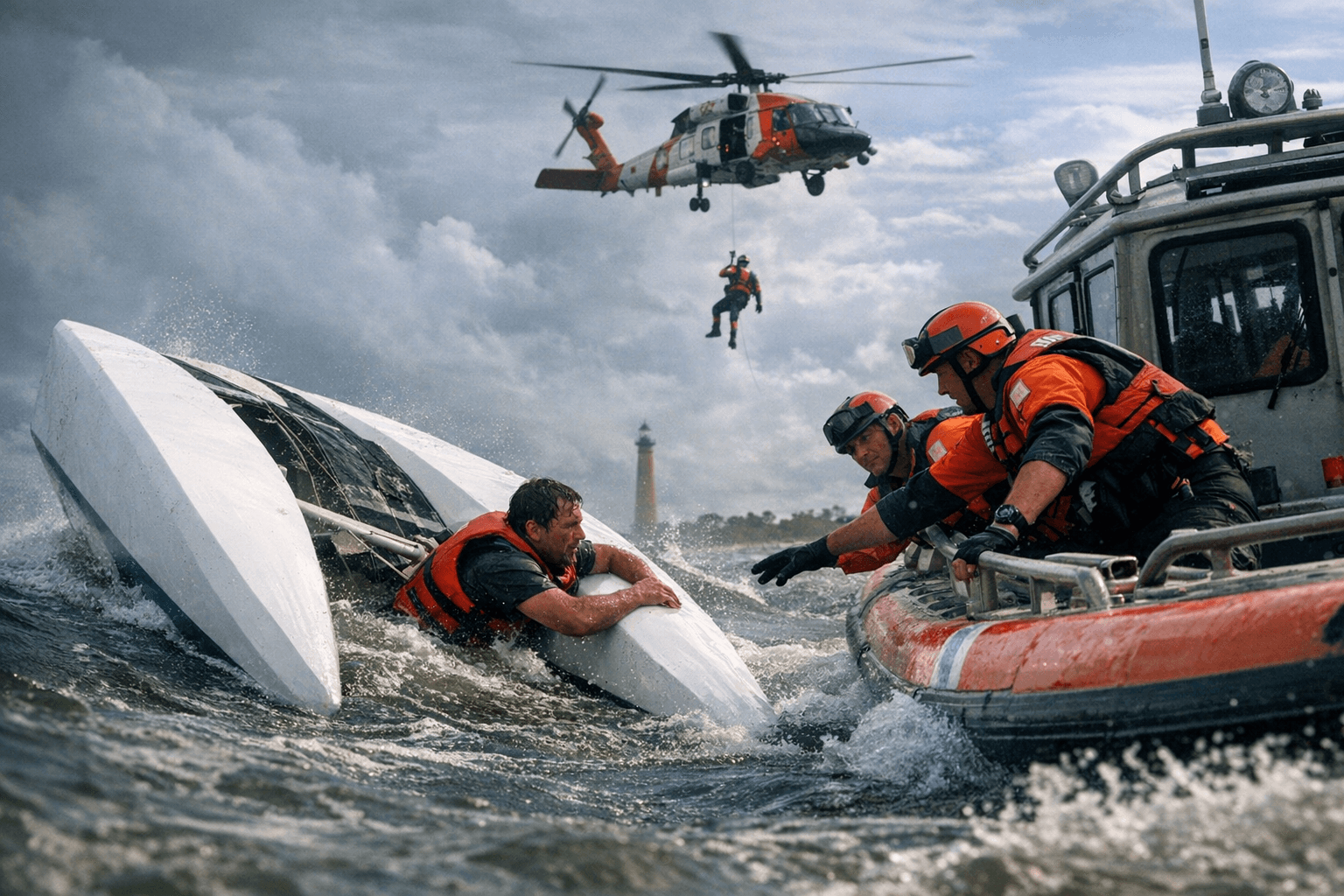
On December 29, 2025, an operator was recovered from a capsized catamaran off Ponce Inlet in the Port Orange area. The operator was unable to right the vessel and required external assistance; the event underlines how even experienced recreational outings can turn urgent in short order.
2. Sea conditions and why righting failed
Strong offshore winds in the area prevented the operator from righting the catamaran, a common challenge for light multihulls when wind and wave action combine. Understanding how wind can hold a capsized hull flat or push it into an unstable position helps explain why immediate outside intervention was necessary.
3. Ocean Rescue Lifeguards’ primary response
Ocean Rescue Lifeguards used a rescue watercraft to reach the capsized vessel and make contact with the operator, demonstrating the value of small, maneuverable craft in shallow, dynamic coastal waters. Lifeguard teams trained for maritime rescues are often the first on scene and can stabilize a person while coordinating further resources.
4. Use of additional personal rescue watercraft
A second personal rescue watercraft responded and assisted the primary lifeguard craft, providing extra capacity for transferring the operator and managing the capsized hull. Multiple small craft working together can create safe transfer points and help control floating debris or a disabled boat in surf zones.
5. Air support from Volusia County Sheriff’s Office
A Volusia County Sheriff’s Office helicopter assisted in the operation, supplying aerial oversight and rapid incident coordination that surface craft can’t provide. Helicopter presence improves situational awareness, helps direct surface units to the best approach vectors, and can accelerate decision-making in tough sea states.
6. Rescue timeline and duration
The entire rescue took about 75 minutes from initial contact to the safe return of the operator and recovery of the capsized craft. That duration reflects the combined difficulty of weather, sea state, transfer logistics, and careful coordination, a reminder that successful rescues can take time and sustained effort.
7. Recovery of both operator and craft
Responders not only returned the operator safely but also recovered the capsized catamaran, limiting environmental hazards and navigation risks for other users. Retrieving the vessel prevents fouling risks and reduces the need for extended closure or cleanup efforts in a popular coastal area.
8. Coordination among local agencies and partners
This incident highlighted seamless cooperation among Ocean Rescue Lifeguards, a second personal rescue watercraft team, and Volusia County law enforcement aviation, a model of interagency response that benefits everyone on the water. Communities that maintain regular joint drills and interoperable communications reduce response times and improve outcomes when incidents occur.
9. Practical safety takeaways for catamaran operators
You can lower risk by checking forecasts for offshore wind potential, securing redundant communications (VHF, cellphone with waterproof case, personal locator beacon), and ensuring everyone aboard wears a personal flotation device. Also practice capsize-recovery drills in controlled conditions and carry basic righting aids and strong tow lines; preparation short-circuits many emergency scenarios.
10. What local communities and marinas can do
Marinas, clubs, and beach communities should promote weather awareness, provide visible safety briefings, and support volunteer rescue training to expand local capacity. Posting simple reminders about offshore wind hazards and ensuring rapid reporting channels to lifeguards and sheriff units makes it easier to mobilize the right mix of surface and air assets quickly.
11. Implications for rescue readiness and equipment
The episode underscores the value of small rescue watercraft, redundancy in surface units, and air support capability for coastal rescues; investing in these assets and in cross-agency communications pays off in lives saved. Regular equipment checks, joint exercises, and clear incident roles ensure that when weather complicates a situation, responders aren’t improvising their way to a resolution.
12. Closing lessons and community relevance
This Ponce Inlet capsize is a practical case study you can use to sharpen your own safety checklist and to advocate for stronger local preparedness. Quick, coordinated action by trained local responders turned a potentially worse outcome into a successful recovery, a reminder that good planning, proper gear, and clear lines of communication keep our coastal communities safer.
This article was produced by Prism’s automated news system from verified source data, official records, and press releases, then run through automated quality and moderation checks before publishing. The system is built and supervised by the people who set the standards it runs under. Read our full AI policy.
Did this article answer your question?