Catamaran Yachts Community Notes, IDEC SPORT Jules Verne Update
This roundup breaks down the Day 24 report on The Famous Project CIC’s Jules Verne Trophy attempt aboard the IDEC SPORT maxi trimaran and explains what matters to multihull sailors and the local community. You’ll get the timeline, crew roster, performance highlights, technical issues, and practical takeaways for high-speed ocean sailing and foil-equipped multihulls.
1. Sail-World Day 24 report
Sail-World published the Day 24 update on December 24, 2025 covering IDEC SPORT’s progress and conditions. The report is the primary source for the timing, speed figures, and incident details noted in this summary.
2. The Famous Project CIC
The Famous Project CIC is the organization behind this all-women Jules Verne attempt, coordinating logistics, media and shore support. Their campaign is relevant to the multihull community as a high-profile effort to challenge global around-the-world records.
3. IDEC SPORT maxi trimaran
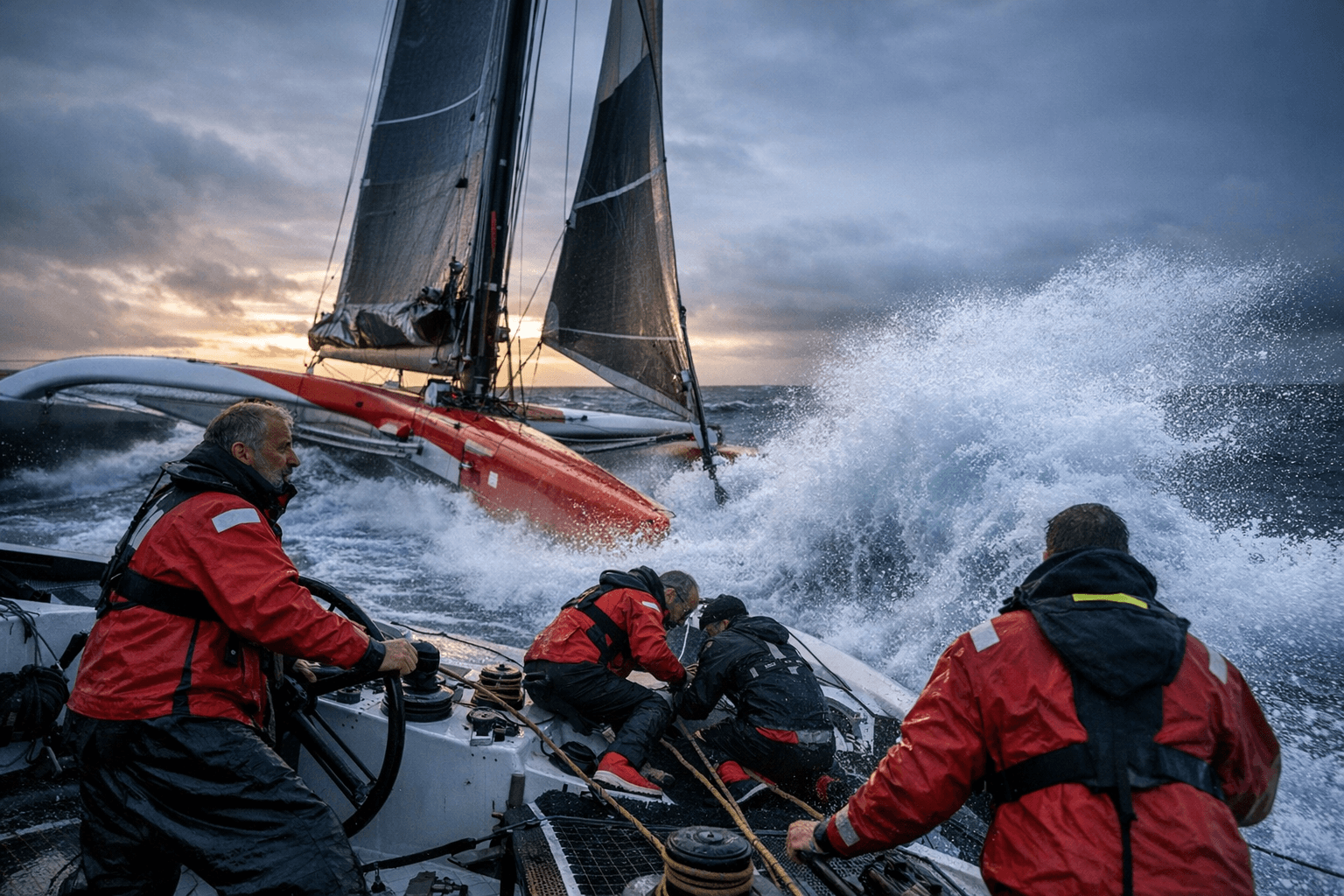
IDEC SPORT is a maxi trimaran optimized for round-the-world speed attempts with foils and a high-performance sail plan. While not a catamaran, its foiling and systems lessons are directly relevant to multihull yacht owners and racers.
4. Jules Verne Trophy attempt context
This is an attempt at the Jules Verne Trophy, the non-stop crewed circumnavigation record, a benchmark for ocean-going multihulls. Watching a campaign like this gives practical insight into routing, watch systems, and risk management in sustained high-speed conditions.
5. The eight-woman crew overview
The crew of eight brings broad offshore experience and showcases increased female representation at the top level of multihull racing. Their presence emphasizes teamwork, endurance and shared watch responsibilities on long-distance records.
6. Alexia Barrier
Alexia Barrier is one of the eight skippers and sailors onboard, bringing solo and crewed offshore sailing experience. Her involvement is notable for crew dynamics and leadership rotation on long legs.
7. Dee Caffari
Dee Caffari contributes extensive blue-water and record-attempt experience to the team, useful for strategy and risk management. Her track record helps inform tactical decisions during fast Indian Ocean passages.
8. Annemieke Bes
Annemieke Bes brings high-performance racing expertise that matters during foil use and sail trim at speed. Her skills are directly applicable to foil control and decision-making when pushing rates above 25 knots.
9. Rebecca Gmür Hornell
Rebecca Gmür Hornell adds strong offshore credentials and operational rigging knowledge to the crew. That background helps when sudden technical faults need swift, safe solutions underway.
10. Deborah Blair
Deborah Blair’s experience contributes to navigation, watch keeping, and team resilience on prolonged ocean legs. Consistent watch systems are crucial during the push toward Cape Horn.
11. Molly LaPointe
Molly LaPointe brings hands-on foil and sail handling expertise that pays off during high-speed runs and recovery from fouling events. Practical foil management is becoming core knowledge for modern multihulls.
12. Támara Echegoyen
Támara Echegoyen adds tactical fleet-racing skills and calm under pressure, useful for tight decision windows on route and sail choices. Those skills transfer into improved crew coordination when conditions shift rapidly.
13. Stacey Jackson
Stacey Jackson strengthens the team with offshore systems know-how and seamanship that supports in-situ repairs. Her experience is a reminder to prepare for sustained maintenance at sea.
14. Cape Leeuwin longitude crossing, elapsed time
On Day 24 the crew crossed the longitude of Cape Leeuwin off southwestern Australia after 24 days, 22 hours and 39 minutes at sea. That milestone shows the campaign’s steady progress and provides a precise checkpoint for timing the Southern Ocean approach.
15. High-speed week in the Indian Ocean
The report describes a high-speed week in the Indian Ocean where the trimaran covered extraordinary distances and hit sustained speeds. These conditions highlight the stresses multihulls endure during peak weather windows.
16. Nearly 700 nautical miles in 24 hours
IDEC SPORT covered nearly 700 nautical miles in a 24-hour period, a performance metric that underlines current foiling-era potential for multihulls. For owners and teams, it’s a reminder to monitor structural loads, furling systems and crew fatigue at such rates.
17. Average speeds above 27 knots
Sustained average speeds above 27 knots were recorded during the fast stretch, demonstrating the power of modern multihull platforms in favorable conditions. That level of speed magnifies the consequences of small faults and requires robust watch and emergency procedures.
18. Fishing net fouled on a foil
The boat was briefly slowed when a large fishing net became caught on a foil, an increasingly common and serious hazard for foiling yachts. This incident underlines the need for immediate protocols to reduce drag and protect foil integrity if foulings occur.
19. Impact of fouling on routing and planning
Fouling events like net strikes force tactical slowing and sometimes rerouting, affecting record attempts and cruising schedules alike. Catamaran and trimaran crews must plan contingencies for hauling, cutting lines or reducing speed safely.
20. Mainsail hook failure managed
A mainsail hook failure occurred but was managed aboard without stopping the attempt, illustrating the crew’s technical resilience. Preparing for sail hardware failures with spare components and practiced repair routines is essential for long offshore passages.
21. Onboard repair readiness and inventory
The handling of the hook failure shows why comprehensive spare inventories and practiced repair teams matter on long attempts. For multihull owners, standardizing spares and rehearsing fixes pays off when conditions force quick action.
22. Crew morale and team dynamics
Reports highlight good morale aboard despite the intensity of the leg, a key ingredient for success on long blue-water efforts. Maintaining clear communication, rest schedules and mutual support keeps safety margins high during sustained pushes.
23. Cautious approach for Southern Ocean and Cape Horn leg
The crew adopted a cautious approach as they prepared for the Southern Ocean and the Cape Horn leg, reflecting prudent risk assessment before the most punishing seas. Multihull skippers should mirror that caution when entering sectors known for steep seas and strong systems.
24. Live tracking and official project pages
The team provided links to a live tracker and official project pages for real-time updates and transparency with supporters ashore. Using trackers is valuable community practice, fans, shore crews and rescue services all benefit from accurate, up-to-date position information.
Know something we missed? Have a correction or additional information?
Submit a Tip