Choosing Between Sailing and Power Catamarans: Performance, Costs, Liveaboard Tradeoffs
Choosing between sailing and power catamarans hinges on mission-first trade-offs - fuel, systems, liveaboard layout and resale all shift depending on whether you ride the wind or run on engines.
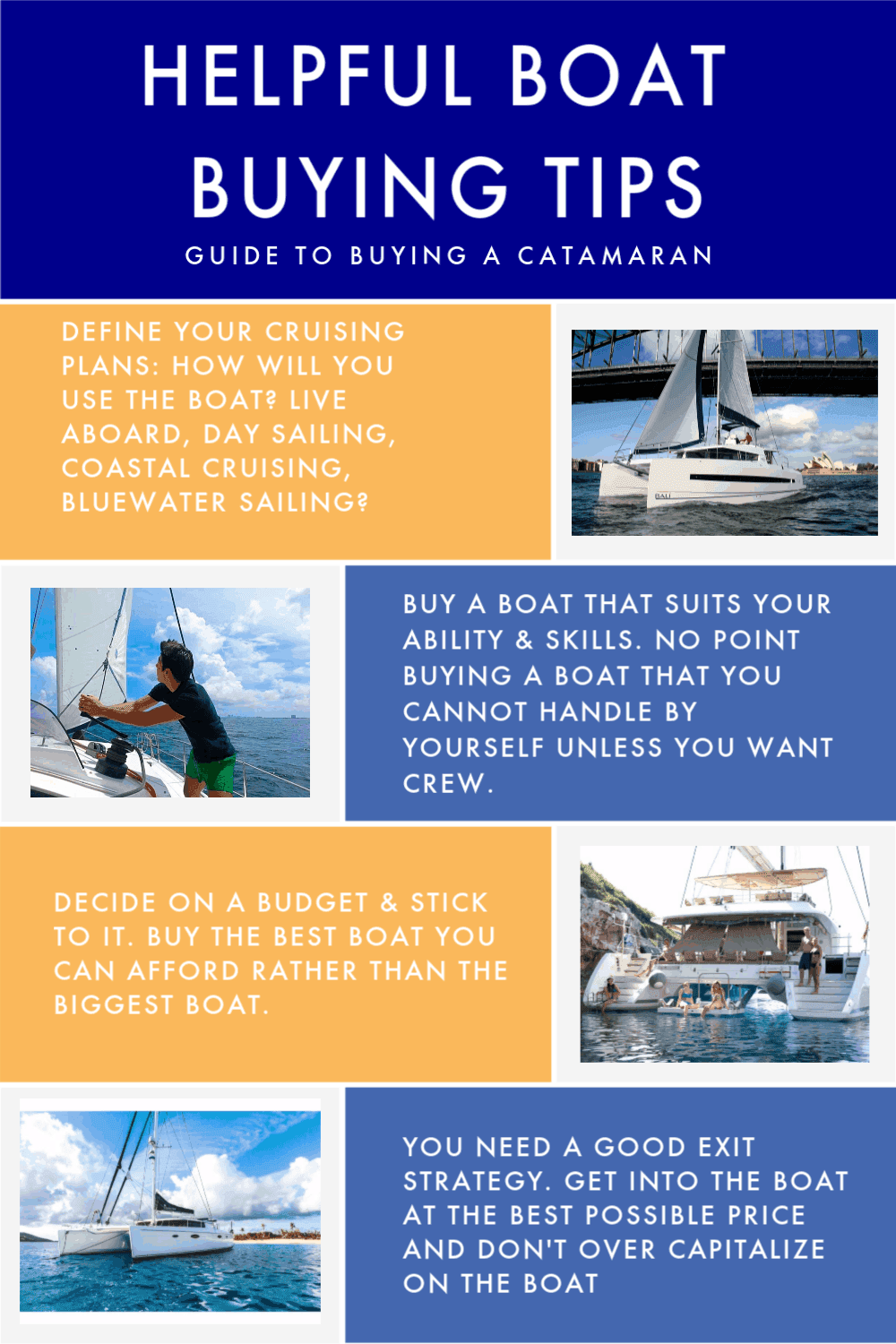
Deciding whether to buy a sailing catamaran or a powercat starts with a single question: what is your mission? Long-distance bluewater cruisers and island-hoppers typically favor sailing cats for their fuel efficiency on extended passages, while owners focused on fast coastal runs, simple operation, and roomy single-level living often lean toward powercats. That choice drives nearly every other cost and habit aboard.
Performance trade-offs are straightforward. Sailing catamarans use wind to cut fuel bills on long passages but demand more complex sail systems, standing and running rigging, and the seamanship to trim and manage sails offshore. Powercats simplify operation - throttles and helms are familiar, systems are concentrated around propulsion and generators, and passage-making under power can be faster and more predictable when time is tight. Expect different maintenance rhythms: rig checks, sail servicing and winch care for sail cats versus engine tune-ups, cooling-system checks and fuel management for powercats.
Operating costs extend beyond fuel and mechanic bills. Sailing cats still carry engines and electrics, but their biggest scheduled costs are sail replacement, reefing systems and rigging inspections. Powercats typically face higher fuel burn and more frequent engine service intervals, particularly on older designs with high hours. Outboards on smaller powercats introduce a different maintenance pattern than inboard diesels. When calculating total cost of ownership, compare realistic fuel use for the passages you plan to run, factor in haul-out intervals, and include expected replacement timelines for sails, propellers, and key electrical components.
Liveaboard life and layout are decisive for daily comfort. Powercats often deliver larger salon volumes and easier galley access with fewer companionway steps - single-level living that appeals to cruisers who value convenience and entertain frequently. Many sailing cats sacrifice a bit of interior volume to make room for rigging, chainplates and tankage, but modern designs push back with clever storage and accessible systems. Bridgedeck clearance matters for slam and comfort offshore; ensure adequate separation to reduce slamming in steep seas.
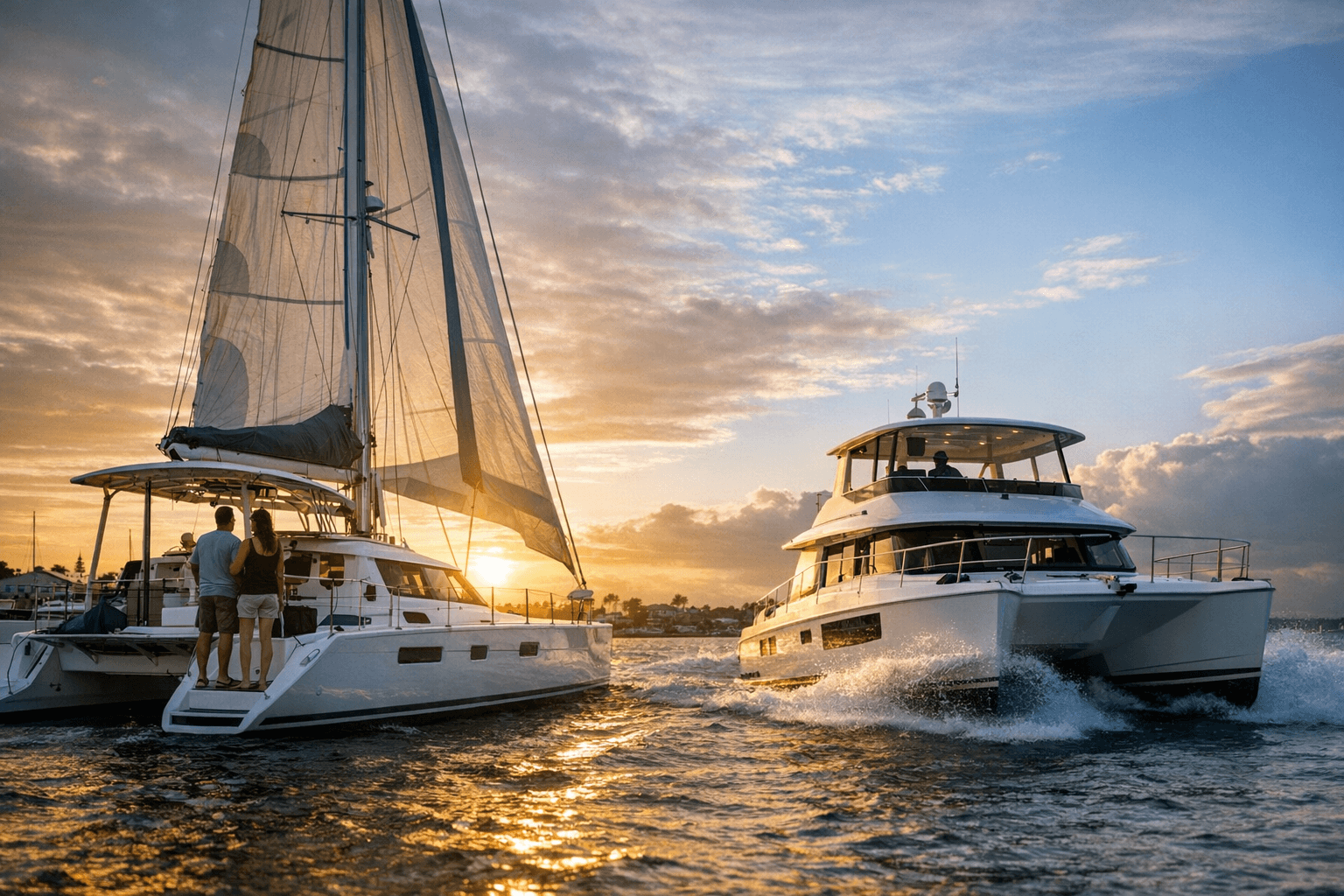
Resale and charter demand vary by model, brand and region. In charter-heavy markets, certain powercat models remain highly hireable; in bluewater communities, proven sailing cats retain strong resale value. When assessing a candidate boat, insist on a thorough survey and sea trial in the mode you plan to use the boat most. Key checklist items: bridgedeck clearance, hull gaps or osmosis signs, engine hours and service records, corrosion at chainplates and engine mounts, and inspection of bulkheads and stringers during haul-out.
Practical next steps: run a sea trial under sail and under power if applicable, get a professional haul-out survey, and build a realistic TCO spreadsheet that includes fuel, insurance, slip fees and routine replacements. Talk to brokers who specialize in the class you prefer and compare post-sale support options. Choose the boat that matches your cruising priorities and lifestyle - whether you want to trim the main on a salty passage or throttle up and make miles on diesel, pick the mission and the cat will follow.
Know something we missed? Have a correction or additional information?
Submit a Tip