Comanche wins line honours, light winds create tight Sydney Hobart finish
Master Lock Comanche, skippered by Matt Allen and James Mayo, took line honours in the 80th Rolex Sydney Hobart Race on December 28, 2025 after a two day battle and a tense final miles period when light winds closed the fleet. The finish exposed equipment failures and injuries among the supermaxi fleet, and the race holds actionable lessons for multihull and catamaran owners on tactics, safety, and preparation.
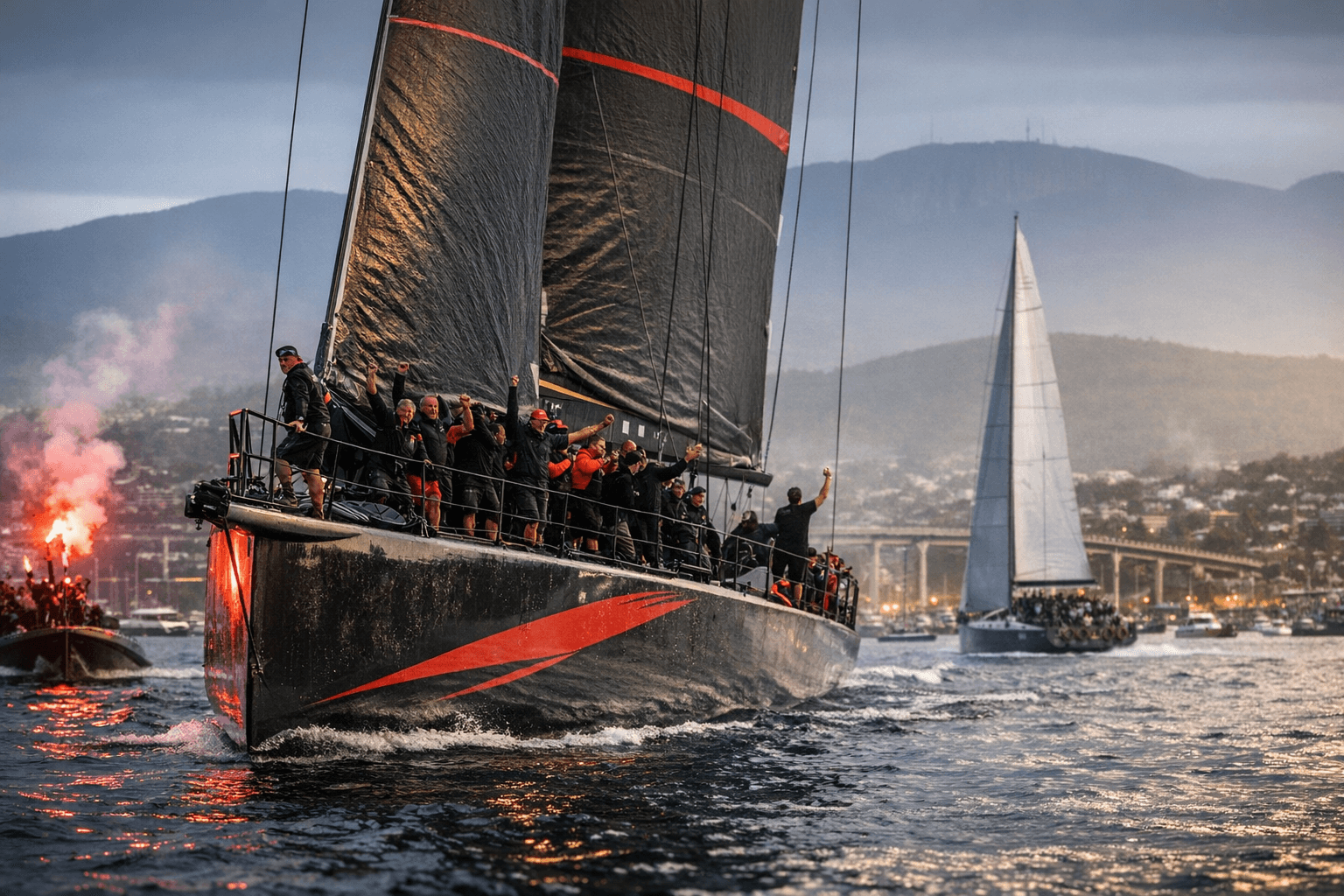
Master Lock Comanche emerged ahead in a stretched and dramatic offshore contest, claiming line honours after a tightly contested run into Hobart. The race unfolded over two days, and in the closing miles a prolonged lull of light wind collapsed gaps and turned the finish into a tactical sprint. Inshore choices proved decisive as Comanche reclaimed the lead by exploiting a wind shift inside the heads, leaving other supermaxis scrambling to respond.
The contest saw several lead changes earlier in the race as the big boats traded positions through varying conditions. Equipment problems afflicted multiple supermaxis during the passage, forcing some into slower modes and prompting retirements from the fleet. Comanche itself recorded crew injuries that required onboard treatment and attention once ashore, a reminder that even top professional boats face human cost in heavy offshore campaigns. Organisers updated retirements and the overall IRC standings in the hours after the finish, reflecting the attrition among the largest yachts.
For catamaran and multihull owners the race matters beyond the monohull headlines. The light wind finish illustrated how mixed fleets compress in light air, increasing the risk of close quarters incidents and making tactical positioning critical. Rig and sail failures on the supermaxis highlight the value of redundancy, pre race rig checks, and conservative sail inventory choices when long offshore legs are expected. Crew health measures and medical drills proved relevant as injuries affected performance and required post race attention.
Practical takeaways are clear. Check standing and running rigging for wear and corrosion ahead of major offshore events. Review sail handling plans for prolonged light air sequences, and practise asymmetric kite management for crowded finishes. Refresh onboard medical procedures and equipment, and rehearse casualty drills so treatment and decision making are calm when pressure is high. Attend post race debriefs and fleet briefings to learn from equipment failures and tactical choices that shaped this edition of the race.
The 80th Rolex Sydney Hobart provided a vivid case study in how weather, equipment and human factors combine to decide outcomes. For anyone preparing multihulls for offshore competition, the results and lessons from this race deserve direct attention.
This article was produced by Prism’s automated news system from verified source data, official records, and press releases, then run through automated quality and moderation checks before publishing. The system is built and supervised by the people who set the standards it runs under. Read our full AI policy.
Did this article answer your question?