Eco catamarans defy one definition, MODX 70 leads the shift
MODX 70 shows why “eco” catamarans are not one class at all: buyers now choose between zero-emission new builds, efficient sailing, or life-extending refits.
The MODX 70 makes the argument in plain sight: “eco catamaran” is not a single product category, it is a set of different engineering bets. At the International Multihull Show in La Grande-Motte, that distinction matters more than ever, because buyers are no longer just comparing berth volume and speed. They are comparing how a boat moves, how it generates power, what it is built from, and whether it is designed to replace fuel use or simply reduce it.
The green conversation is now part of the main sales pitch
The multihull market has changed from a comfort-and-space contest into a sustainability conversation, and the 2025 International Multihull Show showed how central that shift has become. The event ran from April 23 to 27 and brought 73 boats on the water plus 10 yards in the village, which made it a high-density snapshot of where the sector is headed. That matters because the eco story is no longer confined to niche prototypes. It is now being used to differentiate new builds, performance cruisers, and refit programmes all at once.
For buyers, that creates a practical problem: the word “eco” can mean very different things depending on the boat. One catamaran may aim for zero-emissions underway, another may cut engine hours through better sailing performance, and a third may extend the life of an existing yacht with a deep industrial refit. The right question is not whether a catamaran is green in the abstract. It is which part of the operating profile has actually been improved.
MODX 70: the clearest example of a zero-emission new build
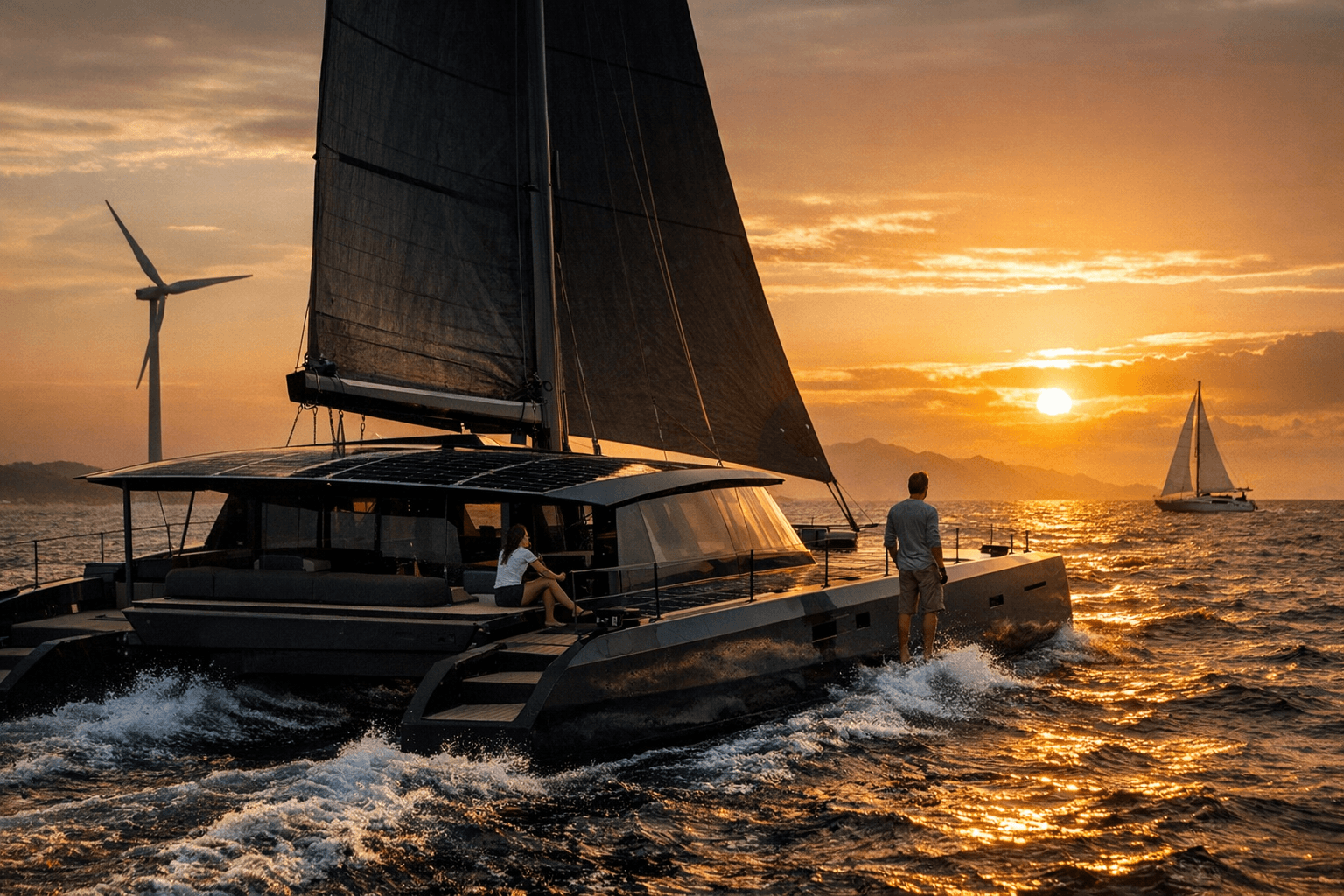
The MODX 70 is the most striking proof that a new catamaran can be designed around renewable energy from the outset. It is presented as a 100% electric 70-footer built around two inflatable automated wingsails, two 40 kW electric motors, and a 250 kWh battery bank. The concept is not a conventional sailing catamaran with green add-ons. It is a platform built to deliver fossil-fuel-free sailing as the starting point, not as an upgrade.
Its energy package is equally ambitious. MODX Catamarans says the boat was designed for 100% renewable-energy sailing, with automated wing propulsion paired with electric engines, while other reporting says the hull carries bio-sourced resin and 40% recycled foam. Additional details show a broader material strategy as well: 38% bio-based epoxy resin, 40% recycled PET foam, plus flax fibres and cork. That widens the eco argument beyond propulsion and into construction choices that affect embodied impact as well as onboard performance.
Solar input is another key part of the story. MODX 70 is described as carrying 70 square metres of solar panels, while VPLP says the design integrates 75 square metres. The slight difference is worth noting because it underlines how these boats are often discussed through concept material and builder material at the same time. Either way, the intent is the same: to build a self-sufficient yacht that can lean on wind, sun, and stored electric power instead of diesel dependence.
The market also responded in a tangible way. MODX 70 won the Multihull 2025 prize in the Multiyacht category, which shows that the industry is rewarding this kind of integrated eco design, not just talking about it. For buyers, the lesson is simple: if the goal is genuinely lower or near-zero emissions underway, a purpose-built platform like this is the benchmark to study.
ORC 57: a different kind of green, through efficiency and sailing time
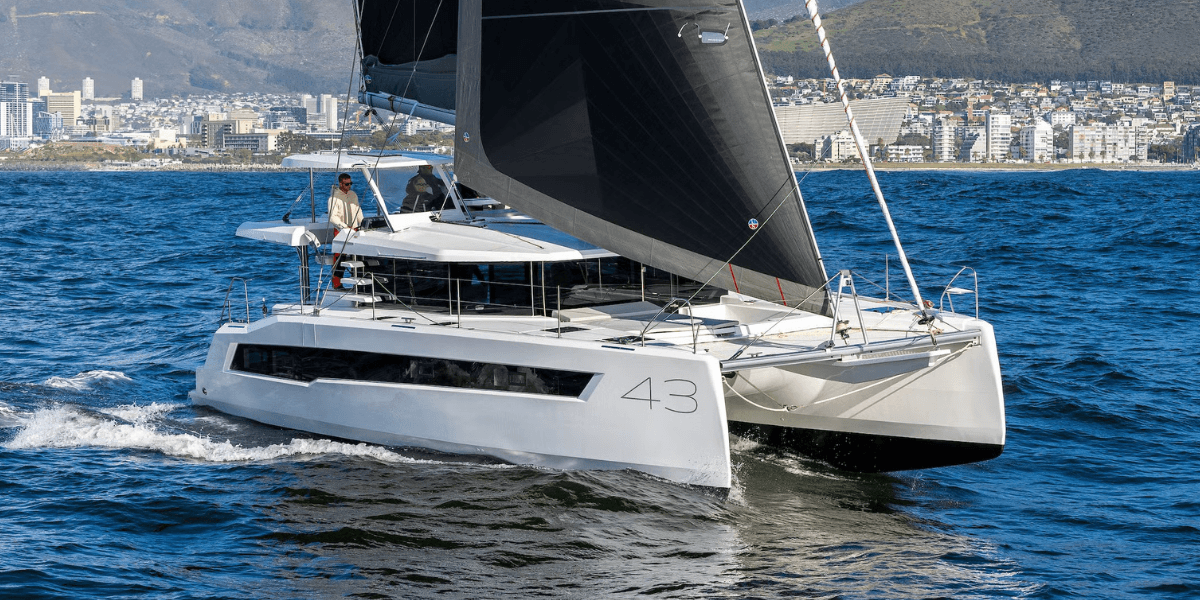
The ORC 57 shows that an eco catamaran does not have to be electric-first to make sense. Designed by Marc Lombard, the boat takes a performance-led approach to sustainability, aiming to reduce engine use by sailing efficiently in lighter air. Official ORC material says the ORC57 starts sailing in about 6 knots of true wind, which is a meaningful claim for owners who spend long stretches in variable conditions.
That light-air behavior is where the environmental logic sits. If a catamaran moves earlier and more willingly under sail, it spends less time idling engines just to stay underway. The boat is also listed at just 11.3 tonnes light ship, which helps explain why it can be so effective in modest breeze. Independent reporting from Sailing Today highlighted sea trials in 10 knots and framed the boat as a performance-focused design, reinforcing the idea that efficiency at sea can be its own sustainability strategy.
The ORC57 line is not theoretical either. Independent reporting identified the third ORC 57, Avel Vaez, as launched on January 16, 2024 and delivered a few weeks later. Described as the third ORC57 catamaran, it carries a Breton name meaning “Offshore Wind,” which fits the boat’s identity well. This is the version of green boating that relies on well-judged naval architecture, not batteries and solar panels alone.
Lagoon 620 NEO: sustainability through renewal, not replacement
Then there is the refit path, and Lagoon’s NEO programme is the clearest example of how sustainability can be built around keeping a good hull in service. The Lagoon 620 NEO story is not about a brand-new concept boat. It is about giving an existing catamaran a second life phase through a manufacturer-led modernisation that updates the yacht to current standards and sustainable equipment.
The scope of the work is substantial. The refit at Monfalcone, Italy included structural inspection, mast inspection, reworked bulkheads, new engines, sails, electrics, plumbing, electronics, headlinings, upholstery, solar panels, a lithium battery bank, low-energy air conditioning, and wastewater treatment. Lagoon’s NEO process also begins with a 30-point audit before work starts, which gives the programme a disciplined industrial structure rather than the feel of a cosmetic refresh.
That matters because a refit changes the ownership equation. Instead of scrapping a sound platform and starting over, the owner preserves the boat while bringing systems, comfort, and efficiency up to date. In practical terms, that is a very different environmental claim from a new build with zero-emissions ambitions, but it can still be the greener choice for a buyer who wants to extend useful life and avoid unnecessary replacement.
How to judge whether an eco catamaran is truly greener
If you are comparing boats, the label alone tells you almost nothing. The smarter test is to ask what kind of sustainability is being delivered and where the gains actually come from.
- Is the catamaran designed for zero-emissions sailing, like the MODX 70 with wingsails, electric propulsion, solar input, and a large battery bank?
- Is it engineered to reduce engine dependence through sailing efficiency, like the ORC57 starting in about 6 knots of true wind?
- Is it a refit that renews an existing hull for a second service life, like Lagoon’s NEO programme with its 30-point audit and Monfalcone rebuild?
- Are the gains in propulsion, materials, onboard energy, or lifecycle extension, or are they just marketing language with a green finish?
That framework is the real takeaway from the current multihull market. Eco catamarans are not converging on one formula; they are splitting into clear camps with different tradeoffs, different costs, and different cruising philosophies. The winning boat is not the one with the loudest green label, it is the one whose technical choices match the way you actually sail.
This article was produced by Prism’s automated news system from verified source data, official records, and press releases, then run through automated quality and moderation checks before publishing. The system is built and supervised by the people who set the standards it runs under. Read our full AI policy.
Did this article answer your question?