Electrical and Energy Upgrades That Improve Liveaboard Catamaran Safety and Independence
Liveaboard catamaran owners are prioritizing battery, solar, shore-power and communications upgrades to run major appliances off-grid, boost safety and cut generator dependency.
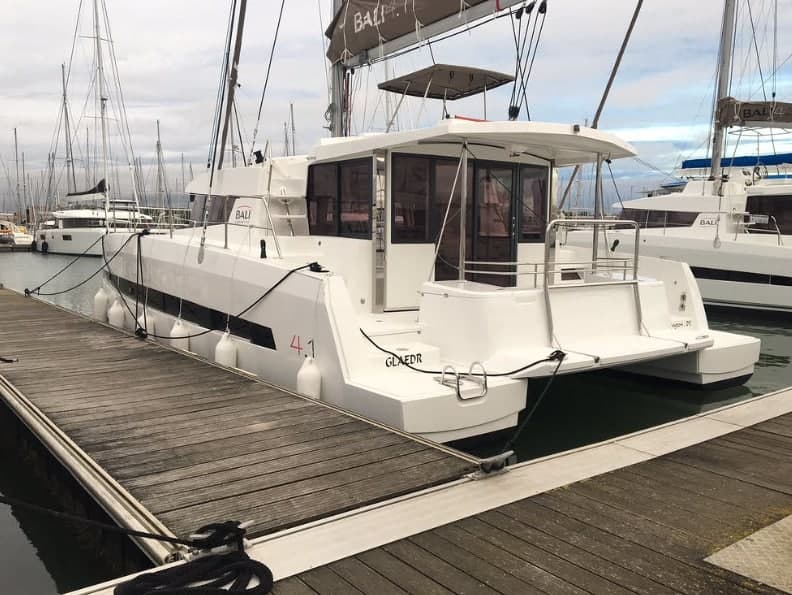
We wanted to be able to run our air conditioners, microwave, water heater and other electrical appliances without having to turn the generator on." That blunt mandate from the owners of a Bali 4.1 named glaedr captures why more cruisers are rethinking electrical and energy systems for liveaboard life. After taking possession in June 2018, the glaedr owners "have sailed thousands of miles mostly up and down the Eastern US and into the Bahamas," and their priorities map directly to habitability, safety and independence underway and at anchor.
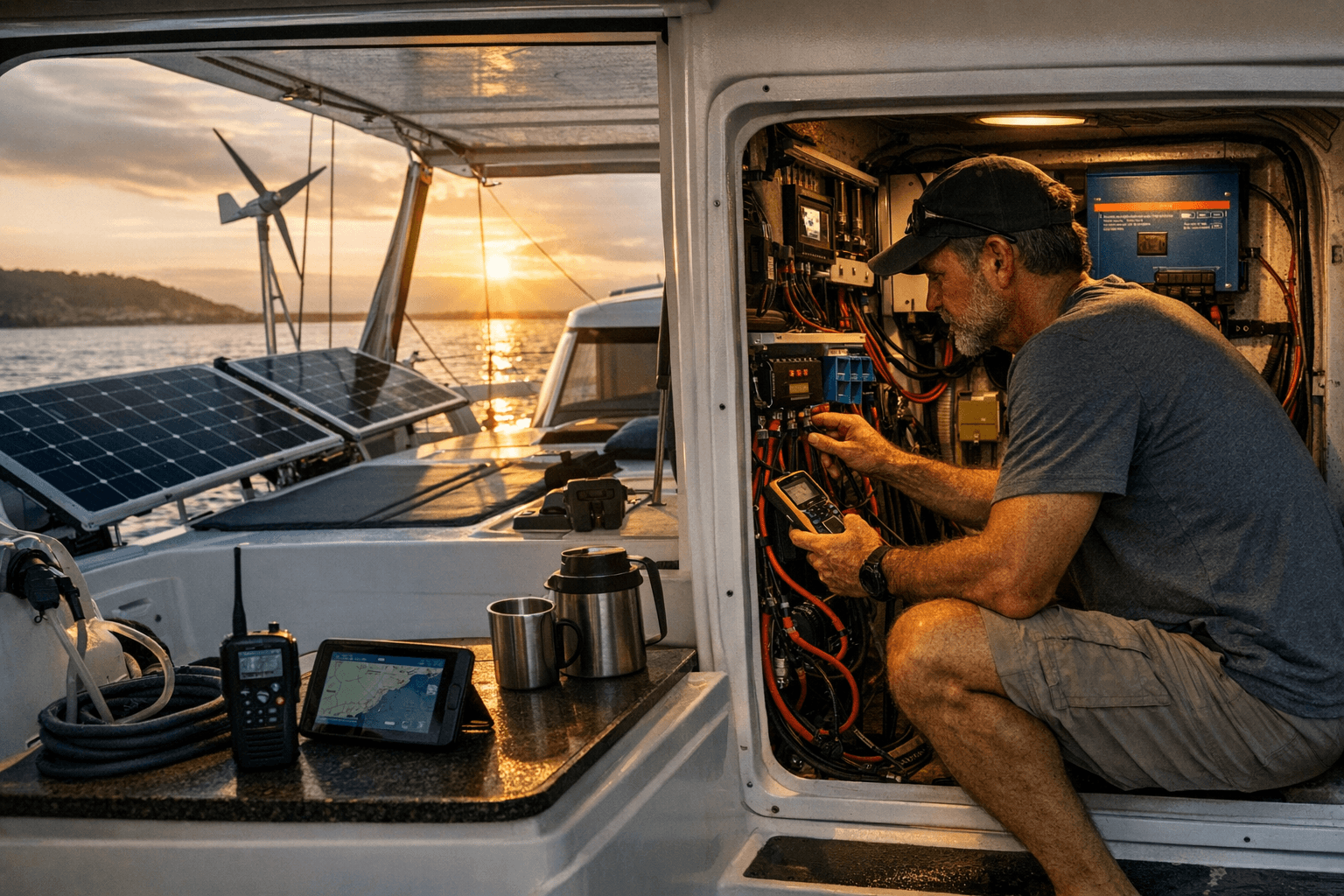
Start with the core power stack. Upgrading to marine lithium batteries is now a common first move; the article authors note "an upgrade to marine lithium batteries on our Bali 5.4 catamaran." Owners pair lithium banks with enough solar generation so they "would not have to shut the fridge down" during extended absences. Simplifying shore power hookups is another practical win, owners report they wanted to "simplify how we connected to docks by using only one shore power cable (originally our air conditioning circuit was totally separate and required a separate 50A cord)."
Monitoring and load reduction finish the basic package. "Most importantly we wanted to be able to monitor the system from both on and off of the boat," owners say; remote monitoring and integrated inverter/charger displays let you check state of charge, production and shore power status before you arrive at the dock. Investing in energy-efficient appliances lowers baseline demand, one owner observed that their efficient oven "makes better bread!" while also trimming electrical draw.
Communications and safety systems are close cousins to electrical upgrades. VHF radio installations with multiple stations improve onboard coordination and safety by allowing you to communicate from various positions on the boat. AIS transponders enhance visibility to commercial traffic, while satellite communication systems provide weather updates and emergency contact capabilities during extended offshore trips. Those items reduce risk and keep you informed when cruising beyond cell range.
For owners focused on range and redundancy, propulsion and fuel-system work matters. Tunnel extensions between hulls can improve shallow-water performance and reduce drag, opening fishing grounds others cannot reach, while sacrificial anodes protect against galvanic corrosion. Propeller upgrades can improve fuel consumption and performance; four-blade propellers "provide better acceleration and handling in rough conditions," while three-blade designs "may offer superior top-end efficiency for long-range cruising." Engine tuning, additional fuel capacity, fuel polishing systems and dual filter setups add reliability and help avoid fuel-related failures that could leave you stranded.
Prioritize upgrades by what reduces generator runtime and preserves safety first: battery chemistry and capacity, matched solar arrays, inverter/charger sizing, shore-power consolidation and robust monitoring. Add communications gear next, then propulsion and fuel-system improvements when range or access is a priority.
What this means for liveaboards is straightforward: invest where you can cut routine generator use and add redundancy, and tailor hull and propulsion changes to your cruising profile. Confirm battery specs, inverter and charger sizing, and shore-power arrangements with installers, and factor in safety measures for lithium systems before committing, those checks translate upgrades into dependable independence on the water.
This article was produced by Prism’s automated news system from verified source data, official records, and press releases, then run through automated quality and moderation checks before publishing. The system is built and supervised by the people who set the standards it runs under. Read our full AI policy.
Did this article answer your question?