German Authorities Abandon Rescue Efforts for Stranded Baltic Humpback Whale
No scientist or veterinarian endorsed the Danish catamaran lift plan for 12-ton "Timmy"; Germany's stranded humpback was left to die in Wismar Bay after all rescue options failed.
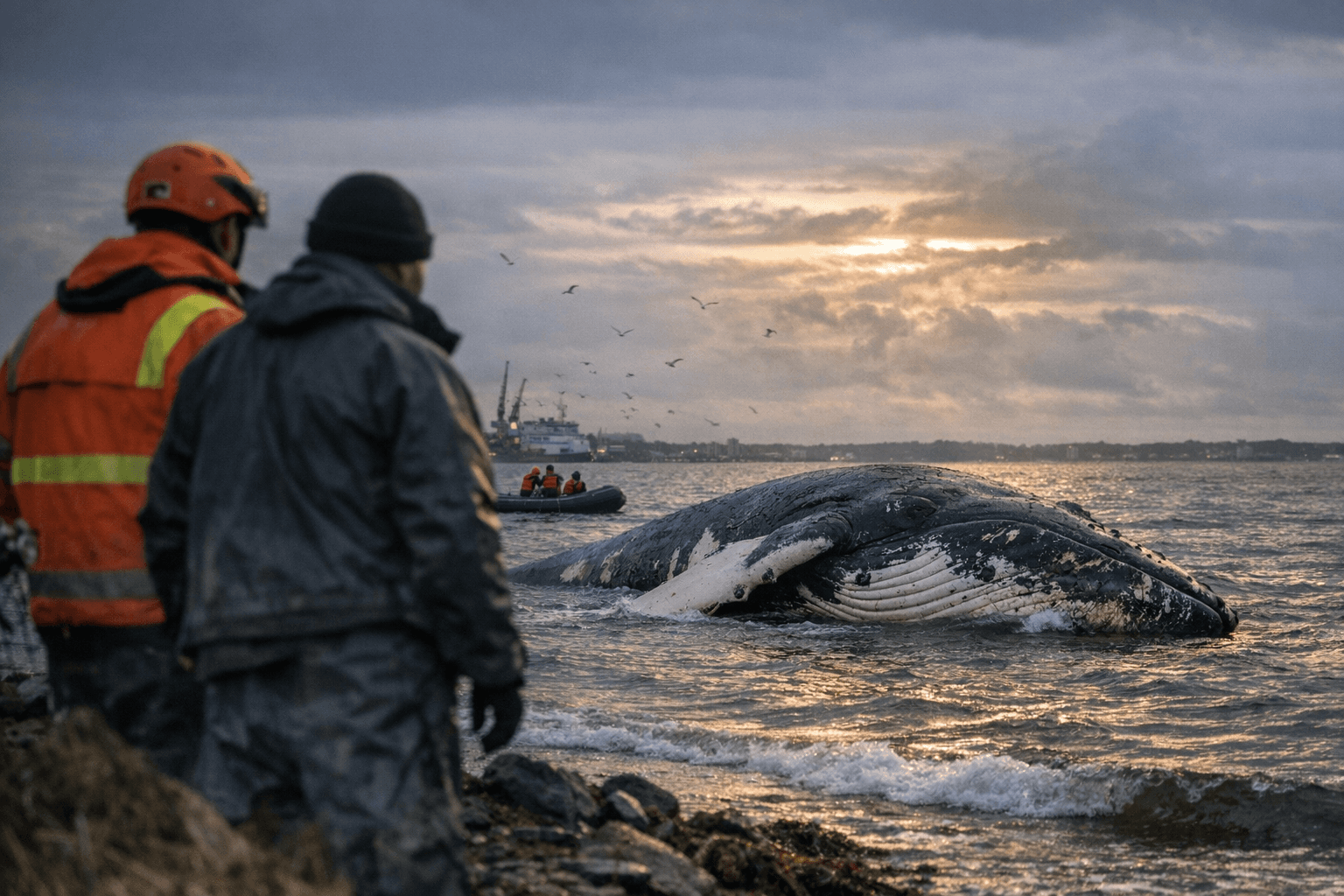
Burkard Baschek, the marine rescue expert leading the response to Germany's stranded humpback whale, was unambiguous at his televised news conference on April 2: "We firmly believe that the animal will die there." That assessment sealed the fate of the Danish catamaran lifting plan, the last serious option on the table, and it delivered a hard lesson about what a multihull can and cannot do when a 12-ton cetacean is involved.
The whale, nicknamed Timmy after Timmendorfer Strand where it first beached on March 23, measured 12.35 metres and had stranded four times along Germany's Baltic coast since early March. Excavators dug an escape channel on March 26 to free it initially; by the time it grounded again in the Bay of Wismar near the island of Poel, the animal had sunk 50 to 60 centimetres into the seabed under its own weight. Its breathing had become irregular, its skin was deteriorating from prolonged exposure to the Baltic's abnormally low salinity, and remnants of fishing gear were visible around its mouth. Veterinary and marine biology assessments concluded a large transfer operation would almost certainly kill it.
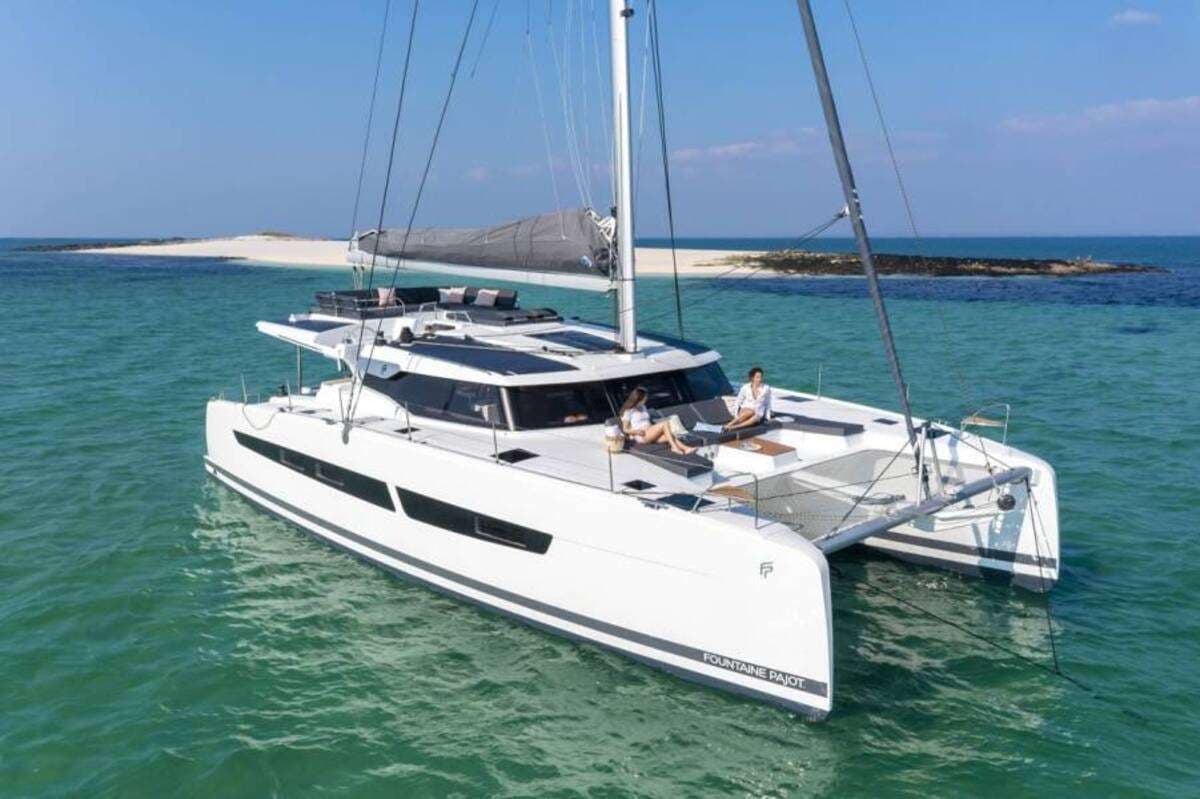
The catamaran option, offered by an unidentified Danish company, was evaluated seriously before being rejected. The platform's shallow draft was exactly why it was considered: a conventional monohull could not reach a whale beached in water that shallow. The plan called for broad straps to be rigged beneath the animal at high water, suspending it in a net or custom cradle between the hulls, then carrying it to deeper water offshore. On paper, it addressed the access problem that ruled out every other vessel type.
In practice, experts found the physics and the animal welfare calculus irreconcilable. Rigging straps under a 12-ton animal already embedded in the seabed, then hoisting it clear while managing its breathing, circulatory stress, and body temperature in brackish water, exceeds what any improvised lifting arrangement can safely deliver. Environment Minister Till Backhaus of Mecklenburg-Western Pomerania said no scientist or veterinarian recommended the catamaran transport option because Timmy "would be subjected to severe suffering during the attempt to rescue it alive." Backhaus confirmed rescue teams had "explored all ideas" before standing down. Baschek added that the whale "no longer has the strength" and that responsible rescue work demands, at some point, that responders "let it go." A restricted zone was established around the animal to allow it to decline without further disturbance.
For catamaran owners and charter crews sailing Baltic and North Sea waters, the episode draws a clear operational boundary. The shallow-draft advantage that makes a cruising cat useful for coastal exploration is not the same as the rated, engineered lift capacity required for a large-mammal rescue. Straps, cleats, and netting rigged from crossbeams are not certified lifting points for multi-ton loads under dynamic sea conditions, and no recreational or charter vessel carries the veterinary monitoring equipment, hydrodynamic slings, or coordinated dive teams such an operation demands. Acting on instinct when an animal is in distress is understandable, but approaching a stranded whale without coordination from the designated authority, in this case the Mecklenburg-Western Pomerania State Environment Ministry and its expert responders, risks compounding the animal's suffering and exposes crew to genuine legal and safety liability.
The Timmy case is now being cited in marine conservation circles as a reference point for the limits of improvised heavy-lift rescue at sea. Any future attempt using a catamaran-based platform will require not just the right hull design but veterinary sign-off, state authority, and engineering specifications that no marina-sourced vessel is equipped to meet off the shelf.
Know something we missed? Have a correction or additional information?
Submit a Tip