Incat Crowther Designs 80-Metre High-Speed RoPax Catamaran for Korean Ferry Operator
Incat Crowther has landed a design contract for a 45-knot, 80-metre RoPax catamaran that will carry 572 passengers and up to 60 cars on South Korean routes.
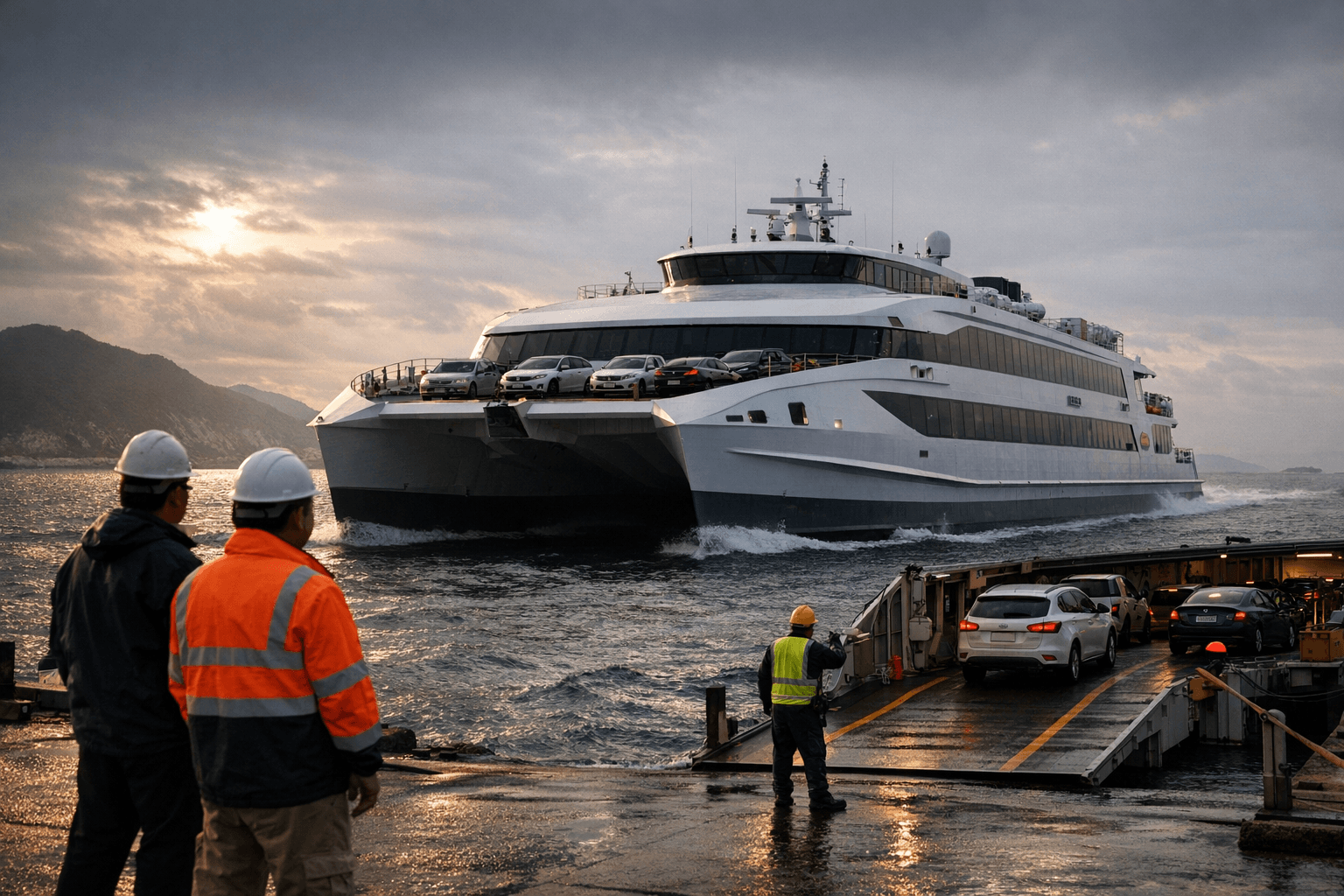
Incat Crowther signed a design contract with South Korean shipyard Kangnam Corporation for an 80-metre high-speed catamaran RoPax capable of hitting 45 knots while carrying up to 60 cars, an order placed by Korea Express Ferry (KEF) that underscores the continuing appetite for large, fast vehicle-carrying catamarans in Asian short-sea markets.
The vessel's specification sheet reads like a checklist of what fast-ferry operators in freight-heavy corridors actually need. The vehicle deck accommodates approximately 60 cars or around 50 trucks, with passenger accommodation for 572 and a crew of 12. That combination of freight flexibility and passenger capacity targets the mixed-use coastal corridors where KEF operates, where time-sensitive cargo and high-frequency schedules demand a hull that can turn around quickly and sustain high speeds between sailings.
Propulsion comes from a six-engine MTU package driving waterjets through gearboxes, a configuration that prioritises both top-end performance and operational resilience. For a vessel running intensive short-sea schedules, the redundancy built into six engines matters as much as the speed figure: a mechanical issue on a two- or three-engine setup can strand a sailing, while a six-engine arrangement keeps the vessel moving even with one unit offline. The waterjet selection also suits South Korean coastal conditions, where wake management and shallow-water manoeuvring in port approaches are genuine day-to-day considerations.
Kangnam Corporation will build the vessel, with construction scheduled to begin in the second half of 2026 and delivery targeted for 2028. That timeline places the project firmly in near-term fleet planning territory for KEF, which is building capacity on routes where vehicle throughput and crossing times directly affect logistics chains across the region.
The Australian firm brings extensive experience in large aluminium catamaran design to the project, with a track record spanning seaworthy RoPax concepts across multiple international markets. The KEF contract fits a broader pattern of Asian operators turning to specialist catamaran designers rather than conventional monohull ferries when the route profile rewards speed and lightweight construction.
At 45 knots with a full vehicle deck loaded, this vessel would rank among the faster commercial RoPax catamarans currently under development anywhere in the world, and the 2028 delivery date means its impact on KEF's scheduling and Korea's short-sea freight picture is not far off.
This article was produced by Prism’s automated news system from verified source data, official records, and press releases, then run through automated quality and moderation checks before publishing. The system is built and supervised by the people who set the standards it runs under. Read our full AI policy.
Did this article answer your question?