Luxury Catamaran Market to Grow as Electrification and Charter Demand Rise
Luxury yacht spending is set to rise as electrification and charter demand boost orders, affecting catamaran builders, charter operators, and marina plans.
Demand for luxury yachts is strengthening, and catamaran builders and operators should be ready for an uptick driven by electrification and expanding yacht tourism. ResearchAndMarkets released a market intelligence report on January 21, 2026 forecasting the luxury yacht market to grow from about USD 10.12 billion in 2025 to USD 10.76 billion in 2026, with a projected compound annual growth rate through 2031. That combination of growth and technology shifts matters to owners, brokers, shipyards, and marinas that serve the multihull community.
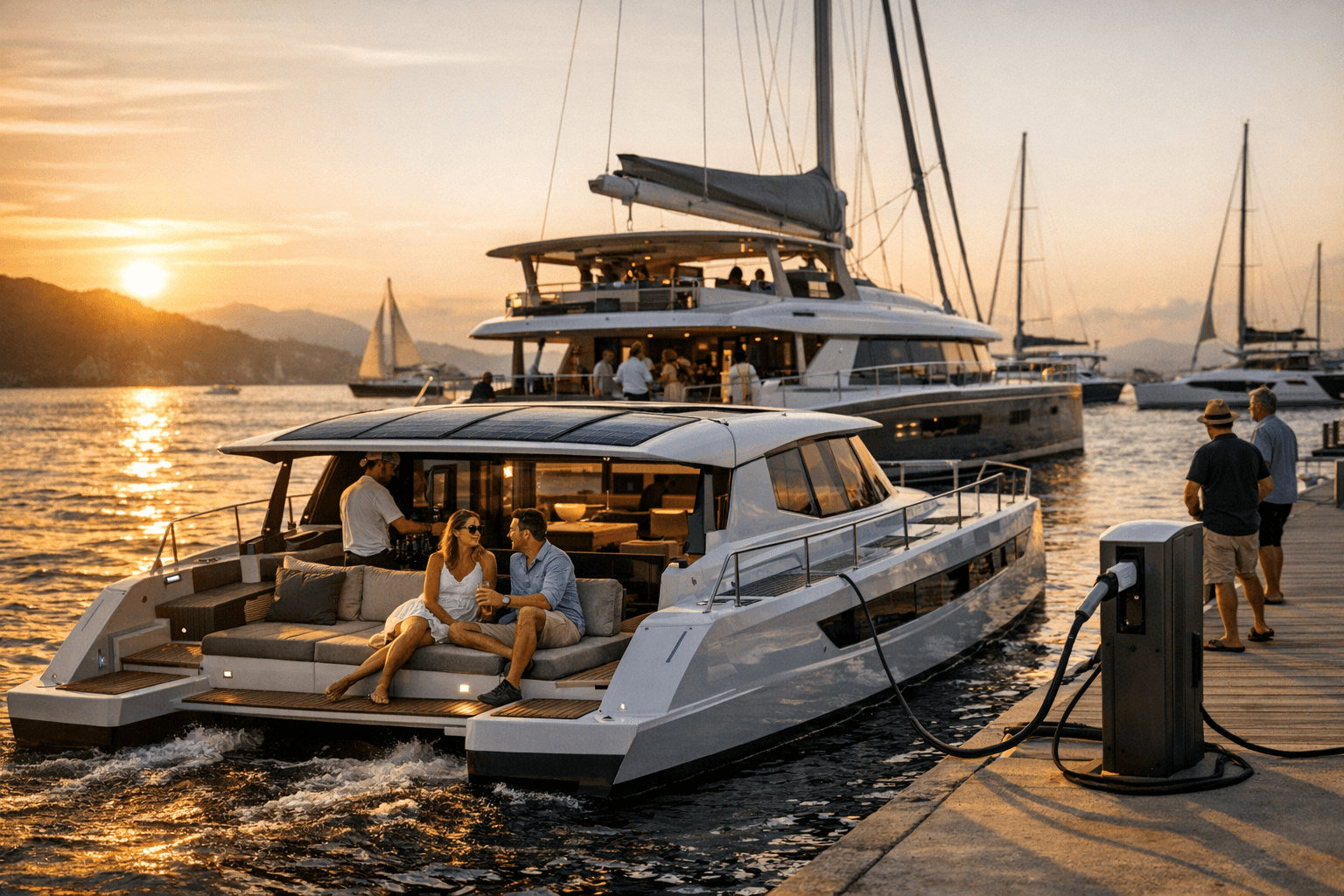
Hybrid and electric propulsion systems are gaining traction as builders anticipate tighter International Maritime Organization greenhouse-gas requirements. The report highlights an electrification trend across propulsion systems, which dovetails with catamaran strengths: wide beams for battery storage, lower hull resistance for efficient propulsion, and stable platforms for hybrid installations. Expect more twin-hull designs to offer hybrid drivetrains, electric pod options, and shore-power-ready systems to meet charter and owner expectations for quieter, cleaner cruising.
Yacht tourism expansion is another major driver. Charter operators are investing in larger, more luxurious vessels, pushing demand for charter-ready catamarans with high-end cabins, extended deck space, and layout flexibility for both skippered and bareboat markets. Asia-Pacific is identified as the fastest-growing region while Europe remains the largest market by share, signalling shifting cruising grounds and new charter itineraries that could influence build orders and marina capacity planning.
Rising numbers of ultra-high-net-worth individuals in emerging markets and an appetite for expedition and explorer yachts are influencing specifications. Catamaran designers should anticipate requests for extended-range systems, increased storage for toys and tenders, and strengthened load-bearing structures to support wings, cranes, and heavy battery banks. Shipyards and component suppliers need to adapt to a market that values both luxury fit-out and technical complexity.
Supply-chain pressures for specialized components are already affecting lead times, and the report notes consolidation among builders and marina operators. That consolidation could alter bargaining power for yards and slow the addition of shore-side electric infrastructure unless marina operators prioritize charging and shore-power upgrades. Owners and brokers should plan earlier ordering windows, secure long-lead items like batteries and electric motors, and coordinate with marinas about charging availability and shore-power rates.
For catamaran buyers, owners, and small-scale builders, the immediate takeaways are practical: factor electrification into budgets and refit plans, expect charter operators to favor larger, higher-spec multihulls, and prepare for longer delivery schedules on components. As the market broadens, the next phase will test which catamaran builders can innovate on propulsion while keeping the creature comforts charter clients demand.
Know something we missed? Have a correction or additional information?
Submit a Tip