Multihull design's 70-year evolution reshaped catamaran sailing and racing
The 1960s turned catamarans into serious engineering, and that reset still shapes the beam, clearance, weight and livability you feel on today’s boats.
The catamaran you step aboard today still carries the imprint of a design reset that happened more than half a century ago. Once naval architects began treating twin-hull and three-hull boats as serious marine engineering, not curiosities, the category stopped being a side experiment and became a real alternative to the monohull.
Why the 1960s changed everything
The big shift came when builders broke away from the single-hull sailboat model and started solving for a different balance of stability, speed and living space. That mattered then, and it still matters now, because the core multihull promise has barely changed: more beam for stability, less heel under sail, and a platform that can carry people and gear without giving up pace.
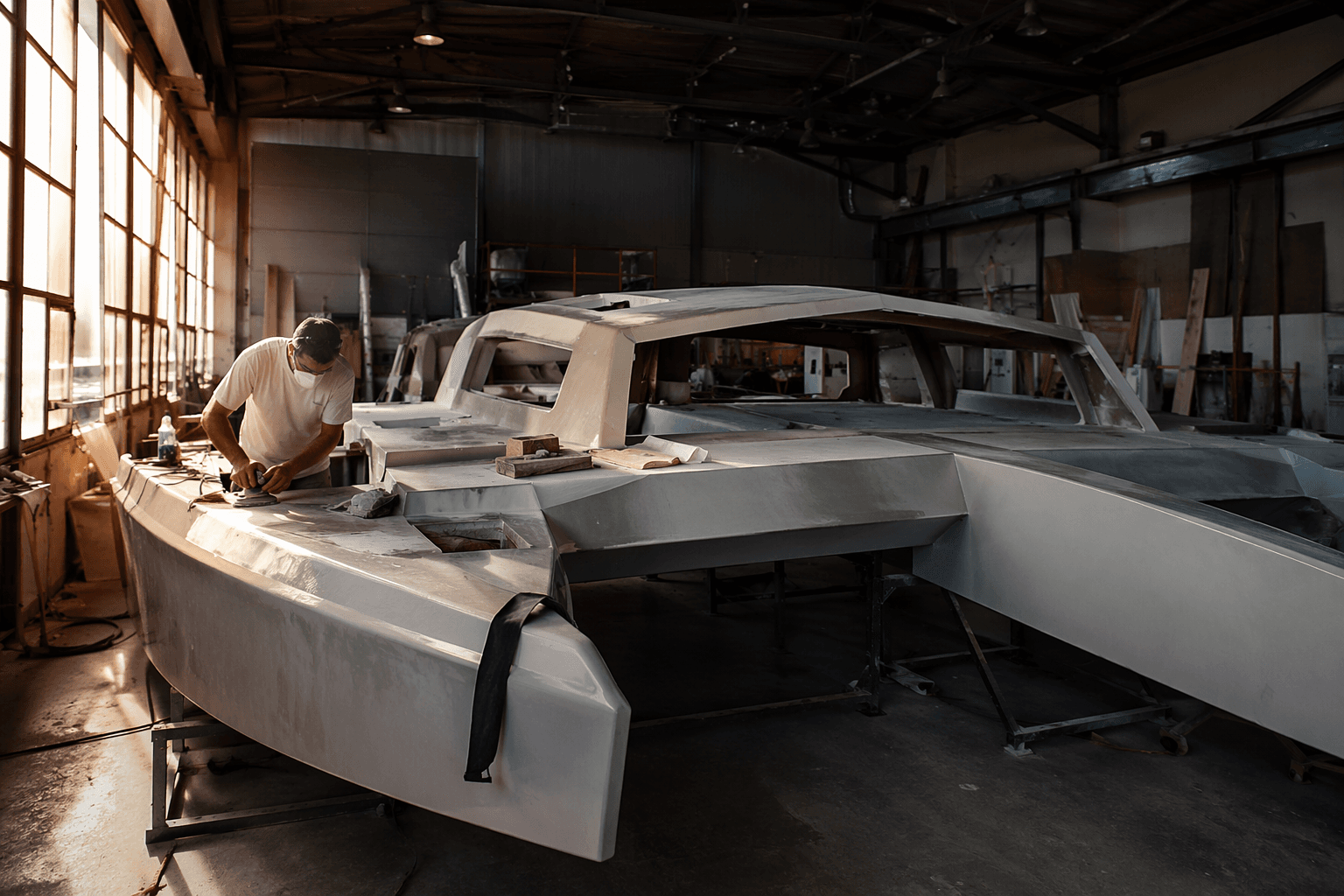
You can see that legacy in almost every modern production catamaran. Wide stance, bridgedeck clearance, weight discipline and rig layout are not abstract design talking points; they are the practical answers to questions multihull builders began asking in the 1960s. The boats on today’s docks are the descendants of that moment, and they still reveal the same engineering priorities.
The pioneers who proved the concept
Modern multihull advocates often trace the lineage back to Polynesian voyaging craft, and that long view matters because it shows the idea was never merely fashionable. In the modern era, James Wharram helped push ocean-capable catamarans back into the sailing conversation, including a notable Atlantic crossing in 1959, before the wider industry fully caught up.
In the United States, names like Arthur Piver, Jim Brown and Rudy Choy became central to the multihull conversation in the 1950s and 1960s. Arthur Piver, often described as the father of the modern multihull, became one of the best-known symbols of that era, while Jim Brown’s later work captured the characters and culture that formed around the movement. Together, they helped make the multihull feel less like a novelty and more like a serious path forward.
Racing forced the issue into the open
Racing gave the new ideas a public test. The Outrigger Canoe Club says it co-sponsored the first Multihull Transpacific Yacht Race in 1964, which is a useful marker because it shows how quickly multihulls moved from backyard experimentation to organized offshore competition. By 1968, the race had already produced a clear result: Buddy Ebsen’s 35-foot Polynesian Concept won in 11 days, 16 hours, 20 minutes and 10 seconds.
That kind of performance was impossible to ignore. Offshore racing exposed what multihulls could do when designers got the weight right and the hulls were shaped to reduce drag, and it also made the risks visible, especially in an era when skepticism about capsizes and structural failures was intense. The category had to earn legitimacy in public, not just in design offices.
The design questions owners still feel today
The arguments that shaped the 1960s are still the ones you feel when comparing modern catamarans. Beam is the obvious one, because it drives both stability and the amount of usable space you get on deck and below. Bridgedeck clearance is the quiet one, because it affects how often you hear slamming and how comfortable the boat feels offshore. Weight tradeoffs remain central too, since every extra pound can dull acceleration, add load to the structure and alter how forgiving the boat is in a seaway.
Rig choice still reflects those priorities. A more aggressive sail plan can unlock performance, but it asks more of the structure and the crew, while a cruising-focused setup may give up some speed in exchange for easier handling and a broader comfort envelope. That is why the multihull market can support such different boats at once, from lightweight performance platforms to family cruisers and powercats built around efficiency and range.
What today’s production cats owe that era
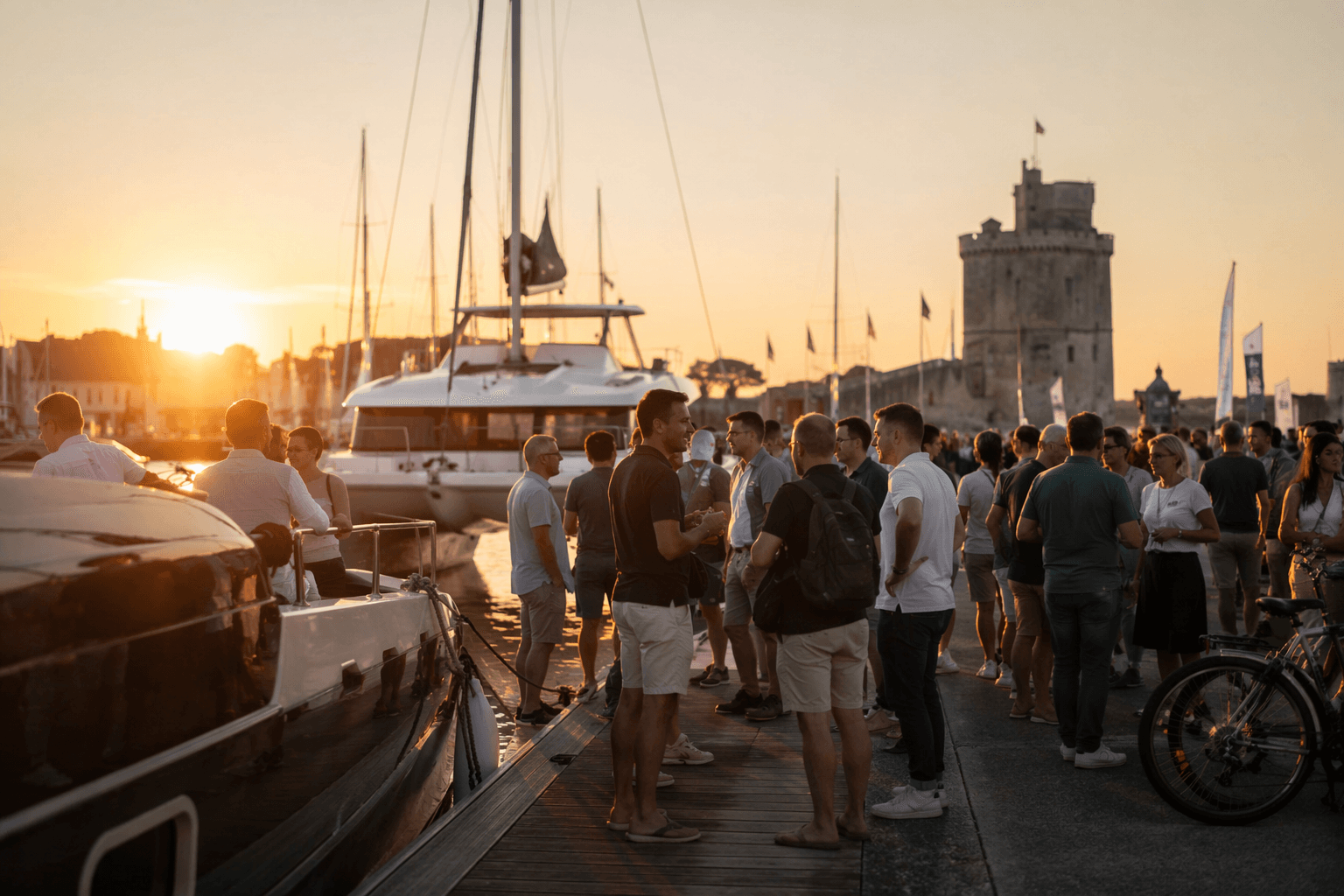
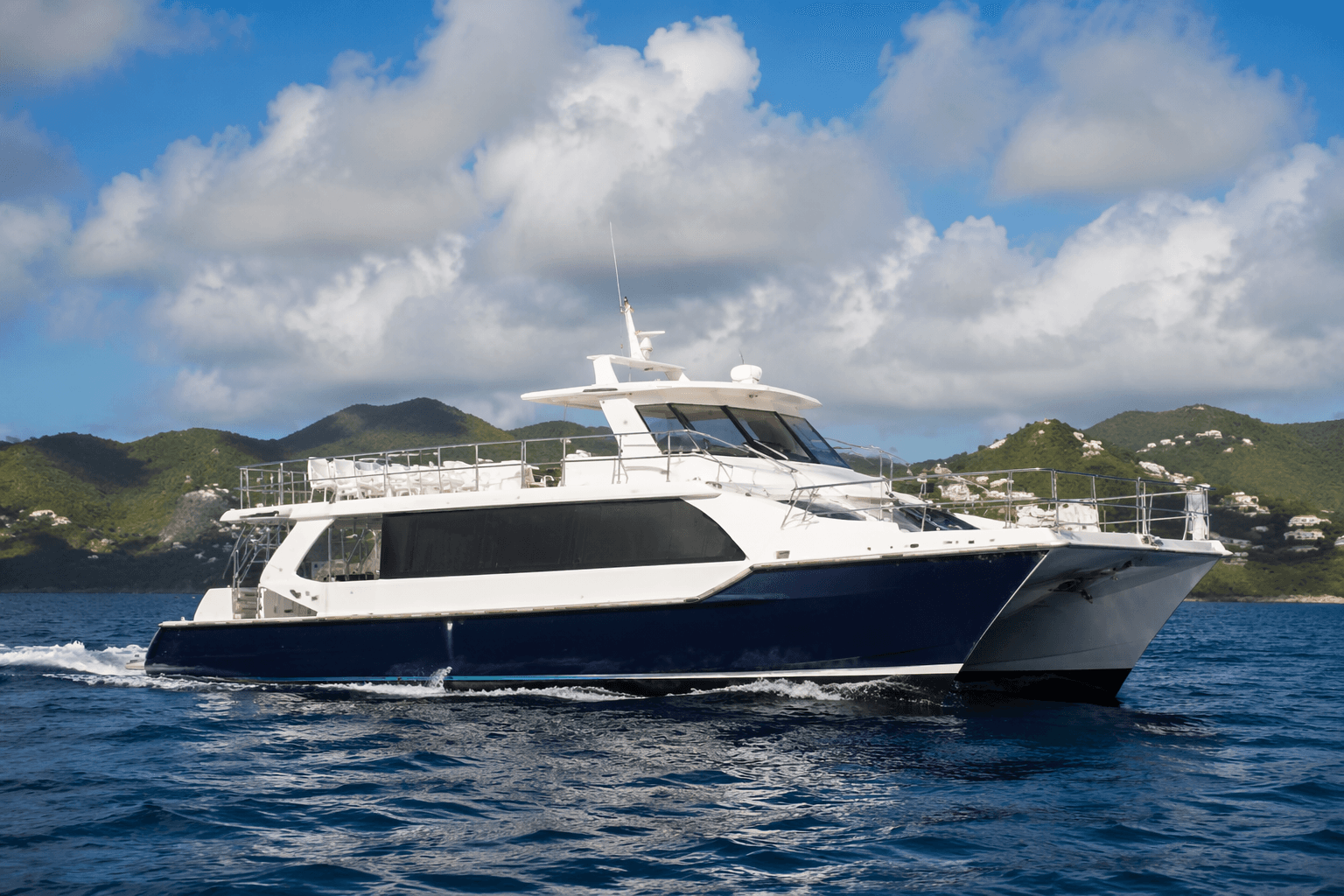
You can see the old design debate playing out in current production names like the Leopard 53 Powercat and Lagoon’s 2026 launches, including an 80-foot powercat and a new 47 sailing model. Those boats speak the language the 1960s helped create: more space without the same heel, more range without monohull compromises, and more attention to how the hulls, beam and weight all interact in real use.
That is also why modern multihulls continue to split into recognizable lanes. Charter buyers want volume and easy liveability, bluewater owners look for comfort and offshore steadiness, electric and hybrid concepts chase efficiency, and power-cat buyers want speed with better fuel use. The common thread is the same one early designers were chasing, just with better materials, more refined engineering and a much larger market.
From fringe to mainstream conversation
By June 1976, the World Multihull Symposium in Toronto drew about 400 enthusiasts from around the world, a strong sign that multihulls had become an international subject rather than a fringe obsession. That gathering, coming after the first major racing milestones and after years of public argument over safety and handling, marked another step in the category’s legitimacy.
The important point for anyone looking at a catamaran now is that today’s boats were not invented in a vacuum. They are the product of decades of trial, racing, debate and refinement, and that is why the best modern multihulls feel so purposeful. When you notice the beam, the bridgedeck, the weight balance or the way a rig is tuned, you are seeing the 1960s still at work in 2026.
The reset that began when builders stopped treating multihulls as curiosities is still visible every time a modern catamaran lifts onto its lines, offers real living space and holds speed without the same heel. That is the lasting inheritance of the 1960s, and it is why today’s boats look and sail the way they do.
This article was produced by Prism’s automated news system from verified source data, official records, and press releases, then run through automated quality and moderation checks before publishing. The system is built and supervised by the people who set the standards it runs under. Read our full AI policy.
Know something we missed? Have a correction or additional information?
Submit a Tip