Nugae Debuts 3D-Printed Catamaran Component Made from 70% Recycled Material
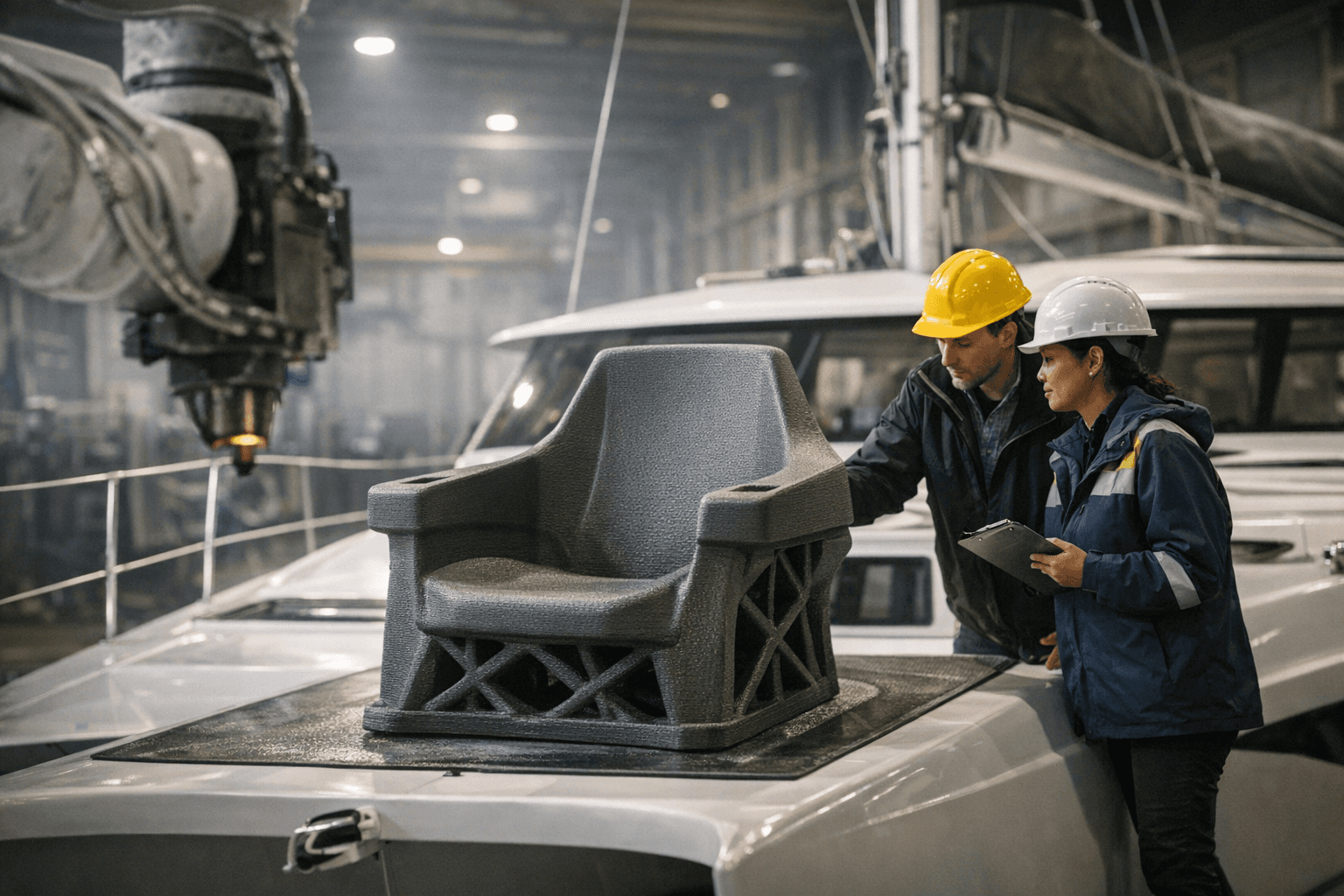
NUGAE's 37 kg robotic-printed structural chair for a 13 m catamaran, made from 70% recycled polypropylene, took just 42 hours to produce.
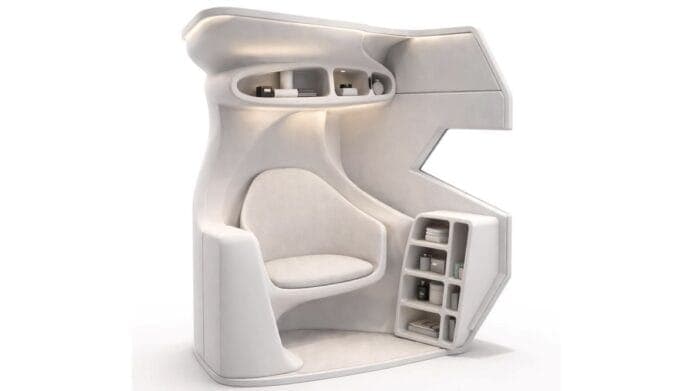
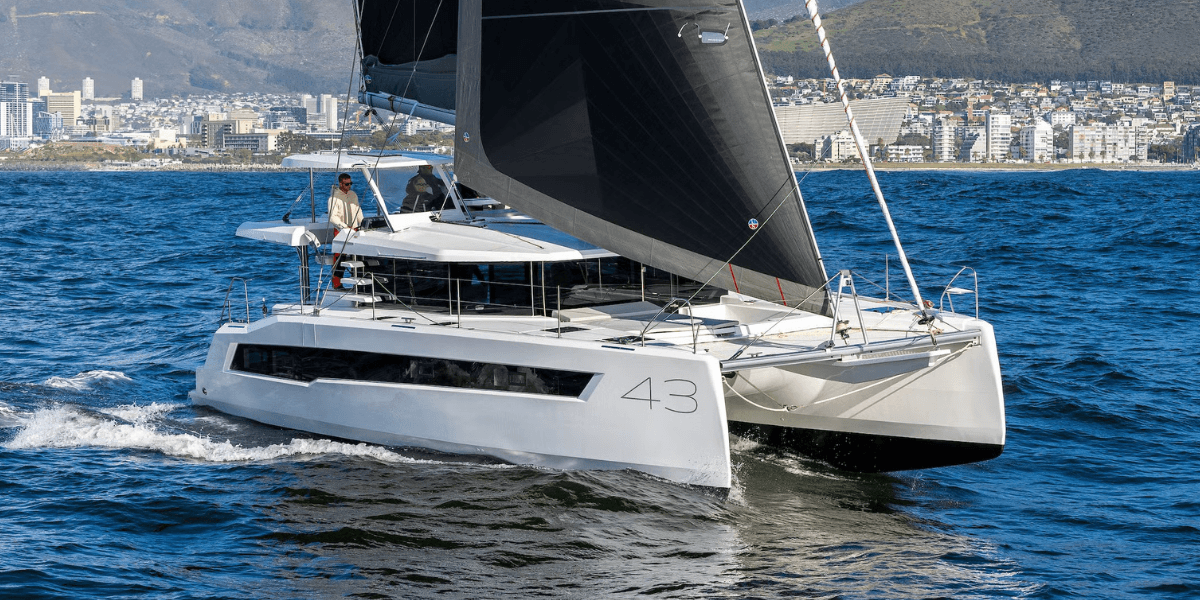
Italian large-format additive manufacturing specialist NUGAE brought a 37 kg robotic 3D-printed structural component to JEC World 2026, destined for a 13 m (43 ft) catamaran the company currently has under construction. The part, described by 3dadept as a structural chair made for a boat, took 42 printing hours to produce and is composed of 70% recycled material.
The component was developed under the NEMO – Design 4 Yacht Flexible Customization project, a collaboration between NUGAE and Politecnico di Milano. That partnership frames the demonstrator as proof that robotic additive manufacturing can reshape how large composite marine structures are designed and built, integrating directly with the traditional laminate workflows already standard in advanced boatbuilding yards.
At the core of NUGAE's process is CoreLight3D®, an ultralight material the company engineered specifically for robotic deposition. Based on recycled polypropylene, it is designed to be machinable after printing and optimized for adhesion with resins and composite laminates, allowing the printed core to accept conventional fiber reinforcement without retooling the surrounding production chain. The remaining 30% composition of the JEC component was not specified in available materials.
Managing the robotic system's toolpaths and deposition logic is NU-Slice, NUGAE's proprietary software environment. The platform handles slicing and deposition strategies tuned for functional structural geometries rather than aesthetic or prototyping applications, which is a meaningful distinction when a part needs to carry load inside a working hull.
One detail worth flagging: the original documentation referencing the robotic system used by NUGAE is truncated, cutting off at "robotic UL-" without completing the model or manufacturer name. The full hardware specification has not been confirmed through available sources.
What the JEC demonstration does confirm is that the sustainability case and the performance case for large-format AM in boatbuilding are converging on the same part. A 70% recycled-content structural component that integrates with standard composite lamination schedules is no longer a laboratory hypothesis. For a 43 ft cat currently taking shape somewhere in Italy, it is already a construction reality.
This article was produced by Prism’s automated news system from verified source data, official records, and press releases, then run through automated quality and moderation checks before publishing. The system is built and supervised by the people who set the standards it runs under. Read our full AI policy.
Did this article answer your question?