Sizing LiFePO4 Battery Systems for Catamarans: Hotel Loads, Propulsion, Charging
Balance LiFePO4 battery capacity with hotel loads, propulsion and charging to keep catamarans cruising longer and systems safe.
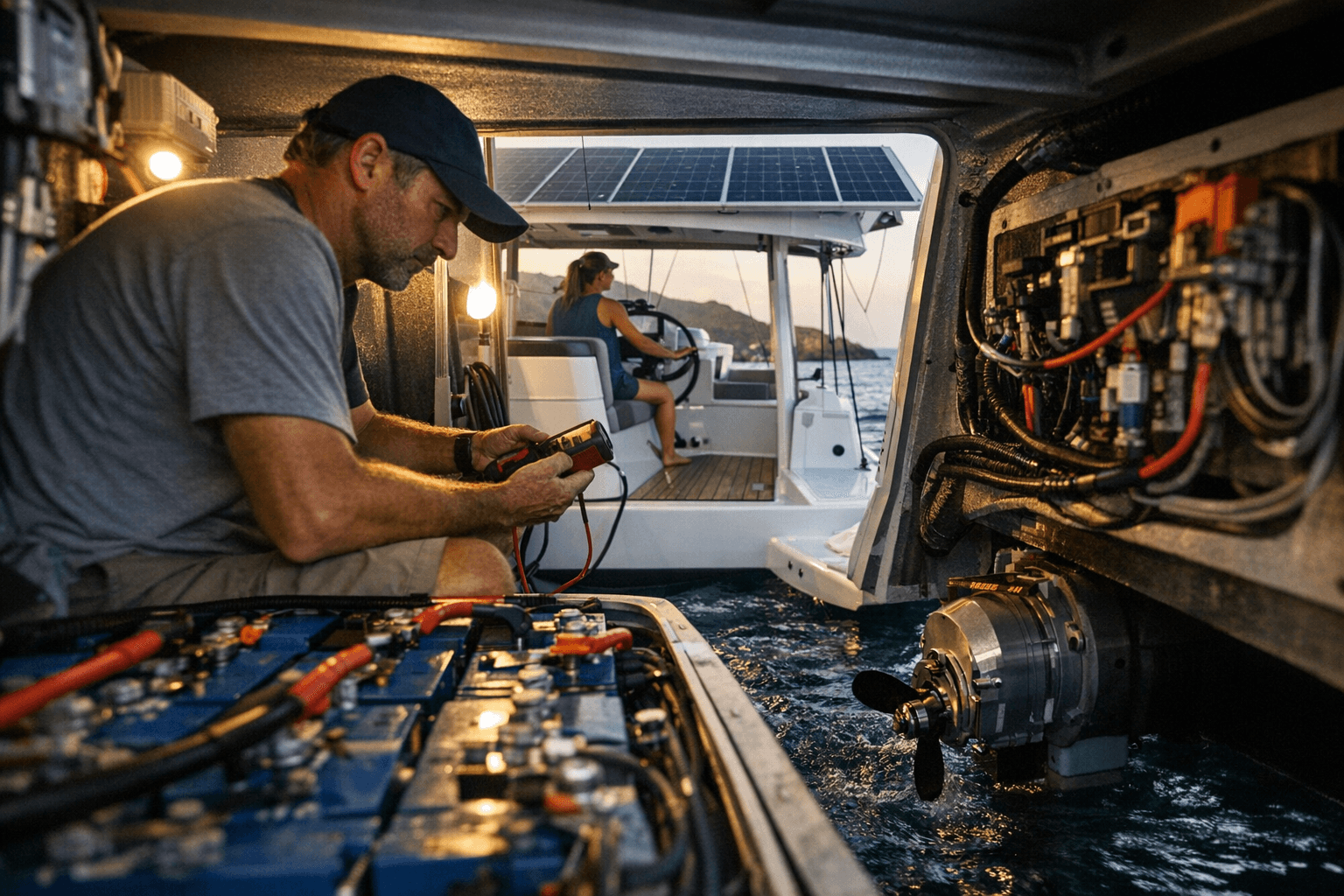
Choosing and sizing LiFePO4 battery systems for a catamaran is a practical exercise in balancing hotel loads, propulsion strategy, and available charging sources while managing weight and redundancy across two hulls. Favor LiFePO4 for the house bank because of its long cycle life, safer thermal behaviour, stable voltage and acceptable energy density. That chemistry lets owners run modern hotel loads with less worry about premature capacity loss.
Start with a clear sizing method. Calculate average daily hotel load A in kWh, decide on days of autonomy D at anchor without charging - commonly 1-3 days - and choose a usable depth-of-discharge DoD for system lifetime, for example 80% for LiFePO4. Use the formula Battery_kWh ≈ A × D / DoD. For a 12 kWh daily hotel load with 2 days autonomy and 80% usable DoD, the bank should be about (12 × 2) / 0.8 = 30 kWh. Add a separate propulsion battery capacity if electric propulsion is primary. For hybrid setups, size the propulsion battery to cover typical cruise legs at economical speeds, typically 6-8 knots for many power cats.
Design charging to accept combined inputs. Estimate solar yield by multiplying installed panel kW by effective sun hours, and combine that with shore power charger capacity, generator output and any hydrogeneration or regeneration systems. Specify an intelligent energy management system that prioritises solar, shore and generator inputs and prevents concurrent overcharging or charger conflicts. Plan charger sizing so shore power and generator can meaningfully top the bank within expected cruising windows.
Safety, monitoring and redundancy matter more on a catamaran because you can distribute weight and serviceability across hulls. Install a high-quality battery management system per bank, add distribution fusing and isolate banks per hull so one fault does not disable both sides. Make bank sections separately serviceable and plan cabling runs to minimize DC voltage drop. Mount batteries to structural points in ventilated and protected compartments, and distribute weight fore-aft and port-starboard for trim and heel control.
Follow ABYC and ISO marine electrical guidelines and include onboard fire detection and suppression appropriate to LiFePO4 chemistry. Use integrated battery, inverter and system monitoring with alarms and remote telemetry where practical, and keep a maintenance log with periodic capacity checks.
For brokers, refit teams and owners, size to actual loads, leave headroom for future upgrades such as air conditioning, watermakers or electric cooking, and consult a qualified marine electrician for installation and certification. Getting the sizing right keeps your cat on an even keel electrically and extends both cruising range and equipment life.
This article was produced by Prism’s automated news system from verified source data, official records, and press releases, then run through automated quality and moderation checks before publishing. The system is built and supervised by the people who set the standards it runs under. Read our full AI policy.
Did this article answer your question?